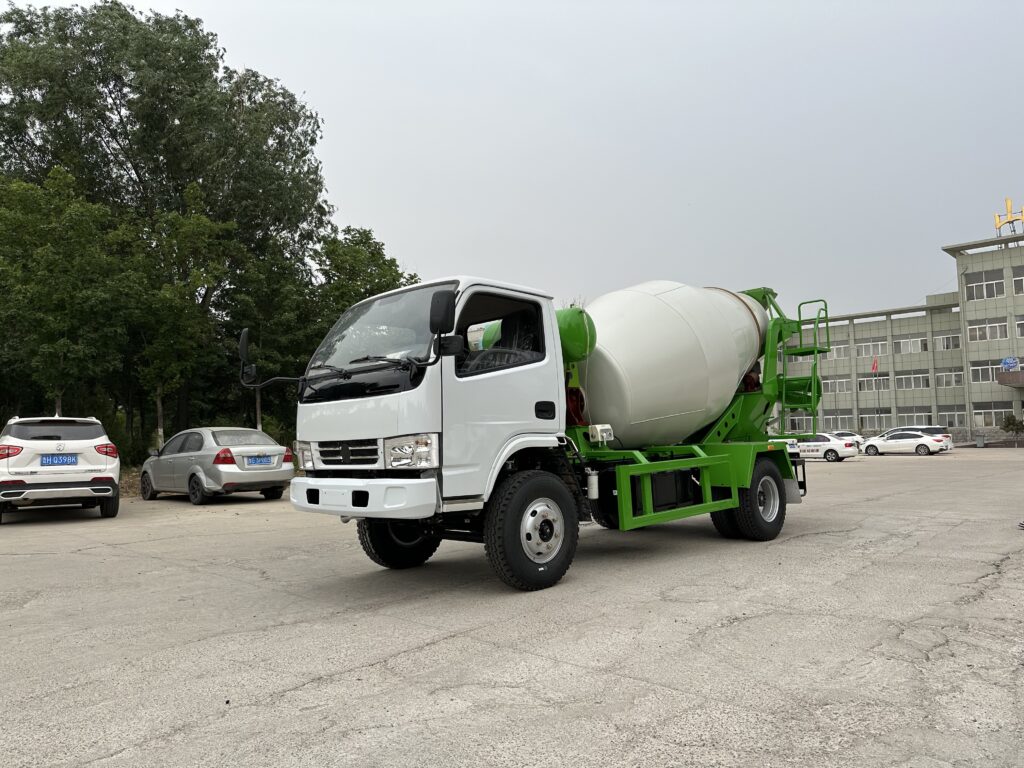
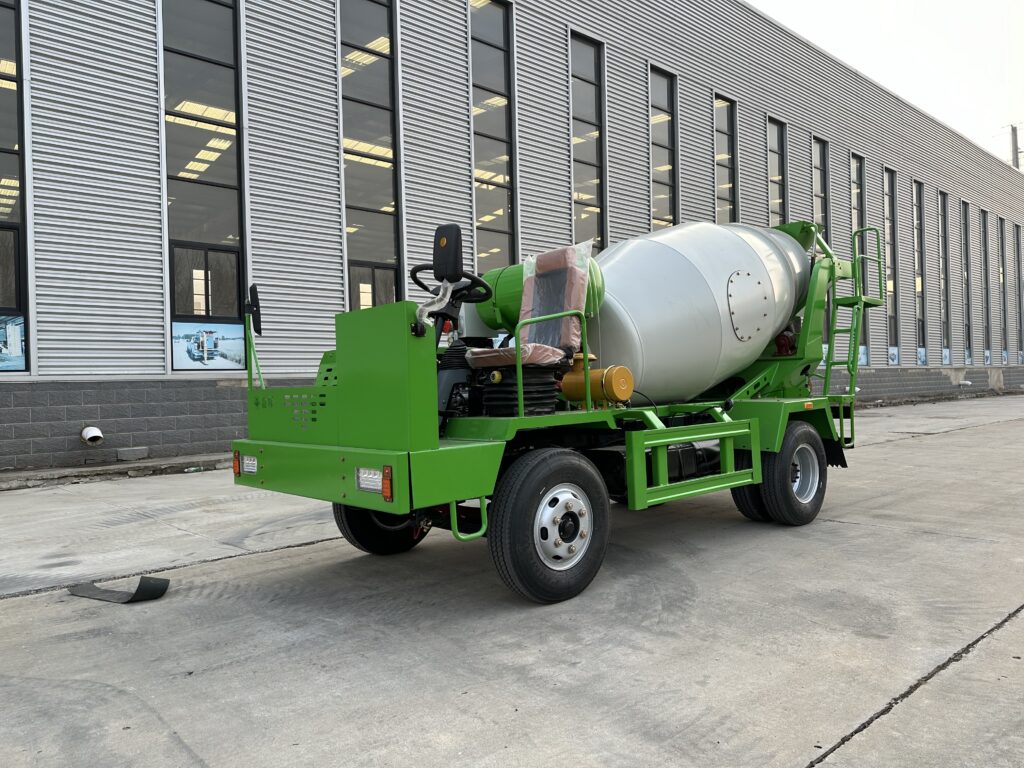
Construction sites do not always have smooth roads.
Some projects require concrete mixer trucks to travel on gravel roads, muddy ground, slopes, uneven surfaces, or temporary construction roads. In these conditions, the truck needs more than mixing and transportation capability. It also needs suitable traction and mobility.
A Concrete Mixer Truck With 4 Wheel Drive provides power to all four wheels, helping the vehicle maintain traction when working on challenging roads and construction sites.
Four-wheel drive can be particularly useful for projects where the truck needs to travel away from paved roads or operate on uneven terrain.
However, 4WD is not automatically the right choice for every project. The drive system should be selected according to the actual road conditions, terrain, vehicle configuration, and concrete requirements.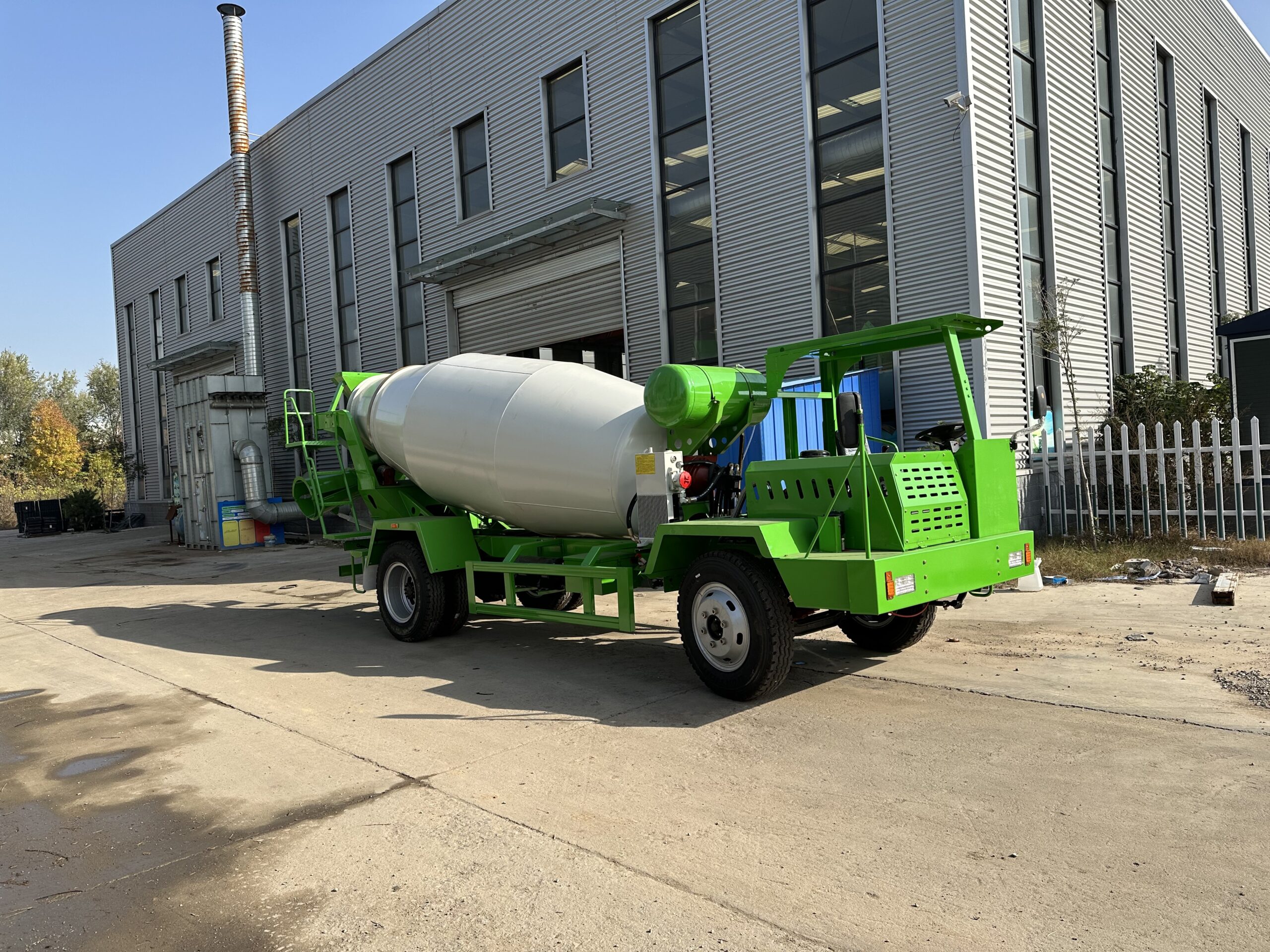
What Is A 4 Wheel Drive Concrete Mixer Truck?
A four-wheel-drive concrete mixer truck is a mixer truck equipped with a 4WD driving system.
Unlike a conventional two-wheel-drive configuration, the driving force can be distributed to all four wheels.
This can help improve traction when the vehicle is operating on surfaces where wheel slip may be more likely.
A 4WD Concrete Mixer Truck can be considered for applications such as:
- Construction roads
- Mountain projects
- Mining sites
- Gravel roads
- Muddy areas
- Sloped construction sites
- Uneven ground
- Off-road construction areas
The actual performance depends on the complete vehicle configuration and working conditions.
Why Choose 4 Wheel Drive For A Concrete Mixer Truck?
The main reason to consider four-wheel drive is traction.
A concrete mixer truck can carry a significant amount of weight. When the vehicle travels on slopes or loose surfaces, maintaining sufficient traction becomes important.
Four-wheel drive can help distribute driving force across the vehicle’s wheels.
This can be useful when:
- The road surface is loose
- The vehicle needs to climb slopes
- The ground is uneven
- The construction road is muddy
- The truck needs to leave paved roads
- The job site has changing road conditions
However, four-wheel drive should be considered as part of the complete vehicle configuration rather than as a standalone feature.
4WD Concrete Mixer Truck For Rough Roads
Construction projects often use temporary roads before permanent roads are completed.
These roads may consist of:
- Gravel
- Soil
- Crushed stone
- Compacted earth
- Mud
A Concrete Mixer Truck For Rough Roads needs to maintain reliable mobility while carrying its concrete load.
Four-wheel drive can provide additional traction in these conditions.
The suitability of the truck still depends on factors such as tire selection, ground clearance, vehicle weight, engine output, transmission, and road conditions.
4WD Concrete Mixer Truck For Slopes
Sloped construction sites can create additional demands on a heavy vehicle.
When traveling uphill or downhill, the truck needs sufficient traction and suitable braking performance.
A Concrete Mixer Truck For Slopes should therefore be selected according to the actual slope and road surface.
Customers should provide information about:
- Maximum slope
- Road width
- Surface condition
- Vehicle load
- Turning space
This information allows the manufacturer to evaluate the appropriate drive configuration.
Four-wheel drive can be particularly useful when the truck needs to maintain traction while climbing or traveling across sloped surfaces.
4WD Concrete Mixer Truck For Uneven Terrain
Uneven ground can make vehicle movement more difficult.
Construction sites may include:
- Rocks
- Potholes
- Uneven road surfaces
- Temporary access roads
- Construction debris
A Concrete Mixer Truck For Uneven Terrain should have a configuration that matches the expected ground conditions.
Four-wheel drive can improve traction, while appropriate ground clearance and chassis configuration can help the vehicle handle uneven roads.
The complete vehicle should therefore be considered when selecting a mixer truck for this type of project.
Four Wheel Drive Vs. Two Wheel Drive
The main difference between four-wheel drive and two-wheel drive is how driving force is delivered to the wheels.
| Feature | Two-Wheel Drive | Four-Wheel Drive |
|---|---|---|
| Driving wheels | Two | Four |
| Traction | Suitable for normal roads | Better suited to challenging surfaces |
| Rough roads | Depends on conditions | More suitable |
| Slopes | Depends on conditions | Better traction potential |
| Uneven terrain | General applications | Challenging applications |
| Cost | Usually lower | Usually higher |
| Application | Standard construction | More demanding conditions |
This does not mean that four-wheel drive is always better.
For projects with good paved roads and normal working conditions, two-wheel drive may be sufficient.
For projects with difficult roads, slopes, loose surfaces, or off-road requirements, four-wheel drive may provide greater mobility.
Does 4WD Make A Concrete Mixer Truck More Powerful?
Four-wheel drive primarily changes the way driving force is delivered to the wheels.
It does not simply mean that the engine has more power.
Overall vehicle performance also depends on:
- Engine
- Transmission
- Axles
- Tires
- Vehicle weight
- Chassis
- Hydraulic system
- Ground clearance
Therefore, customers should not choose a mixer truck based only on whether it has four-wheel drive.
The entire vehicle configuration should match the intended application.
 How Does Mixer Capacity Affect A 4WD Truck?
Mixer capacity and vehicle weight are closely related.
A larger concrete load means greater operating weight.
When working on slopes or rough roads, vehicle weight can influence traction, braking, and mobility.
Therefore, contractors should balance:
Mixer capacity + vehicle weight + drive system + terrain
For smaller construction projects, a compact mixer may be sufficient.
For example, a Small Self Loading Concrete Mixer Truck can provide an integrated solution for loading, mixing, transporting, and discharging concrete.
The appropriate capacity should be based on actual project demand rather than simply choosing the largest available mixer.
4WD Concrete Mixer Truck For Mining Projects
Mining construction can involve challenging roads and changing working conditions.
A mining site may have:
- Steep access roads
- Gravel surfaces
- Uneven ground
- Temporary roads
- Limited access
A Concrete Mixer Truck For Mining Projects can be configured according to the actual site conditions.
Four-wheel drive can provide additional traction where the road surface is difficult.
Other factors should also be considered, including:
- Ground clearance
- Chassis strength
- Engine configuration
- Tire selection
- Mixer capacity
- Discharge requirements
The best configuration depends on the specific mining application.
4WD Concrete Mixer Truck For Mountain Construction
Mountain construction can combine several challenging conditions.
The truck may need to travel on narrow roads, slopes, gravel surfaces, and uneven terrain.
In these environments, both mobility and vehicle dimensions are important.
For projects with restricted access, aSmall Concrete Mixer Truck For Narrow Roads may be considered.
If the road conditions are also challenging, four-wheel drive can provide additional traction.
The final choice should consider both access and terrain rather than looking at the drive system alone.
Can A 4WD Concrete Mixer Truck Be Customized?
Depending on the manufacturer and model, customers may be able to customize different parts of the mixer truck.
Possible requirements may include:
- Mixer capacity
- Chassis
- Vehicle dimensions
- Engine
- Drive system
- Drum configuration
- Discharge height
- Hydraulic system
For projects with specific requirements, a Concrete Mixer Truck With Custom Configuration can be developed around the actual application.
Customization can be particularly useful when the project requires a specific combination of vehicle size, mobility, concrete capacity, and discharge capability.
How To Choose The Right 4WD Mixer Truck
Before choosing a four-wheel-drive mixer truck, evaluate the actual construction conditions.
1. Check The Road Surface
Identify whether the truck will operate on:
- Asphalt
- Gravel
- Dirt
- Mud
- Rocky roads
- Temporary construction roads
2. Check The Maximum Slope
Determine the steepest section the vehicle will need to travel through.
This is important for evaluating the required drive and vehicle configuration.
3. Check The Available Space
Measure:
- Road width
- Entrance width
- Turning area
- Maximum height clearance
A truck with excellent traction is still not suitable if it cannot physically enter the job site.
4. Determine Concrete Requirements
Estimate:
- Concrete demand per cycle
- Daily concrete demand
- Transportation distance
- Number of working cycles
This helps determine the appropriate mixer capacity.
5. Consider The Complete Vehicle
Evaluate:
- Engine
- Transmission
- Drive system
- Chassis
- Tires
- Ground clearance
- Hydraulic system
- Mixer drum
The complete configuration determines how the vehicle will perform.
What Information Should You Give The Manufacturer?
If you are looking for a four-wheel-drive concrete mixer truck, provide detailed information about the project.
Useful information includes:
- Project type
- Road conditions
- Maximum slope
- Terrain
- Required mixer capacity
- Road width
- Site access
- Required discharge height
- Destination country
- Quantity required
Photos and videos of the construction site can also help the manufacturer understand the actual working environment.
With this information, the manufacturer can recommend a suitable configuration instead of simply offering a standard model.
 When Do You Need A 4WD Concrete Mixer Truck?
Four-wheel drive may be worth considering when the truck needs to regularly operate on:
- Steep construction roads
- Gravel roads
- Muddy ground
- Uneven terrain
- Mountain roads
- Mining sites
- Temporary construction roads
- Off-road job sites
For normal urban construction on paved roads, four-wheel drive may not be necessary.
The decision should be based on actual working conditions.
4WD And Self Loading Concrete Mixer Trucks
Four-wheel drive and self-loading functions solve different problems.
Four-wheel drive focuses mainly on vehicle mobility and traction.
A self-loading system focuses on material loading and concrete production.
When both functions are combined, the machine can provide greater flexibility for certain construction projects.
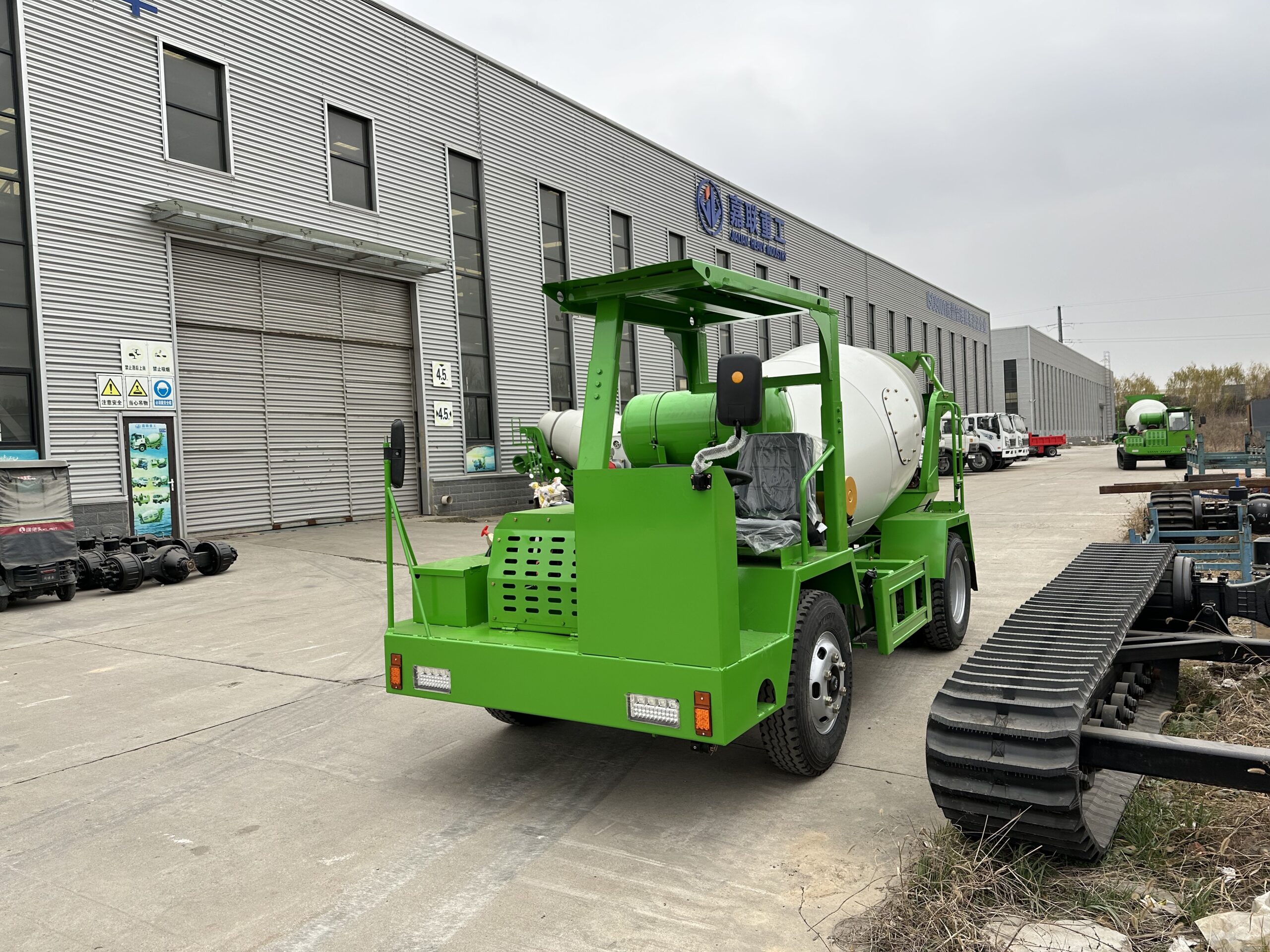
A self-loading mixer can load materials, mix concrete, transport it, and discharge it at the job site.
For projects where concrete needs to be produced directly at the construction location, a Self Loading Concrete Mixer Truck For Remote Areas may be considered.
The appropriate configuration depends on the project requirements.
Maintenance Considerations For A 4WD Mixer Truck
Regular maintenance is important for a four-wheel-drive mixer truck.
In addition to normal mixer truck maintenance, attention should be given to the drive system.
Important components include:
- Front and rear axles
- Drive shafts
- Tires
- Transmission
- Differential
- Hydraulic system
- Engine
- Mixing drum
After working in muddy or dusty conditions, the vehicle should be cleaned and inspected according to the manufacturer’s maintenance recommendations.
Regular inspection can help identify wear before it affects normal operation.
How To Buy A 4WD Concrete Mixer Truck
Before requesting a quotation, define the project requirements.
You should know:
- Where the truck will work
- What type of roads it will use
- How much concrete is required
- Whether four-wheel drive is necessary
- What vehicle dimensions are acceptable
- Where the concrete needs to be discharged
Then provide these details to the manufacturer.
An experienced Concrete Mixer Truck Manufacturer can evaluate the requirements and recommend a suitable configuration.
For projects requiring special vehicle dimensions or equipment combinations, customers can also discuss a customized solution.
Conclusion
A Concrete Mixer Truck With 4 Wheel Drive can provide additional traction and mobility for construction projects involving rough roads, slopes, uneven terrain, mining sites, and other demanding working environments.
However, four-wheel drive is only one part of the vehicle.
Mixer capacity, engine, transmission, chassis, tires, ground clearance, vehicle dimensions, and discharge requirements all influence the overall performance of the truck.
For standard paved-road construction, a conventional drive configuration may be sufficient.
For challenging construction environments, four-wheel drive can provide an additional level of mobility.
The best approach is to describe the actual construction conditions to the manufacturer and select a complete vehicle configuration based on the project.