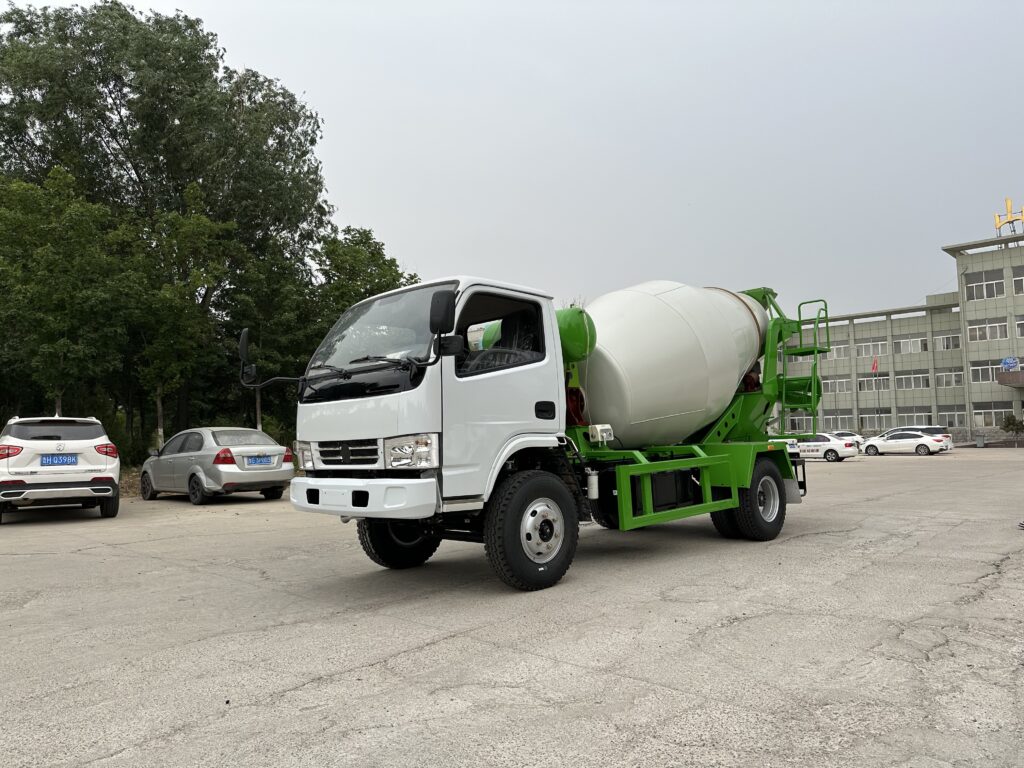
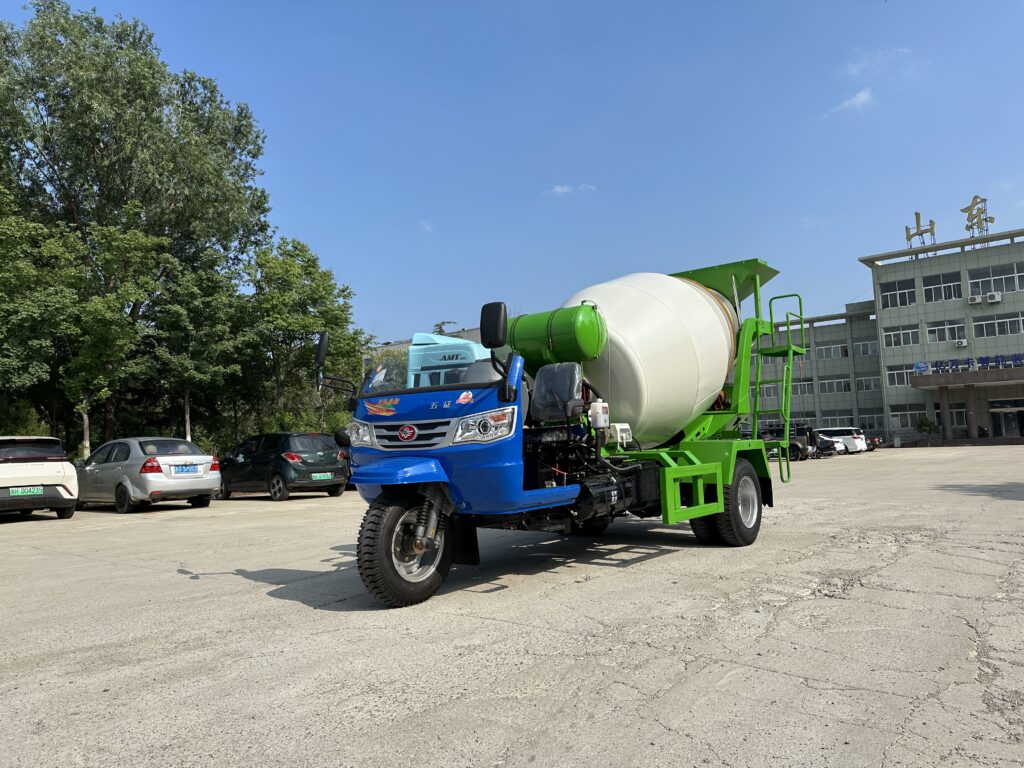
When buying a concrete mixer truck, many buyers focus first on drum capacity, engine power, and price. However, a complete specification sheet contains much more information. Chassis configuration, vehicle weight, overall dimensions, hydraulic components, and discharge design all affect whether a truck is suitable for a particular construction project.
Understanding Concrete Mixer Truck Specifications helps buyers compare different models, evaluate their working capabilities, and avoid choosing a truck that does not match their actual needs.
In this guide, we explain the most important concrete mixer truck parameters, what each specification means, and how to use this information when selecting a vehicle.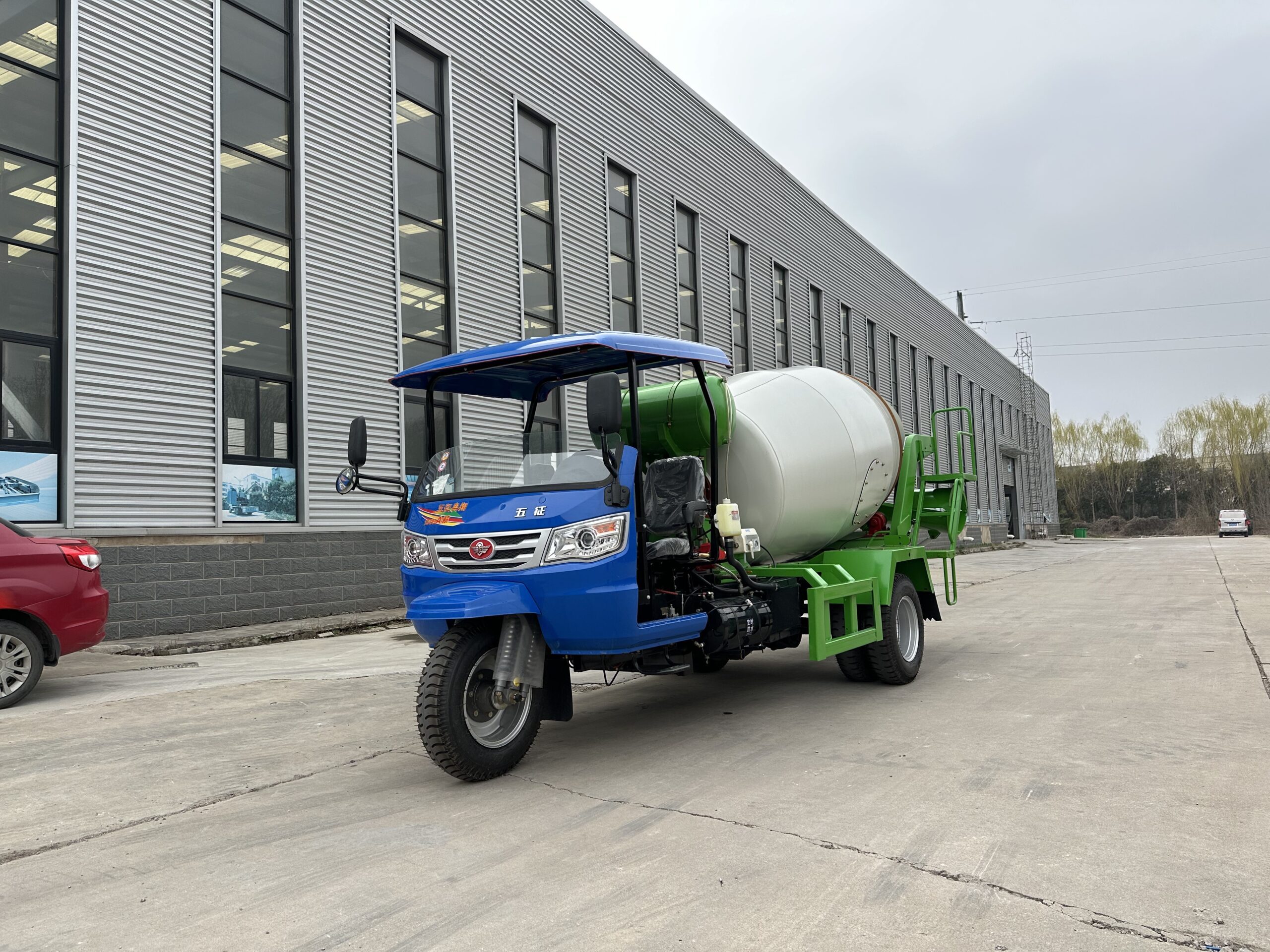
1. Concrete Mixer Truck Capacity: What Does the Number Mean?
Drum capacity is one of the first specifications buyers check. However, the capacity shown in a product description does not always represent the amount of concrete the truck can carry under normal working conditions.
When reviewing concrete mixer truck specifications, it is important to understand three different terms.
Geometric Volume
Geometric volume refers to the total internal volume of the mixing drum. It describes the space inside the drum, but it does not automatically indicate the amount of concrete that can be mixed or transported.
Rated Mixing Capacity
Rated mixing capacity refers to the mixing capacity specified by the manufacturer for a particular model and design. It is generally more useful for understanding the truck’s intended working capacity than geometric volume alone.
Actual Load
The actual load depends on several factors, including concrete density, vehicle payload limits, axle loads, drum design, and local transportation regulations.
For example, a truck advertised with a 3 m³ mixing capacity should not be assumed to carry any load without considering its weight limits and approved configuration.
What should buyers check?
Ask the manufacturer whether the listed capacity refers to geometric volume or rated mixing capacity. Confirm the recommended working load and applicable vehicle weight limits before making a purchase.
2. Engine Power: Does Higher Power Always Mean Better Performance?
Engine power indicates the engine’s output capability. It is commonly measured in kilowatts (kW) or horsepower (hp).
A concrete mixer truck needs sufficient power for both vehicle movement and its intended working requirements. The appropriate engine depends on the truck’s capacity, chassis, transmission, total weight, and operating environment.
When reviewing engine specifications, pay attention to the following details:
- Engine Model: Identifies the specific engine installed in the vehicle.
- Rated Power: Indicates the engine’s rated output, usually expressed in kW or hp.
- Maximum Torque: Expressed in N·m, torque is relevant to the engine’s ability to deliver rotational force.
- Emission Standard: Indicates the applicable emissions requirements and must be checked against the destination market’s regulations.
- Fuel Type: Identifies the type of fuel used by the engine.
Power and torque are related but are not the same. Engine power describes output capability, while torque helps explain how rotational force is delivered at different engine speeds.
For trucks operating on steep roads, muddy ground, or other challenging terrain, buyers should also consider the transmission, drive configuration, vehicle weight, and road conditions.
Buying tip: Do not select a concrete mixer truck based on engine power alone. Compare the engine model, torque, transmission, chassis, and intended working conditions together.
3. Chassis Specifications: Understanding the Truck’s Foundation
The chassis provides the foundation for the complete vehicle. Its specifications affect load capacity, vehicle layout, road performance, and the compatibility of the mixer body.
Chassis Brand and Model
The chassis brand and model identify the base vehicle used in the truck configuration.
Two concrete mixer trucks with similar drum capacities may have different chassis models, wheelbases, engine configurations, and weight ratings. These differences can affect the vehicle’s suitability and purchase cost.
Drive Configuration
Drive configuration describes how the vehicle’s wheels and axles are arranged and which wheels receive power.
For example:
- 4×2: Typically describes a two-axle vehicle with one driven axle.
- 4×4: Typically describes a two-axle vehicle with both axles driven.
- 6×4: Typically describes a three-axle vehicle with two driven axles.
The exact arrangement should always be confirmed against the manufacturer’s technical documentation.
For construction sites with muddy roads, steep gradients, or difficult access, buyers should evaluate the drive configuration together with ground clearance, tires, chassis design, and actual site conditions.
Wheelbase
Wheelbase is generally the distance between the centers of the front and rearmost axles, as defined in the vehicle’s technical documentation.
It affects vehicle layout, turning characteristics, and the space available for installing the mixer body.
For narrow construction roads or sites with limited turning space, wheelbase should be considered alongside overall length and width.
Buying tip: Confirm the chassis model, drive configuration, wheelbase, axle load ratings, and compatibility between the chassis and mixer body before ordering.
4. Vehicle Weight and Payload: Capacity Is Not the Same as Legal Load
Vehicle weight is another important part of concrete mixer truck specifications. Buyers should understand the difference between the truck’s own weight, its permitted total weight, and the load it can carry.
Curb Weight
Curb weight describes the vehicle’s own weight under a specified condition. The exact definition may vary depending on which fluids, tools, accessories, or other items are included.
For a concrete mixer truck, buyers should confirm whether the quoted weight refers to the bare chassis or the complete vehicle with the mixer body, hydraulic system, water tank, and other equipment installed.
These figures should not be treated as interchangeable.
Gross Vehicle Weight
Gross vehicle weight generally refers to the permitted total weight of the vehicle under specified conditions. The applicable definition and limit should be confirmed using the vehicle documentation and local regulations.
Payload
Payload refers to the load a vehicle can carry within its applicable weight limits.
The amount of concrete a truck can transport depends on the vehicle’s own weight, permitted gross weight, axle load limits, and the weight of the concrete.
A large drum does not automatically mean the vehicle can legally transport a full drum of concrete under every operating condition.
Buying tip: Request the completed vehicle’s weight information and applicable weight ratings. Confirm that the configuration complies with the destination market’s axle load and road regulations.
 5. Vehicle Dimensions: Length, Width, and Height
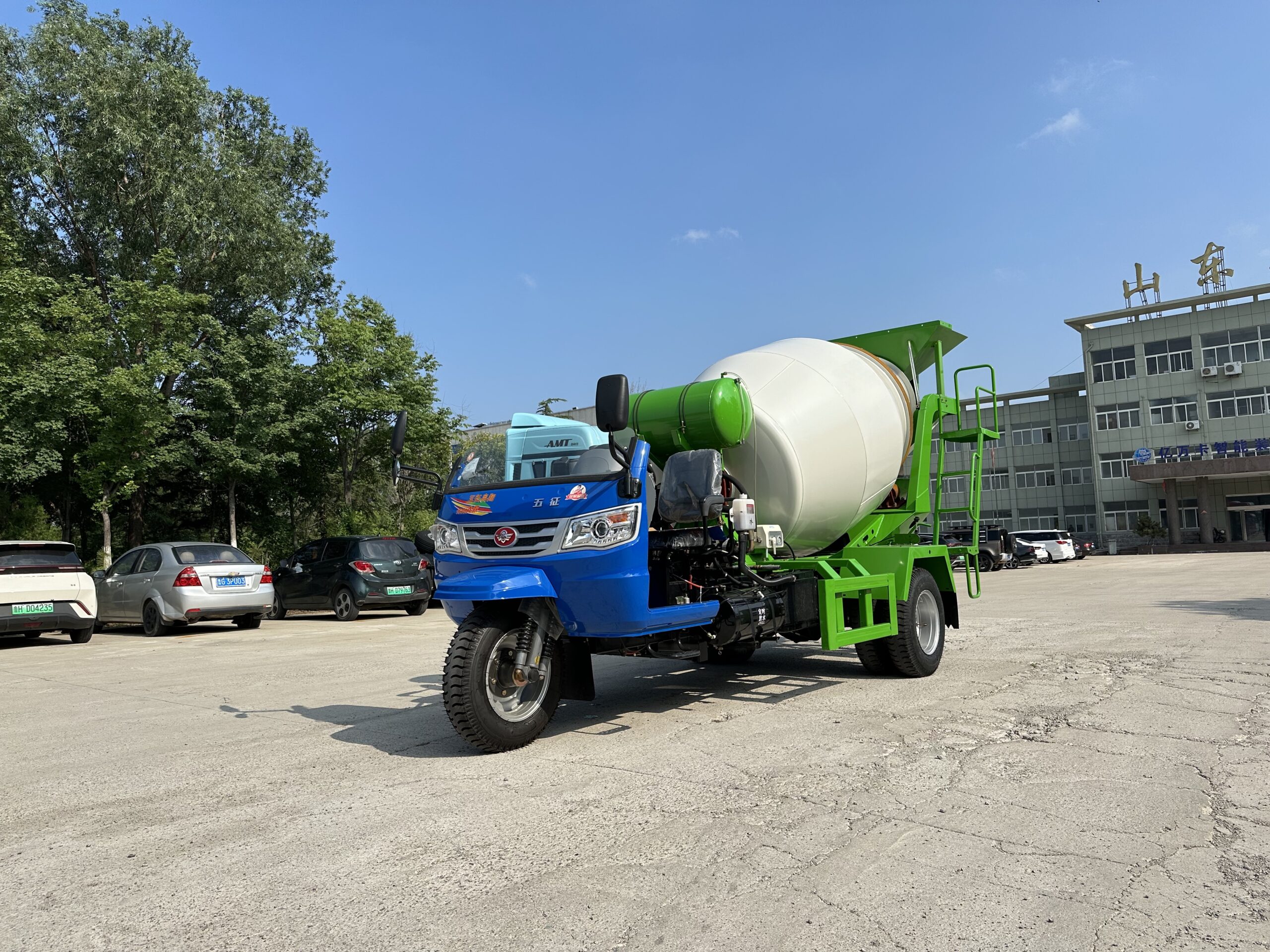
Vehicle dimensions determine whether a concrete mixer truck can access a construction site and travel along the planned route.
Common dimensional specifications include:
- Overall Length: The total length of the vehicle.
- Overall Width: The overall vehicle width as defined by the manufacturer.
- Overall Height: The vehicle’s overall height in the specified configuration.
- Wheelbase: The distance between the relevant axle centers.
- Ground Clearance: The clearance between the vehicle’s lowest relevant point and the ground, measured according to the manufacturer’s method.
These measurements are particularly important for rural construction, narrow roads, low-clearance entrances, and sites with restricted turning space.
For low-clearance projects, confirm the overall height and any relevant protruding components. For narrow access roads, check the vehicle’s width, length, and turning requirements. For uneven terrain, consider ground clearance and chassis configuration.
Dimensions may change with different vehicle configurations. Buyers ordering a customized truck should obtain the final dimensions in the approved technical specification or drawing.
Buying tip: If your project has strict height, width, or length restrictions, provide the exact limits to the manufacturer before ordering. Do not rely on product photographs alone.
6. Hydraulic System Specifications: What Should You Check?
The hydraulic system is commonly used to drive the mixing drum or related working mechanisms. Its design and component arrangement depend on the truck model.
When reviewing hydraulic specifications, focus on the following components.
Hydraulic Pump
The hydraulic pump converts mechanical energy into hydraulic energy within the system. Its model and performance should be evaluated in relation to the complete hydraulic circuit.
Hydraulic Motor
The hydraulic motor converts hydraulic energy into mechanical rotation. In a mixer truck, it may form part of the mixing drum drive system.
System Pressure and Flow Rate
Pressure and flow rate are important hydraulic operating parameters. However, neither should be evaluated in isolation. Pump and motor compatibility, piping, control methods, and the overall system design also matter.
Reduction Gearbox
Some drum drive systems use a reduction gearbox to adjust rotational speed and torque to suit the drum’s operating requirements.
Hydraulic configurations vary between models, so buyers should not assume that all concrete mixer trucks use identical components or operating specifications.
Buying tip: Ask the manufacturer to identify the hydraulic pump, motor, reduction gearbox, and other relevant components. Also confirm maintenance requirements, spare parts availability, and after-sales support.
7. Drum Speed and Discharge System: Understanding Operating Parameters
Drum speed is usually measured in revolutions per minute (rpm). Different operating stages may require different rotational speeds, including loading, mixing during transportation, and discharge.
When reading a specification sheet, confirm which operating stage the stated drum speed refers to. One speed figure should not automatically be interpreted as the fixed speed for every operating condition.
The discharge system is also important, particularly for projects with limited working space.
Relevant specifications may include:
- Discharge opening and related components.
- Chute design, length, and adjustment options.
- Drum rotation and discharge control.
- Operating controls and maintenance requirements.
For sites where the truck must discharge concrete in a confined area, the chute layout and adjustment range may be just as important as the drum capacity.
Drum speed, internal blade design, and discharge arrangement should be evaluated as parts of the complete mixing system.
Buying tip: Confirm the operating speed range, discharge configuration, and control method with the manufacturer. Make sure the arrangement suits the actual concrete placement conditions.
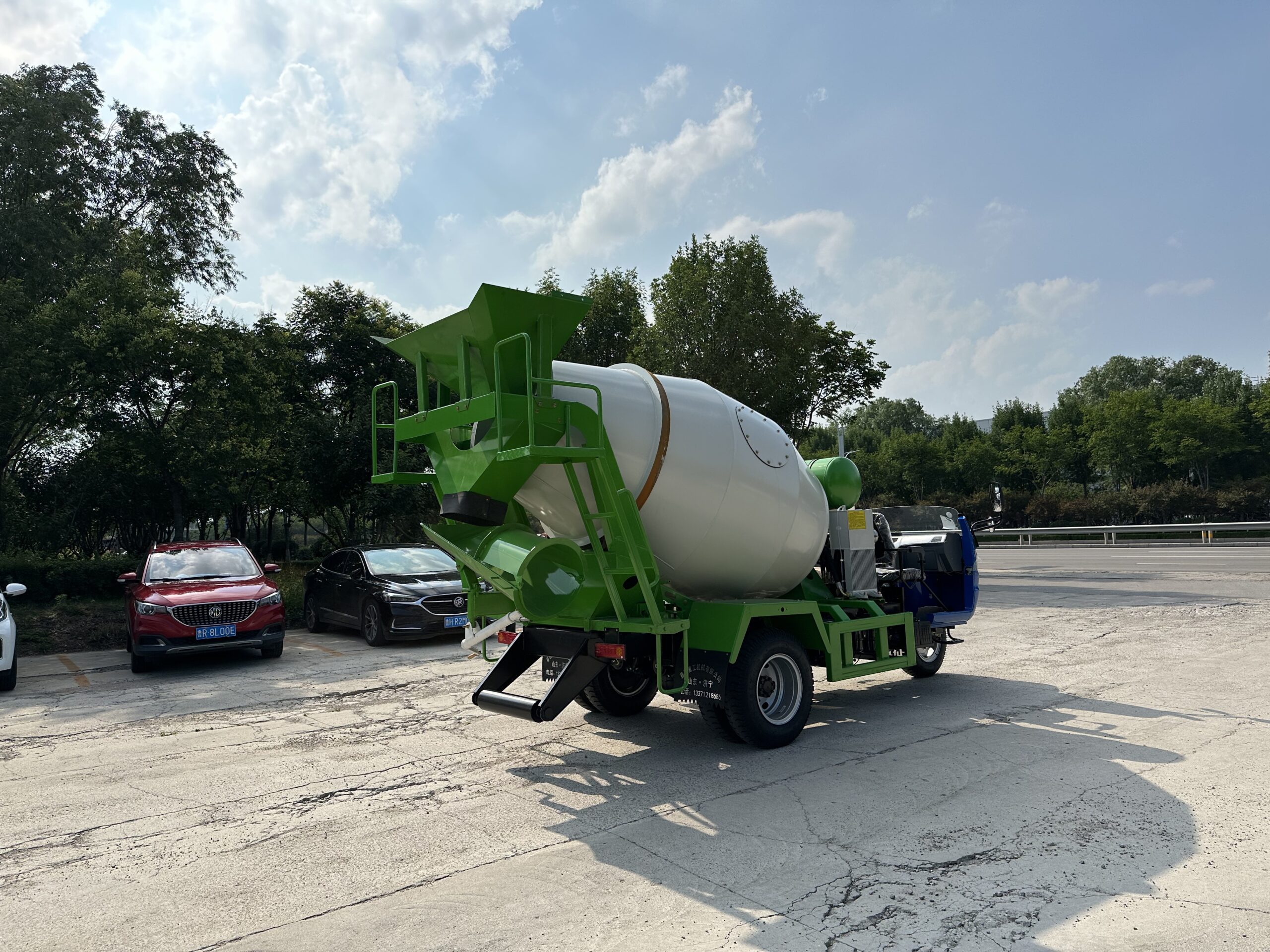 8. How to Compare Two Concrete Mixer Truck Specification Sheets
When comparing quotations from different suppliers, place the key specifications in one table. This makes differences easier to identify and helps prevent misleading price comparisons.
| Specification | What to Check | Why It Matters |
|---|---|---|
| Drum capacity | Geometric volume and rated mixing capacity | Helps clarify the intended working capacity |
| Engine | Model, power, torque, and emissions | Helps evaluate power configuration and market compliance |
| Chassis | Brand, model, drive configuration, and wheelbase | Helps assess vehicle layout and road suitability |
| Weight | Curb weight, gross weight rating, and axle loads | Helps verify load limits |
| Dimensions | Length, width, height, and ground clearance | Helps determine site access |
| Hydraulic system | Pump, motor, and related components | Helps evaluate the drum drive configuration |
| Discharge system | Chute design and operating method | Helps determine whether unloading suits the site |
| After-sales support | Spare parts, maintenance guidance, and warranty terms | Helps assess long-term support |
Make sure the specifications use consistent definitions before comparing models.
For example, one supplier may quote the weight of the bare chassis while another quotes the completed truck. These figures cannot be compared directly without accounting for the difference.
The same principle applies to drum capacity, engine power ratings, and optional equipment. Ask each supplier to clarify the scope of the quoted configuration.
9. Questions to Ask Before Buying a Concrete Mixer Truck
Understanding the specification sheet is only the first step. Buyers should also confirm whether the proposed configuration matches the intended application.
Before requesting a quotation, prepare the following information:
- Application: Explain whether the truck will be used for rural housing, road construction, general building work, or difficult terrain.
- Required Capacity: State the desired rated mixing capacity and ask about applicable loading limits.
- Destination Market: Identify the country or region where the truck will operate so emissions and road requirements can be checked.
- Site Conditions: Describe road width, height restrictions, gradients, turning space, and ground conditions.
- Vehicle Configuration: Specify any chassis, engine, drive configuration, or other requirements.
- Customization: Explain whether you need special dimensions, right-hand drive, or other modifications.
- Purchase Scope: Clarify whether you need a complete truck or a concrete mixer body to install on an existing chassis.
If you already have a specification sheet, send it to the manufacturer and ask for clarification of each important parameter. This helps you understand which configurations are suitable and which requirements need further confirmation.
10. Discuss Your Concrete Mixer Truck Specifications with Jialian Heavy Industry
Different construction projects require different concrete mixer truck configurations. Drum capacity, chassis, engine, dimensions, and hydraulic system should be considered together rather than selected independently.
Jialian Heavy Industry works with customers to discuss concrete mixer truck models and configuration requirements based on their projects. Buyers looking for small concrete mixer trucks, vehicles for challenging terrain, special dimensions, or mixer bodies should prepare their requirements before confirming a configuration.
If you are comparing concrete mixer truck specifications, share your application, required capacity, vehicle dimension limits, and destination country or region to discuss a suitable model and request a quotation.
Conclusion
Understanding concrete mixer truck specifications is not simply about memorizing technical terms. It is about knowing what each number means and how it affects the truck’s suitability for your project.
Drum capacity must be considered alongside actual loading conditions. Engine power should be evaluated with torque, chassis configuration, and operating environment. Vehicle dimensions must match site access requirements, while the hydraulic and discharge systems must suit the intended working conditions.
Before purchasing, request a complete technical specification sheet, confirm the meaning of each key parameter, and check applicable local requirements. Comparing trucks on a consistent basis will help you make a more informed purchasing decision and select a concrete mixer truck that meets your project needs.