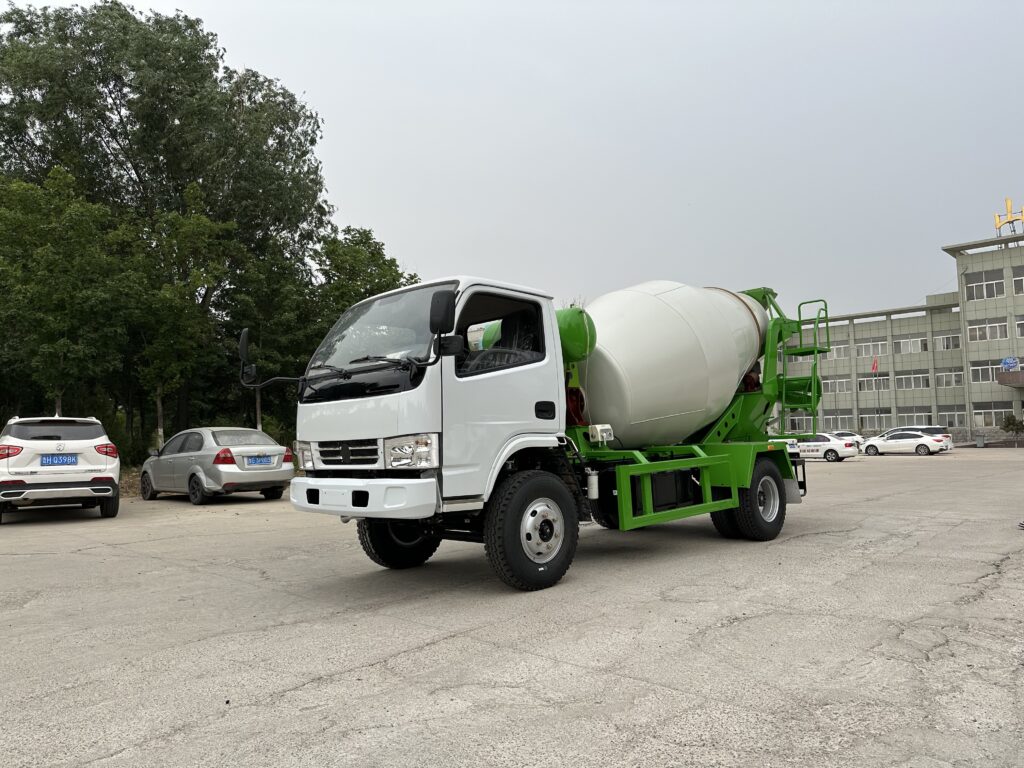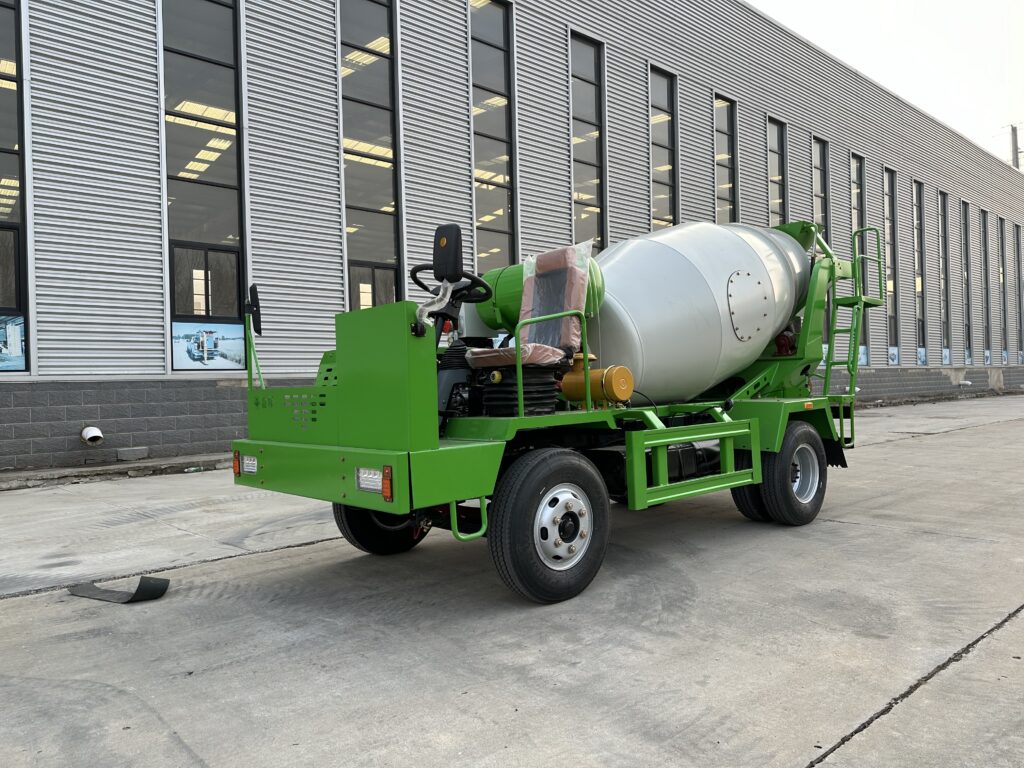
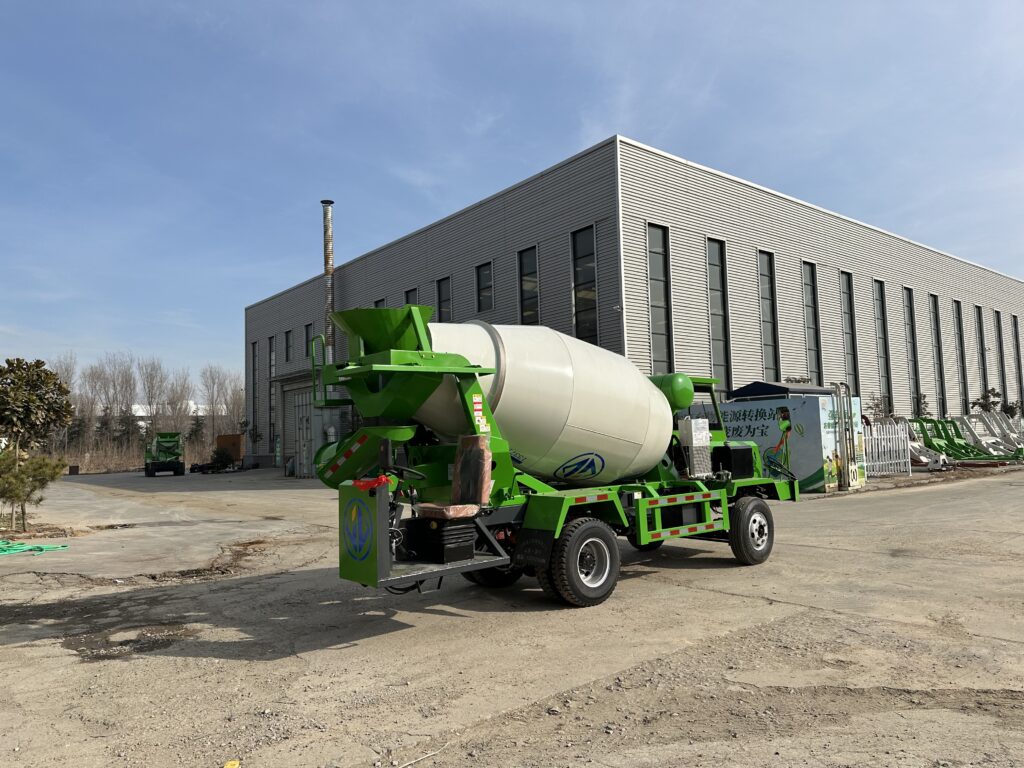
Choosing the right Bidirectional Concrete Mixer Truck Specifications is important when a construction project involves narrow roads, tunnels, underground mines, or other areas with limited turning space. In these environments, a conventional truck may have difficulty turning around, especially when the access route is narrow and the working area is confined.
A bidirectional concrete mixer truck is designed to allow driving in both directions through a specialized cab and control arrangement. Depending on the model, it may use a reversible driving position, a rotating operator seat, or another two-way driving configuration. This design can help operators move forward and backward along restricted routes without always needing to turn the entire vehicle around.
However, dual-direction driving is only one part of the selection process. Buyers must also consider the chassis, overall dimensions, steering system, mixing capacity, engine, hydraulic system, discharge arrangement, and safety requirements.
This guide explains how to evaluate bidirectional concrete mixer truck specifications and choose a suitable configuration for narrow construction sites, tunnels, and mining projects
1. What Are the Main Bidirectional Concrete Mixer Truck Specifications?
The specifications of a bidirectional concrete mixer truck describe how the vehicle is configured for driving, mixing, transporting, and discharging concrete.
Unlike a conventional mixer truck with one primary driving position, a bidirectional model is designed to support vehicle operation in both directions. The exact design depends on the manufacturer and model.
Before choosing a vehicle, compare the following specifications.
| Specification | What to Check |
|---|---|
| Driving arrangement | How the vehicle is operated in both directions |
| Cab configuration | Reversible seat, dual driving positions, or other design |
| Steering system | Steering arrangement and maneuvering requirements |
| Overall dimensions | Vehicle length, width, and height |
| Chassis | Chassis model, layout, and load compatibility |
| Mixing capacity | Rated mixing capacity and usable concrete output |
| Engine and transmission | Powertrain specifications and maintenance requirements |
| Hydraulic system | Components and functions supported by the system |
| Discharge arrangement | How concrete is delivered at the placement point |
| Safety equipment | Braking, visibility, lighting, and operator protection |
These parameters should be considered together. A truck may have a suitable bidirectional driving system but still be too wide for a tunnel entrance or too long for a confined working area.
For a broader overview of vehicle specifications, see our guide to Concrete Mixer Truck Specifications.
2. How Does Front-and-Rear Bidirectional Driving Work?
The defining feature of a bidirectional concrete mixer truck is that it can be driven in either direction using its designed driving arrangement.
On a conventional truck, the operator usually faces one primary direction of travel. If the vehicle reaches the end of a narrow tunnel or restricted road, turning around may require a larger space than the site provides.
A bidirectional design addresses this limitation by allowing the operator to control the vehicle from the appropriate driving position for the intended direction of travel.
Depending on the model, the design may include a reversible operator seat, a rotating driving position, or separate driving controls at opposite ends of the vehicle. These configurations are not interchangeable, so buyers should confirm the actual design before ordering.
Reversible Driving Position
Some bidirectional mixer trucks use a driving seat or operating position that can be turned to face the opposite direction.
This can help the operator maintain a forward-facing driving position when changing the direction of travel. The controls, steering arrangement, visibility, and procedure for changing positions depend on the specific model.
When evaluating this type of vehicle, ask the manufacturer to provide photographs, operating videos, or technical drawings showing both driving positions.
Dual Driving Positions
Other models may use a different two-way cab or control arrangement. Buyers should confirm whether the vehicle has two complete driving positions, a reversible seat, or another mechanism designed for bidirectional operation.
Do not assume that every model described as a two-way driving mixer truck has the same cab layout.
Why It Matters on the Jobsite
The practical advantage is that the vehicle may be able to enter a restricted route, complete its task, and travel back toward the exit without requiring a full turnaround at the end of the route.
This can be useful in tunnels, underground mine roadways, and confined construction sites where space for turning is limited.
However, the vehicle still needs sufficient clearance, a suitable steering system, safe visibility, and an operating route that complies with site requirements.
Bidirectional vehicle driving should also be distinguished from the forward and reverse rotation of the mixing drum. Drum rotation is a mixing and discharge function; it does not by itself mean the truck can be driven from both ends.
3. Why Choose a Bidirectional Concrete Mixer Truck for Narrow Sites?
Narrow construction sites often have restricted entrances, limited turning areas, temporary barriers, and internal roads shared with other equipment.
In these conditions, a bidirectional driving arrangement can reduce the need for a full turn-around maneuver when the vehicle must travel back along the same route.
Narrow Access Roads
Before purchasing, measure the narrowest section of the access road and the available space around corners or obstacles.
Check the vehicle’s overall width, length, cab layout, and steering requirements. Also consider mirrors, accessories, and any other components that affect the actual clearance required.
A bidirectional truck is not automatically narrower than a conventional mixer truck. Its suitability depends on the dimensions and configuration of the complete vehicle.
Limited Turning Space
Some sites have enough room for a vehicle to travel through but not enough room for it to turn around.
A two-way driving arrangement may help the operator travel in the opposite direction without rotating the entire vehicle. This is particularly useful when the route is relatively straight and there is no suitable turning area at the far end.
For a site with tight corners, however, turning requirements still need to be evaluated. Bidirectional driving does not eliminate the need for adequate maneuvering space.
Repeated Travel Between Work Areas
Projects that require repeated trips between a loading area and a concrete placement point may benefit from a vehicle designed for travel in both directions.
When planning the configuration, consider the route length, traffic flow, loading and discharge locations, and the number of vehicles operating in the same area.
The goal is to select a truck that suits the actual workflow rather than relying on the bidirectional feature alone.
4. Bidirectional Concrete Mixer Truck Specifications for Tunnel Construction
Tunnel construction is a key application to consider when evaluating a bidirectional concrete mixer truck.
Tunnel routes may have low overhead clearance, restricted roadway width, limited passing space, and few locations where a vehicle can turn around. These conditions make the truck’s dimensions and driving arrangement especially important.
Overall Height and Tunnel Clearance
Overall vehicle height must be compatible with the lowest overhead clearance along the intended route.
Before requesting a quotation, measure the entrance and the entire travel path, including sections with beams, pipes, cables, ventilation equipment, or other overhead structures.
Ask the manufacturer to confirm the overall height of the proposed configuration. Do not rely only on the height at the tunnel entrance, because the lowest point along the route determines the effective clearance restriction.
Vehicle Width and Roadway Clearance
Tunnel roadways may be narrow because of the surrounding walls, support structures, installed equipment, and other traffic.
Compare the truck’s maximum outside width with the narrowest usable roadway section. Consider the clearance needed for safe driving and any site-specific traffic rules.
If the tunnel has designated passing areas or one-way traffic controls, provide this information to the manufacturer when discussing the vehicle configuration.
Driving Position and Visibility
A bidirectional driving system can help an operator travel in the opposite direction without a conventional turnaround. However, the actual benefit depends on the cab arrangement and the visibility available at each driving position.
Ask the manufacturer to explain how the driving position changes, which controls are available, and what visibility aids are included.
Lighting, mirrors, cameras, warning devices, and braking systems should be evaluated according to the tunnel’s operating requirements.
Discharge Requirements
The vehicle must also be able to position itself appropriately at the concrete placement point.
Consider the available working space, discharge direction, distance to the pouring location, and any obstacles near the vehicle. The discharge arrangement should be evaluated together with the overall dimensions and driving configuration.
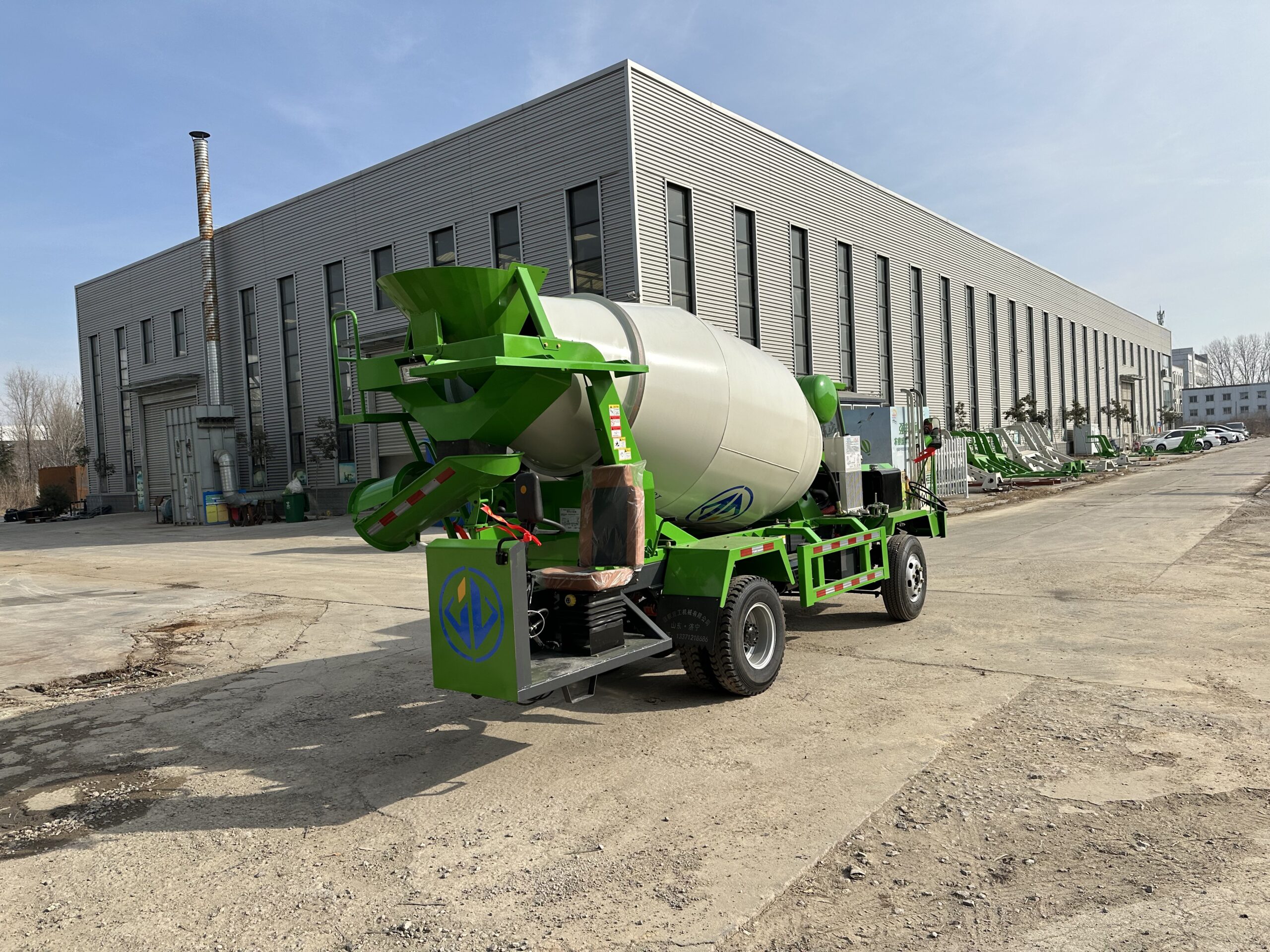 5. Bidirectional Concrete Mixer Trucks for Underground Mines
Underground mining projects may involve narrow roadways, low ceilings, tight bends, and repeated travel between work areas.
A suitable bidirectional mixer truck can help address the difficulty of turning around in restricted passages. However, mining applications require more than a suitable driving arrangement.
Check Roadway Dimensions
Before comparing vehicles, identify the minimum usable width and height of the mine roadway. Also consider tight bends, junctions, loading areas, and concrete placement locations.
Provide these measurements to the manufacturer so the proposed vehicle can be evaluated against the actual site layout.
A truck that fits a straight section may still be unsuitable for a tight bend or a restricted loading area.
Confirm Chassis and Operating Weight
The chassis must support the selected mixer body and intended load. Buyers should check the vehicle’s operating weight, permitted load, dimensions, and compatibility with the mine’s roadway and ground conditions.
The appropriate configuration depends on the project, so do not assume that a model suitable for one mine is automatically suitable for another.
Review Underground Safety Requirements
Underground mining operations may have specific requirements for braking, lighting, fire protection, operator protection, emissions, and ventilation compatibility.
These requirements vary by location and site. Confirm which standards apply to the project and obtain the necessary documentation from the supplier before placing an order.
The bidirectional driving arrangement should be treated as one part of the complete vehicle specification, not as a substitute for underground safety requirements.
6. How to Choose the Right Mixing Capacity
Mixing capacity should be selected according to the project’s concrete demand and operating cycle.
A larger drum may carry more concrete per batch, but it can also affect the vehicle’s weight, dimensions, chassis requirements, and ability to access restricted areas.
When comparing bidirectional concrete mixer truck specifications, consider the following factors.
Concrete demand: Estimate the amount of concrete required for each placement operation or working shift.
Travel distance: Consider the distance between the loading area and the pouring point.
Access restrictions: Confirm that the selected capacity can be accommodated within the required vehicle dimensions.
Operating weight: Check that the chassis and complete vehicle are suitable for the intended load.
Discharge requirements: Make sure the vehicle can position itself appropriately at the placement point.
Ask the manufacturer to distinguish the drum’s geometric volume, rated mixing capacity, and usable concrete output. These figures are different and should not be treated as equivalent.
For more information about choosing capacity, see our guide to Concrete Mixer Truck Capacity.
7. Chassis, Steering, Engine, and Hydraulic System
The chassis and supporting systems must be compatible with the bidirectional driving arrangement and the mixer body.
Chassis and Steering System
The chassis affects the vehicle layout, overall dimensions, load distribution, and compatibility with the mixing system.
For confined construction areas, pay particular attention to the steering configuration, wheelbase or chassis layout, turning requirements, and total vehicle width.
Bidirectional driving can reduce the need for some turnaround maneuvers, but it does not eliminate the need to assess corners, obstacles, and available clearance.
Engine and Transmission
The engine and transmission should suit the vehicle’s operating weight, expected travel conditions, and mixing requirements.
Ask for the actual engine model, rated power, transmission configuration, and maintenance requirements. For export orders, also consider fuel availability and service support in the destination market.
A higher power rating alone does not establish that a truck is the best choice for a particular tunnel or mine.
Hydraulic System
Depending on the model, the hydraulic system may support drum rotation, steering, or other operating functions.
Request information about the installed hydraulic components and confirm that they are compatible with the complete vehicle configuration.
If the project involves frequent loading, mixing, travel, and discharge cycles, explain the expected operation to the manufacturer so the system can be evaluated against the intended use.
 8. Important Dimensions to Confirm Before Ordering
For narrow construction sites, tunnels, and underground mines, dimensions can be as important as the driving system.
| Specification | Why It Matters |
|---|---|
| Overall length | Determines whether the vehicle fits the route and work area |
| Overall width | Affects entrance clearance and roadway access |
| Overall height | Determines compatibility with overhead restrictions |
| Turning requirements | Helps evaluate tight corners and maneuvering areas |
| Cab arrangement | Confirms how the operator drives in both directions |
| Mixing capacity | Must match the required concrete output |
| Operating weight | Needs to suit the intended load and site conditions |
| Discharge configuration | Determines whether concrete can reach the required placement point |
Ask for a dimensioned drawing of the proposed vehicle. Comparing the drawing with tunnel plans, mine roadway measurements, or construction site dimensions can help identify potential clearance problems before production.
If any dimension is restricted, confirm the final configured measurement with the manufacturer before ordering.
9. How to Compare Bidirectional Concrete Mixer Truck Specifications
A practical comparison should focus on the conditions that matter most to the project.
| Application | Specifications to Prioritize |
|---|---|
| Narrow construction site | Overall width, length, cab arrangement, steering |
| Tunnel construction | Height, width, visibility, driving controls, braking |
| Underground mine | Roadway clearance, operating weight, safety requirements |
| Limited turning space | Bidirectional driving design and maneuvering requirements |
| Repeated travel along one route | Driving position, operator controls, route layout |
| Higher concrete demand | Mixing capacity, engine, hydraulic system, operating cycle |
| Custom project | Chassis, dimensions, cab configuration, discharge arrangement |
Compare specifications for the same model and configuration. Do not assume that the dimensions, capacity, or safety equipment listed for one version will also apply to another.
If a supplier provides only general descriptions, request a detailed technical sheet and drawings showing the driving positions, dimensions, and mixer body layout.
10. Questions to Ask a Bidirectional Concrete Mixer Truck Manufacturer
Before placing an order, confirm the details that affect vehicle suitability.
- Does the truck have a reversible driving position, two driving positions, or another bidirectional arrangement?
- How does the operator change between driving directions?
- What are the overall length, width, and height?
- What are the rated mixing capacity and usable concrete output?
- What are the chassis, steering, engine, and transmission specifications?
- What braking, lighting, visibility, and operator protection systems are included?
- What are the vehicle’s turning requirements and operating limitations?
- Is the proposed configuration suitable for the actual tunnel or mine dimensions?
- Which dimensions and mixer body features can be customized?
- What maintenance support, spare parts, and technical documentation are available?
For tunnel and mining applications, provide the site’s actual measurements and applicable safety requirements before requesting a final quotation.
11. Request a Quote for a Bidirectional Concrete Mixer Truck
To help the manufacturer recommend a suitable configuration, provide the following information:
- Project application: Narrow construction site, tunnel construction, underground mining, or another project.
- Access dimensions: Maximum vehicle width and height, available length, and turning space.
- Driving requirements: Whether the vehicle needs to travel in both directions without turning around.
- Required capacity: Preferred mixing capacity or estimated concrete demand.
- Chassis preference: Preferred chassis, engine, or steering configuration, if applicable.
- Discharge requirements: The expected pouring location and available working space.
- Destination country: The country where the vehicle will be used.
- Customization needs: Special dimensions or project-specific equipment requirements.
If you do not have a complete specification list, start by explaining the construction environment and sharing the dimensions of the access route. Site photos, drawings, and measurements can help the manufacturer evaluate the available options.
The final quotation should clearly identify the agreed vehicle specifications, included components, customization scope, and delivery terms.
Conclusion
Choosing the right Bidirectional Concrete Mixer Truck Specifications means matching the driving arrangement, chassis, dimensions, mixing capacity, and safety systems to the actual construction environment.
For narrow construction sites, dual-direction driving can help reduce the need for a full turnaround. For tunnel and underground mining projects, overall height, width, visibility, braking, and site-specific requirements are equally important.
Before purchasing, confirm the complete technical configuration and actual vehicle dimensions with the manufacturer.
Looking for a bidirectional concrete mixer truck for your project? Contact us with your required capacity, site dimensions, working conditions, and destination country. Our team can help you discuss available configurations and request a quotation based on your requirements.