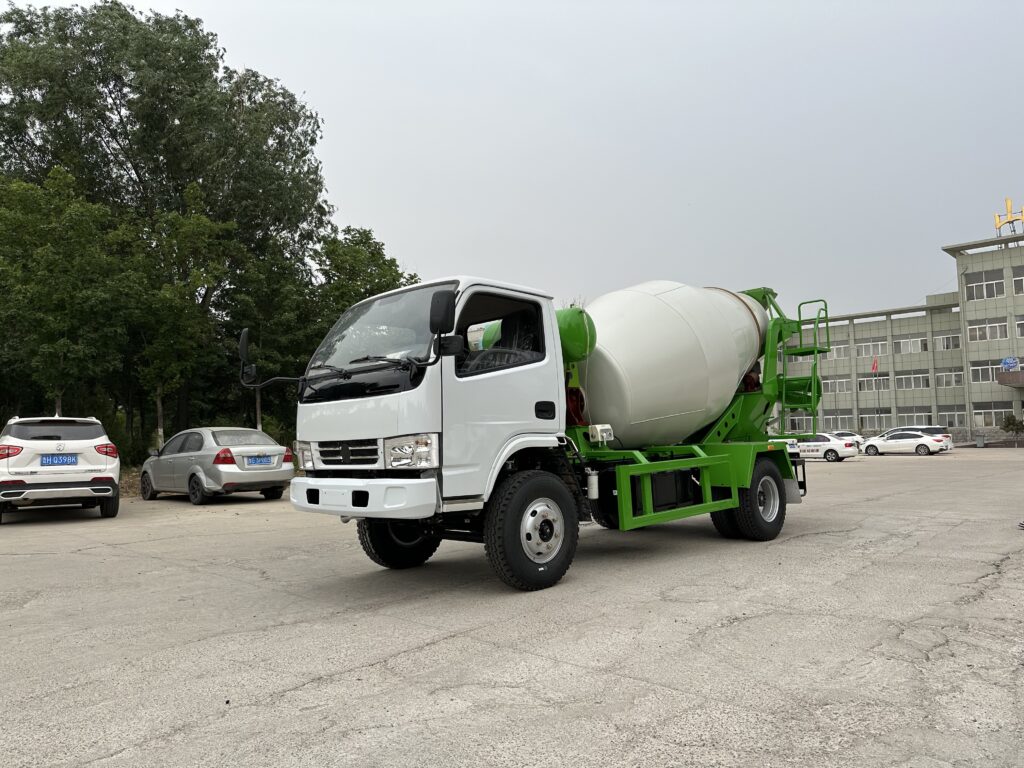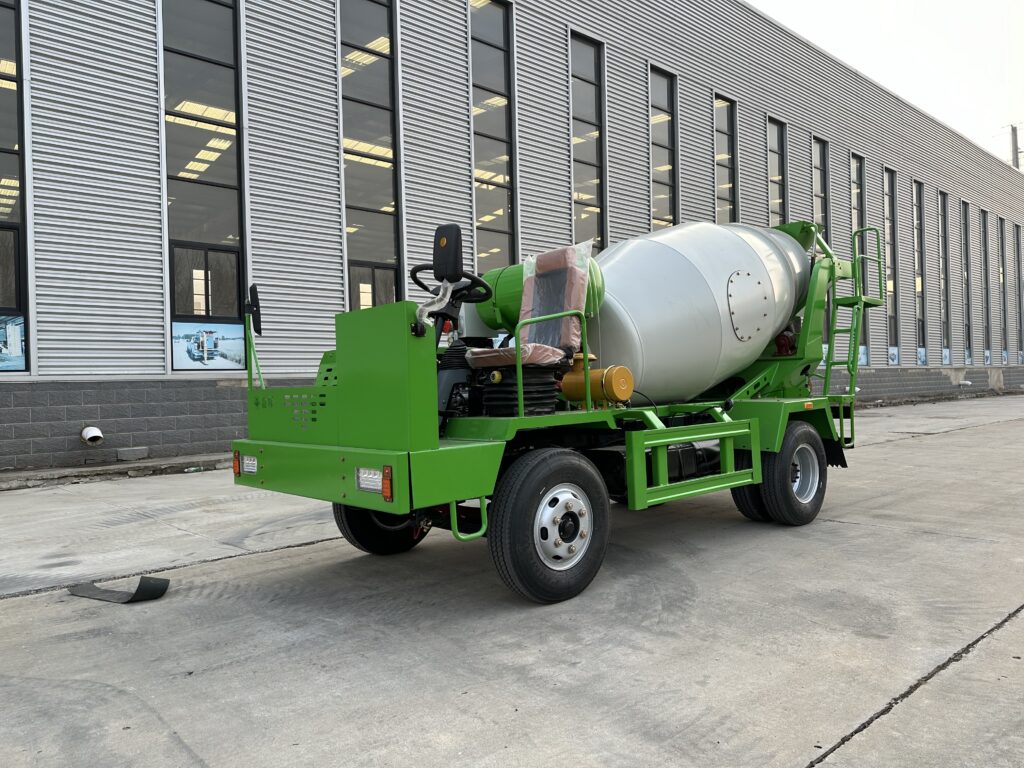

Choosing the right Crawler Concrete Mixer Truck Specifications starts with understanding your construction site. If your project involves muddy ground, uneven surfaces, narrow access routes, or areas where wheeled vehicles have difficulty moving, the crawler chassis deserves particular attention.
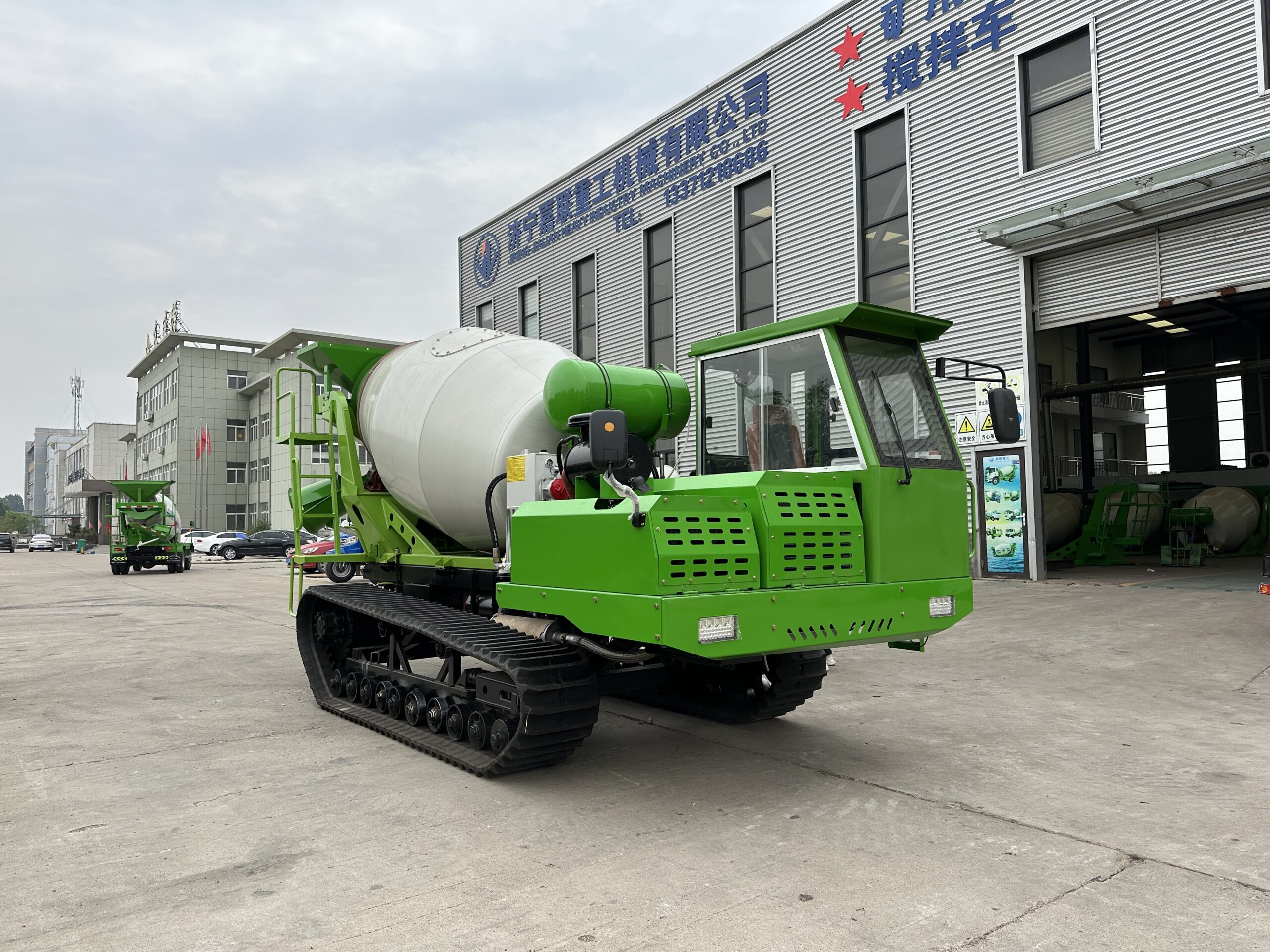
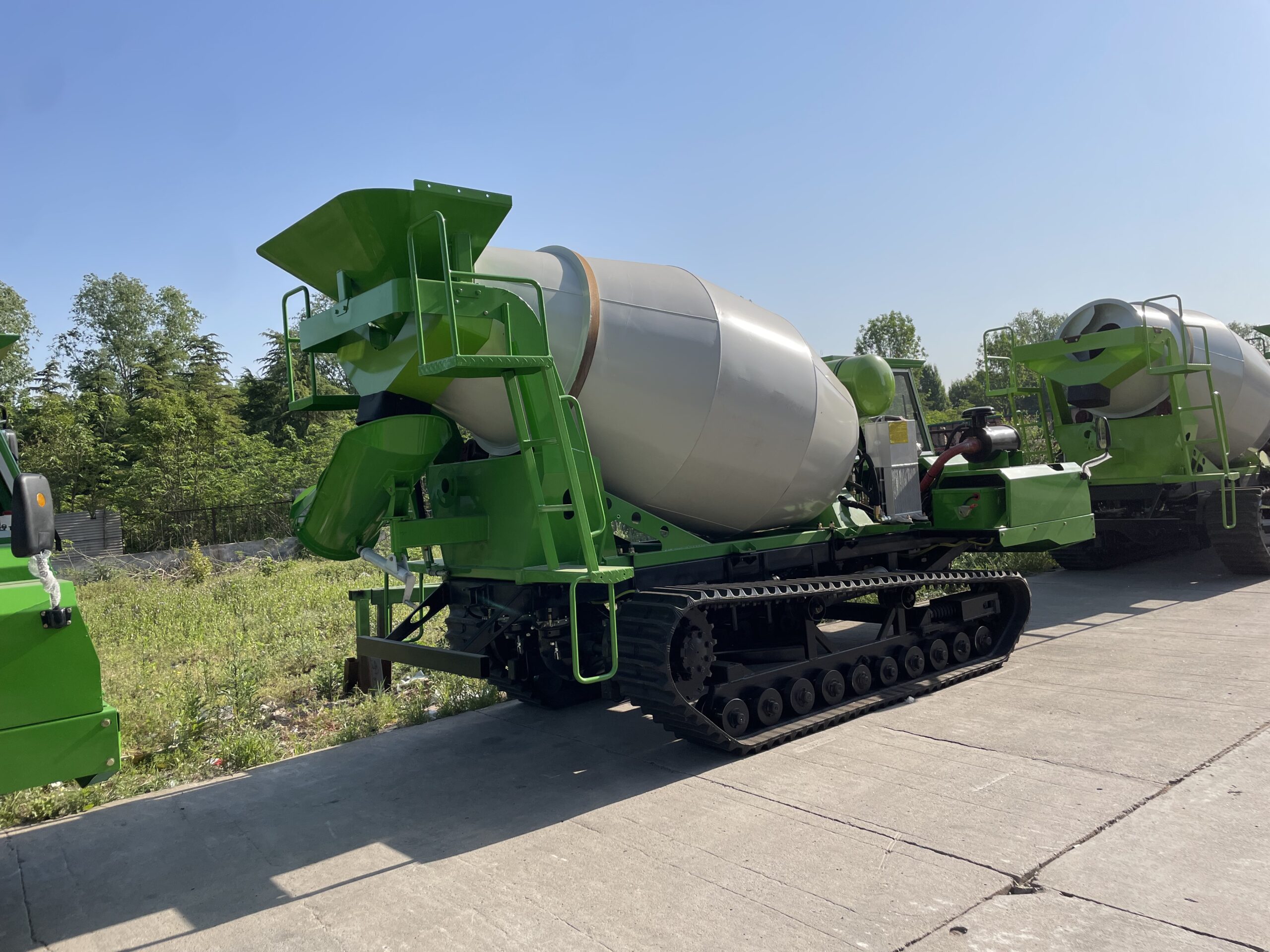
A crawler concrete mixer truck combines a tracked traveling system with a concrete mixing and delivery structure. Depending on the model, it may be designed for small construction projects, rural roads, foundation work, or more demanding terrain.
However, not every crawler mixer truck has the same capabilities. Track width, ground contact length, ground clearance, overall dimensions, mixing capacity, engine, and hydraulic system all affect whether a machine is suitable for a specific jobsite.
This guide explains the key specifications to check, how crawler tracks affect mobility, and how to select a configuration for your working environment.
 1. Crawler Concrete Mixer Truck Specifications: Key Parameters
Before comparing models, identify the specifications that directly affect your construction work. A machine with a suitable mixing capacity may still be unsuitable if it cannot pass through the site entrance or operate safely on the ground conditions.
The following table summarizes the main parameters to review.
| Specification | Why It Matters |
|---|---|
| Track type | Influences traction, ground contact, and suitability for different surfaces |
| Track width | Affects the contact area and the machine’s overall width |
| Track ground contact length | Helps evaluate how the track contacts the ground |
| Ground clearance | Determines the space available beneath the chassis |
| Overall dimensions | Determines whether the machine can access the worksite |
| Mixing capacity | Must match concrete demand and the intended operation |
| Engine and drive system | Need to support travel and mixing requirements |
| Hydraulic system | Supports tracked travel and other hydraulic functions, depending on configuration |
| Operating weight and payload | Affect ground loading, transport, and chassis suitability |
| Discharge arrangement | Determines how concrete can be delivered at the pouring point |
Always confirm whether a published capacity refers to drum volume, nominal mixing capacity, or actual usable output. These figures are not necessarily interchangeable.
For a detailed comparison of conventional vehicle parameters, see our guide to Concrete Mixer Truck Specifications.
2. How the Crawler Chassis Affects Terrain Adaptability
The crawler chassis is one of the most important differences between a tracked mixer and a conventional wheeled mixer truck.
Wheeled vehicles depend on tire contact with the ground. A crawler chassis uses tracks to distribute the machine’s weight over a longer contact area. Depending on its design and operating weight, this can help the machine move across soft or uneven ground with better traction and less risk of becoming stuck.
However, tracks do not make a machine suitable for every terrain. Ground conditions, slope, payload, track design, turning space, and operating technique must all be considered.
Track Width
Track width is the width of an individual track. It affects the contact area and contributes to the overall width of the machine.
Wider tracks may help distribute weight across a larger area, depending on the track arrangement and operating weight. However, wider tracks can also increase the space required to pass through a gate, narrow path, or restricted worksite entrance.
When comparing crawler concrete mixer truck specifications, check both the individual track width and the machine’s total outside width.
Do not assume that a machine with wider tracks will automatically perform better on every surface. The complete undercarriage design and actual ground conditions also matter.
Track Ground Contact Length
Track ground contact length describes the length of the track that contacts the ground during normal travel.
Together with track width and machine weight, this measurement helps explain how the machine’s weight is distributed across the ground.
It is particularly relevant when evaluating soft soil, muddy access routes, or uneven construction areas. Buyers should compare the contact length alongside operating weight and payload rather than treating it as an isolated performance indicator.
Ground Clearance
Ground clearance is the distance between the ground and the specified lowest part of the chassis.
Adequate clearance can help reduce the risk of the chassis contacting raised ground, stones, or other obstacles. However, the actual ability to cross an obstacle also depends on track geometry, the machine’s length, approach and departure angles, and the obstacle’s shape.
If your project includes rough paths, rocks, trenches, or raised sections, provide the manufacturer with details about the obstacles and the required clearance.
Track Type and Material
Crawler concrete mixer trucks may use rubber tracks or other track configurations, depending on the machine design.
Rubber tracks may be appropriate for certain construction sites where surface contact, maneuverability, and reduced damage to suitable finished surfaces are considerations. Track selection should still account for abrasion, sharp stones, heavy loads, and the manufacturer’s operating recommendations.
Ask the supplier which track type is available for your model and whether it is suitable for your actual ground conditions.
3. Crawler Concrete Mixer Truck for Different Construction Environments
The best specifications depend on where the machine will work. Before selecting a model, consider the ground surface, access restrictions, concrete demand, and distance between the loading area and pouring point.
Muddy and Soft Ground
Muddy sites and soft soil can create problems for wheeled equipment, especially when the ground cannot support the vehicle’s weight effectively.
A tracked concrete mixer may be worth considering because its track contact area can help distribute weight over a larger surface. Actual performance depends on soil strength, moisture, track design, machine weight, and payload.
Before purchasing, explain whether the site has shallow mud, deep soft soil, standing water, or ground that changes significantly after rain.
Do not rely on the term “all-terrain” alone. Ask the manufacturer to evaluate the actual site conditions and confirm the machine’s operating limitations.
Uneven Ground and Rough Construction Paths
Construction sites may contain loose gravel, compacted soil, shallow ruts, stones, and irregular surfaces.
For these conditions, check the crawler chassis design, ground clearance, track contact length, overall dimensions, and permitted operating load.
The machine also needs sufficient space to turn and position itself near the pouring point. A crawler chassis can improve mobility in some environments, but it does not eliminate the need to assess obstacles and turning clearance.
Mountain Roads and Sloped Sites
Mountain construction can involve gradients, uneven paths, limited turning space, and changing ground conditions.
When selecting a crawler concrete mixer truck for sloped work, ask for the manufacturer’s rated gradeability and the conditions under which it was measured. Confirm whether the figure applies to a loaded or unloaded machine and whether it refers to straight-line travel or another operating condition.
Do not use a published climbing angle as a guarantee of safe operation on every slope. Soil stability, track condition, payload distribution, cross-slope, and operator procedures all affect safety.
Narrow Access Routes
Small construction sites may have gates, narrow paths, or limited room between buildings.
In these situations, overall width and length can be just as important as the crawler chassis. A machine may have suitable tracks but still be too wide to pass through the entrance or too long to turn in the available space.
Measure the narrowest entrance and the available turning area before requesting a quotation.
For projects with strict access restrictions, review the Concrete Mixer Truck Dimensions before deciding on a model.
Remote and Small Construction Projects
Crawler concrete mixer trucks can be useful to evaluate for rural construction, small foundations, drainage work, and other projects where the mixing point is close to the work area but access for larger vehicles is limited.
The required configuration depends on the volume of concrete needed, the travel distance within the site, and the method of loading and discharge.
For small projects, avoid choosing a machine solely because it has a compact body. Confirm that its usable mixing capacity and daily output are appropriate for the work.
 4. How to Choose the Right Mixing Capacity
The crawler chassis determines how the machine travels, but mixing capacity determines how much concrete it can handle per batch or operating cycle.
A larger drum is not automatically the best choice. Capacity needs to be balanced against the chassis, payload, overall dimensions, engine, hydraulic system, and site access.
When choosing capacity, consider the following factors.
Daily concrete demand: Estimate how much concrete your project requires and how frequently it needs to be delivered.
Distance to the pouring point: Longer internal travel distances may affect cycle time and the number of trips required.
Available access space: The selected mixing capacity must fit a vehicle configuration that can enter and maneuver within the site.
Ground conditions: The loaded machine’s weight must be appropriate for the ground and the crawler chassis.
Loading and discharge method: Consider how materials enter the drum and how concrete will be discharged at the work area.
Ask the manufacturer to clarify the difference between geometric drum volume, rated mixing capacity, and usable concrete output.
You can also review our guide to Concrete Mixer Truck Capacity before comparing different models.
5. Engine and Hydraulic System Specifications
The engine and hydraulic system must be suitable for both the traveling system and the mixing operation.
The exact configuration varies by model, so buyers should request the technical specifications for the complete machine rather than selecting components independently.
Engine Specifications
Review the engine model, rated power, fuel type, maintenance requirements, and compatibility with the intended operating conditions.
For remote construction sites, fuel availability and access to service support may also influence the choice.
A higher power rating alone does not establish that a machine is better for a particular project. The engine must be matched to the machine’s operating weight, drive system, mixing requirements, and intended duty.
Hydraulic System
Depending on the design, the hydraulic system may support crawler travel, drum rotation, loading equipment, or discharge functions.
When comparing specifications, confirm the hydraulic pump and motor arrangement, control system, service requirements, and compatibility between the components.
If your project involves frequent travel on uneven ground or repeated loading and unloading, explain the expected operating cycle to the manufacturer.
The hydraulic system should be evaluated as part of the complete machine configuration, not as an isolated feature.
6. Overall Dimensions, Weight, and Turning Space
Even a crawler concrete mixer truck designed for rough terrain must fit the actual worksite.
Before ordering, confirm the following dimensions and weight specifications:
- Overall length, width, and height
- Outside track width
- Track ground contact length
- Ground clearance
- Operating weight
- Rated payload or permitted load, where applicable
- Turning radius or turning requirements
- Transport dimensions, if different from operating dimensions
These measurements serve different purposes. Overall width determines whether the machine can pass through an entrance, while ground clearance relates to the space beneath the chassis. Operating weight and payload help determine whether the machine is suitable for the ground and the intended load.
Turning performance should also be checked against the available working space. A machine that can move forward along a narrow path may still have difficulty turning around near the pouring point.
If your site has a height or width restriction, send the manufacturer the actual measurements rather than requesting a generally “small” machine.
 7. How to Compare Crawler Concrete Mixer Truck Specifications
Comparing machines becomes easier when you organize the specifications according to the needs of your project.
| Your Main Requirement | Specifications to Prioritize |
|---|---|
| Muddy or soft ground | Track type, track width, ground contact length, operating weight |
| Rough and uneven paths | Ground clearance, track design, chassis layout, permitted operating load |
| Sloped construction areas | Rated gradeability, load condition, track configuration, operating limitations |
| Narrow site entrances | Overall width, length, height, turning requirements |
| Higher concrete demand | Usable mixing capacity, engine, hydraulic system, cycle requirements |
| Remote locations | Fuel type, service access, maintenance requirements, operating range |
| Restricted pouring space | Discharge arrangement, vehicle dimensions, turning space |
A good comparison should use specifications measured or defined on the same basis. For example, gradeability figures should be checked against the same type of loading condition, and capacity figures should be compared using the same definition.
If a supplier lists only general descriptions such as “strong power” or “excellent off-road performance,” ask for the relevant technical data and operating limitations.
8. Questions to Ask Before Buying a Crawler Concrete Mixer Truck
Before placing an order, ask the manufacturer to confirm the details that affect suitability for your project.
- What is the rated mixing capacity, and what is the expected usable concrete output?
- What are the overall dimensions and total outside track width?
- What are the track width, ground contact length, and ground clearance?
- What is the machine’s operating weight and permitted payload?
- What gradeability is specified, and under what operating conditions?
- What engine and hydraulic system are installed?
- Which ground conditions and operating limitations should be considered?
- What loading and discharge arrangements are available?
- Can the machine be configured for the required access width and site layout?
- What maintenance, spare parts, and after-sales support are available for the destination market?
These questions help you move beyond a basic product description and evaluate the machine according to your actual construction requirements.
9. Request a Quote for a Crawler Concrete Mixer Truck
To help a manufacturer recommend a suitable configuration, provide as much project information as possible.
You can start with the following details:
- Application: Road construction, foundation work, rural building, tunnel work, or another application.
- Ground conditions: Mud, soft soil, gravel, rough paths, slopes, or mixed terrain.
- Access restrictions: Maximum permitted width, height, length, and turning space.
- Required capacity: Preferred mixing capacity or estimated concrete demand.
- Operating conditions: Expected load, internal travel distance, and frequency of use.
- Technical preferences: Track type, engine, hydraulic system, loading arrangement, and discharge requirements.
- Destination country: The country where the machine will be used.
If you are unsure about the technical specifications, photographs and measurements of the construction site can help explain your requirements.
The manufacturer can then review the application, clarify which specifications are available, and prepare a quotation based on the proposed configuration.
Conclusion
Choosing the right Crawler Concrete Mixer Truck Specifications means matching the machine to the ground conditions, site access, concrete demand, and working process.
The crawler chassis is central to terrain adaptability, but track width, ground contact length, ground clearance, operating weight, overall dimensions, mixing capacity, and hydraulic configuration must be evaluated together.
Before purchasing, define your site restrictions and ask the manufacturer to confirm the relevant specifications and operating limits.
Looking for a crawler concrete mixer truck for your project? Contact us with your required capacity, ground conditions, site dimensions, and destination country. Our team can help you discuss the available configuration and request a quotation based on your requirements.