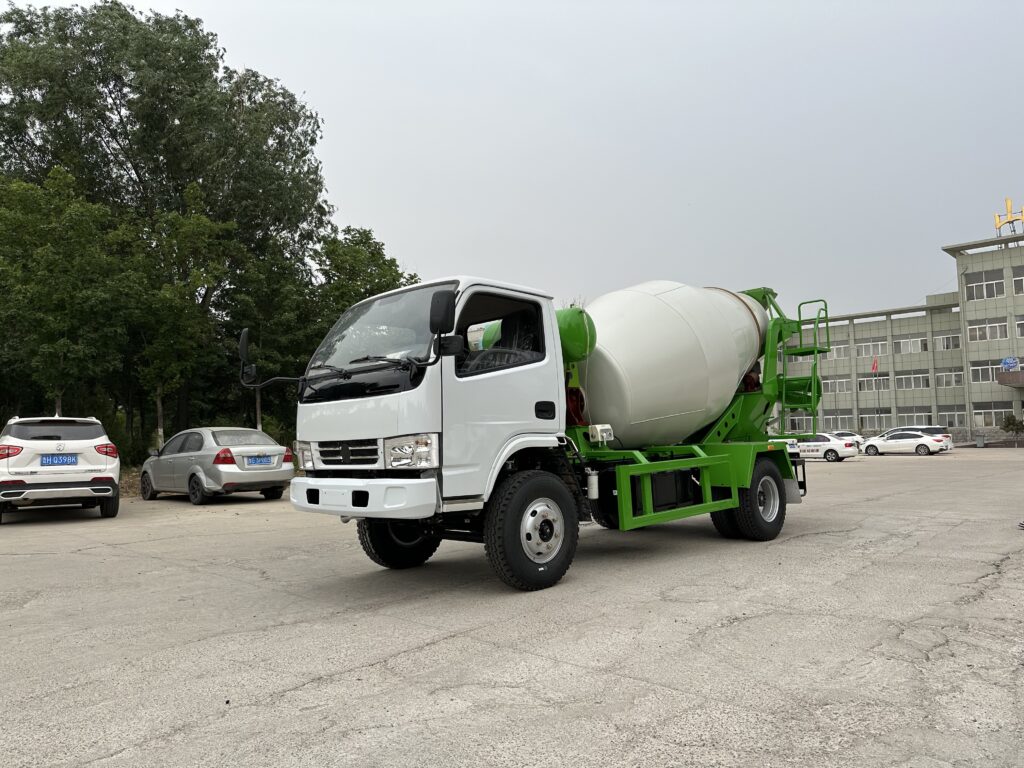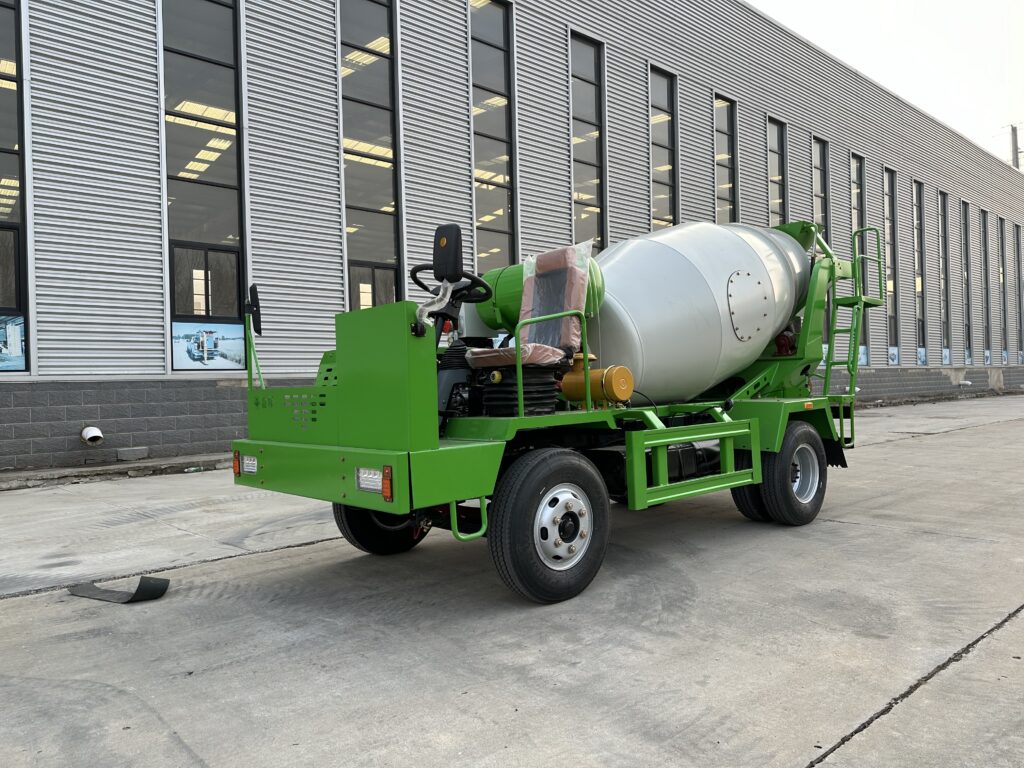

Concrete Mixer Truck for Foundation Work is an important piece of equipment for transporting fresh concrete to building sites. During foundation construction, concrete needs to be delivered efficiently to different pouring locations while maintaining a suitable condition for placement. Choosing the right mixer truck can help construction teams manage concrete transportation, reduce unnecessary delays, and support daily site operations.
From residential building foundations to small commercial projects and rural construction, different jobs require different vehicle capacities and configurations. This guide explains how concrete mixer trucks are used in foundation work, what features buyers should consider, and how to choose a suitable model for their construction projects.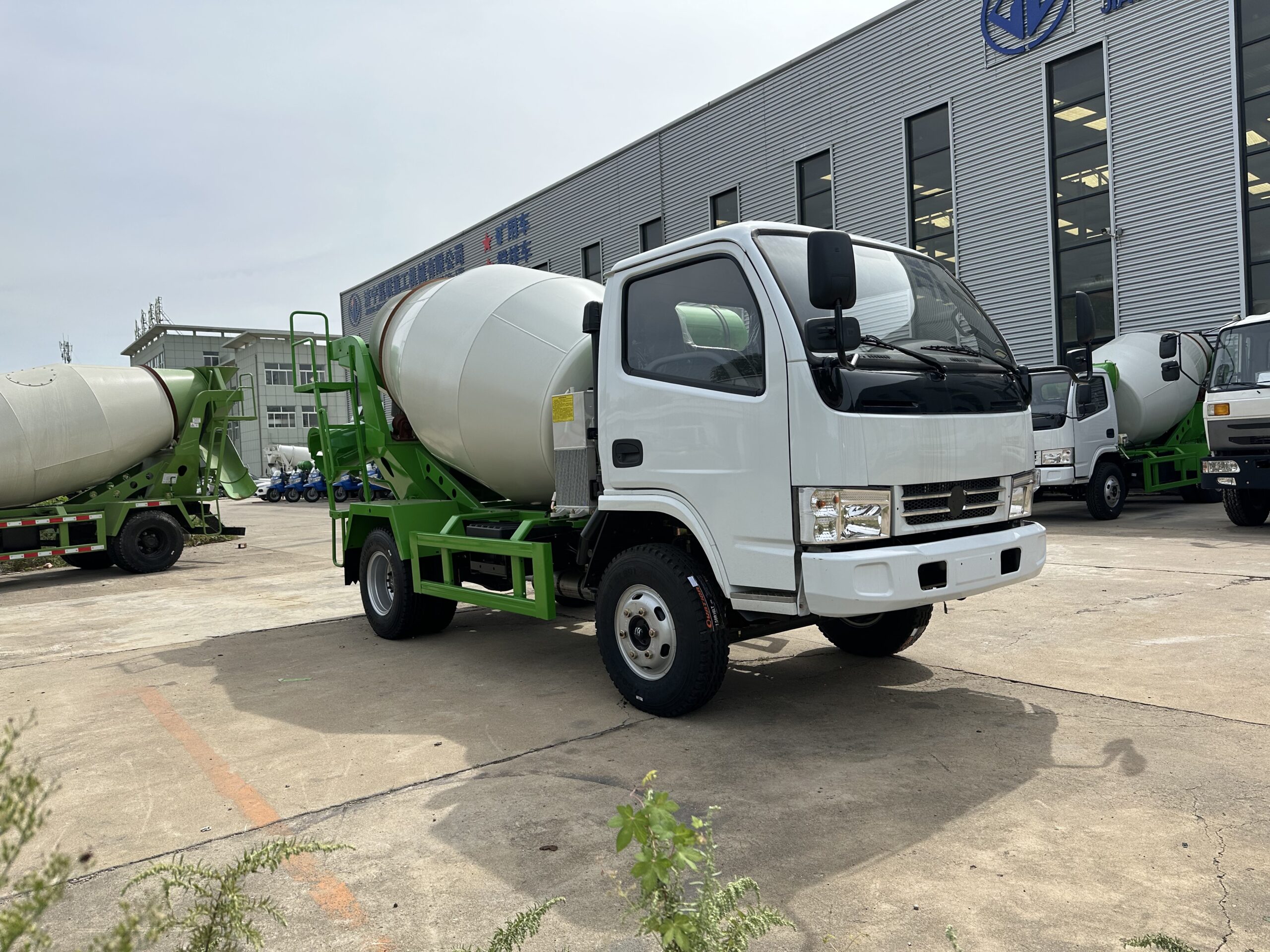
1. Why Is a Concrete Mixer Truck Important for Foundation Work?
Foundation construction is one of the first and most important stages of a building project. It involves preparing and pouring concrete for footings, foundation walls, ground beams, and other structural elements.
Concrete must be transported from the mixing location to the pouring area at the right time. If transportation is not properly arranged, construction teams may experience delays or difficulties coordinating concrete delivery.
A concrete mixer truck combines concrete mixing and transportation in one vehicle. Its rotating drum helps keep the concrete moving during transportation, according to the truck’s operating instructions and concrete requirements.
For foundation projects, a suitable mixer truck can provide several practical benefits:
- Transport fresh concrete between the mixing location and the construction site.
- Support continuous concrete delivery during planned pouring operations.
- Reduce the need for separate transportation arrangements.
- Help supply concrete to different working areas.
- Provide flexible transportation for projects with limited site space.
The right truck depends on the concrete volume, transportation distance, access roads, and foundation construction schedule.
2. Common Foundation Projects That Use Concrete Mixer Trucks
Not every foundation project has the same concrete demand. Some involve small residential buildings, while others require larger quantities for commercial or infrastructure construction.
Understanding the project type helps buyers choose a suitable mixer truck.
Residential Building Foundations
Residential construction often involves concrete footings, foundation beams, ground slabs, and other structural components.
In rural areas and small residential projects, construction sites may have narrow access roads or limited working space. A compact concrete mixer truck can be considered when a large vehicle is difficult to operate.
Small mixer trucks are especially worth evaluating when concrete demand is moderate and transportation flexibility is important.
Commercial Building Foundations
Commercial building projects may require larger concrete volumes and more organized delivery schedules.
Depending on the project scale, buyers may consider different mixer truck capacities to match the concrete demand and transportation distance.
Before choosing a truck, evaluate the required delivery frequency, site entrance dimensions, and available turning space.
Foundation Work in Rural Areas
Rural construction projects often involve uneven roads, narrow entrances, and construction sites located far from concrete supply points.
In these conditions, the truck’s dimensions, chassis, ground clearance, and drive configuration deserve attention.
For projects involving difficult road conditions, buyers can also compare suitable off-road configurations. However, the actual vehicle must match the terrain and operating requirements.
Small Infrastructure Foundations
Concrete foundations are also needed for drainage structures, retaining walls, road facilities, and other small infrastructure projects.
A compact mixer truck may help transport concrete to different work areas, especially when the project requires several smaller deliveries instead of one large delivery.
3. What Capacity Is Suitable for Foundation Work?
Choosing the right capacity is one of the most important decisions when purchasing a concrete mixer truck.
A truck that is too small may require too many trips, while a truck that is too large may be difficult to operate on restricted roads or small construction sites.
For small and medium-sized projects, buyers can compare concrete mixer trucks in the 2–8m³ range.
| Drum Capacity | Potential Applications | Key Considerations |
|---|---|---|
| 2m³ | Small residential foundations and limited concrete work | Compact transportation needs |
| 3m³ | Rural building foundations and small construction projects | Balance between capacity and vehicle size |
| 4m³ | Medium-sized building and foundation projects | Daily concrete demand and access conditions |
| 5m³ | Larger residential and commercial foundation work | Road access and delivery frequency |
| 6m³–8m³ | Projects with higher concrete transportation demand | Site access, vehicle dimensions, and operating conditions |
These are general application references rather than fixed capacity rules. Actual selection should be based on the required concrete volume, truck configuration, transportation route, and local operating conditions.
For a more detailed comparison, see our Concrete Mixer Truck Capacity Guide.
4. Important Features to Consider for Foundation Construction
When selecting a concrete mixer truck for foundation work, buyers should look beyond drum capacity.
The chassis, engine, hydraulic system, vehicle dimensions, and discharge arrangement all influence how the truck performs during daily operations.
Chassis and Drive Configuration
The chassis determines the vehicle’s basic structure and influences its load capacity, dimensions, and road performance.
Different projects may require different chassis options:
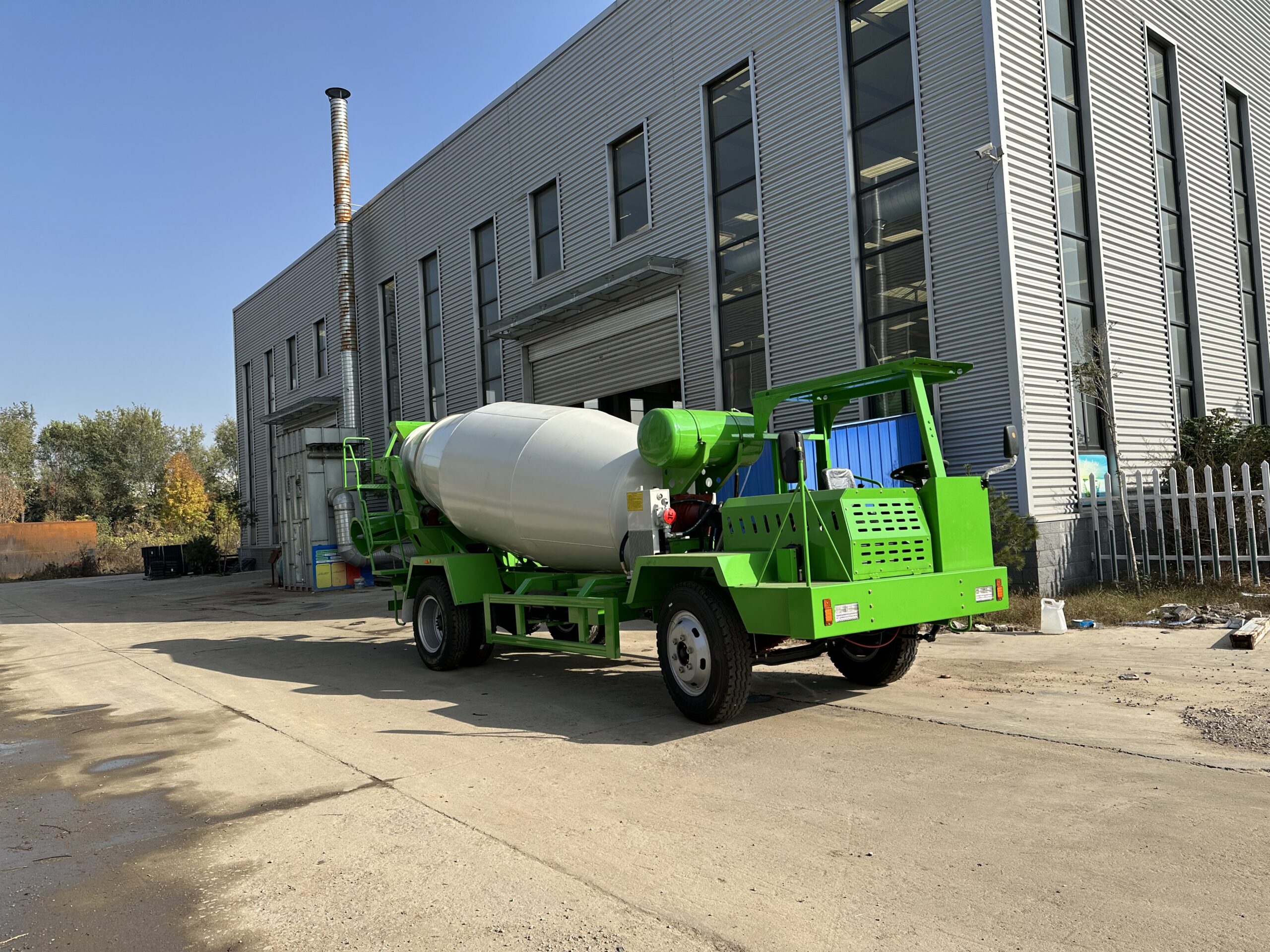
- Three-wheel chassis for certain compact construction applications.
- Four-wheel chassis for general transportation requirements.
- Four-wheel drive configurations for suitable rough or muddy working conditions.
- Crawler configurations for specific soft-ground construction environments.
The best choice depends on road conditions, vehicle weight, required capacity, and local regulations.
Engine and Power
The engine provides power for vehicle movement and supports the truck’s operating requirements.
Buyers should compare engine specifications, rated power, fuel type, emission requirements, and compatibility with the selected chassis.
For overseas buyers, it is important to confirm whether the engine configuration meets the destination country’s applicable regulations.
Hydraulic System
The hydraulic system is an important part of the mixer truck’s operation.
It provides the power needed for mixer drum rotation and other hydraulic functions, depending on the vehicle design.
Before ordering, ask the supplier about the hydraulic pump, motor, control system, and configuration included in the quotation.
Mixer Drum and Discharge System
The mixer drum is responsible for mixing and transporting concrete.
For foundation projects, the drum capacity and discharge arrangement should match the concrete demand and the site layout.
Buyers should check:
- Drum capacity
- Drum structure and mixing blades
- Drum rotation operation
- Discharge chute arrangement
- Cleaning and maintenance access
A suitable discharge arrangement can make it easier to deliver concrete to the required pouring area.
 5. Why Vehicle Dimensions Matter at Foundation Sites
Foundation construction does not always take place in open areas.
Some projects are located in residential neighborhoods, rural villages, or sites with narrow entrances. Large vehicles may have difficulty entering or turning around.
Before purchasing, measure the actual site access conditions.
Important dimensions include:
Vehicle height: Check overhead restrictions, entrances, temporary structures, and low-clearance areas.
Vehicle width: Confirm that the truck can pass through narrow roads and gates.
Vehicle length: Consider turning space and the distance between the entrance and the concrete pouring area.
Turning radius: Check whether the truck can maneuver within the available working space.
If the project has special size restrictions, discuss customization options with the manufacturer before placing an order.
6. Complete Concrete Mixer Truck or Separate Mixer Body?
Buyers importing equipment for foundation construction may have two purchasing options.
Buying a Complete Concrete Mixer Truck
A complete truck includes the chassis and mixer equipment as a combined vehicle.
This option may be suitable for buyers who need a ready-to-configure vehicle for their construction operations.
Before ordering, confirm the chassis, drum capacity, engine, hydraulic system, vehicle dimensions, and discharge configuration.
Buying a Separate Concrete Mixer Body
Some buyers already own a suitable truck chassis and only need the mixer equipm
In this case, purchasing a separate concrete mixer body may be an option.
However, chassis compatibility must be checked carefully. Important details include mounting dimensions, vehicle load capacity, available installation space, hydraulic requirements, and power connections.
You can explore our Concrete Mixer Body options to learn more about separate mixer equipment.
7. How to Choose the Right Truck for Your Foundation Project
Before purchasing, compare the vehicle configuration with your actual construction requirements.
Here are six practical steps:
- Estimate concrete demand: Calculate the approximate concrete volume required for each foundation operation.
- Check transportation distance: Consider the distance between the mixing location and the construction site.
- Measure site access: Record entrance width, height restrictions, road conditions, and turning space.
- Choose the chassis: Compare three-wheel, four-wheel, four-wheel drive, or crawler configurations where appropriate.
- Confirm mixer specifications: Check drum capacity, hydraulic system, discharge arrangement, and engine configuration.
- Review local regulations: Verify vehicle import, registration, and emission requirements before ordering.
For additional guidance on selecting the right vehicle, read our Concrete Mixer Truck Buying Guide.
 8. What Affects the Cost of a Foundation Concrete Mixer Truck?
The purchase cost of a concrete mixer truck depends on several factors.
Drum capacity: Different capacities require different mixer configurations and may affect the overall vehicle cost.
Chassis type: Chassis brand, model, load capacity, and drive configuration influence the quotation.
Engine configuration: Engine power, brand, and emission requirements can affect the final price.
Hydraulic system: Hydraulic components and system specifications are important parts of the mixer equipment.
Customization: Special vehicle dimensions, drum configurations, and discharge arrangements may increase or change the cost.
Transportation and import expenses: International shipping, insurance, customs duties, taxes, and local delivery should also be considered.
To receive an accurate quotation, provide the supplier with your destination country, required capacity, chassis preference, and project requirements.
9. Customized Concrete Mixer Trucks for Foundation Projects
Different foundation projects have different working conditions. A standard vehicle configuration may not always meet every site’s requirements.
Customization can help buyers match the truck to their actual construction needs.
Depending on the available vehicle design, customization may involve:
- Mixer drum capacity
- Chassis selection
- Vehicle height and width
- Engine configuration
- Hydraulic system
- Discharge outlet arrangement
- Other project-specific requirements
For example, a residential foundation project with a narrow entrance may require a more compact vehicle. A construction site with uneven roads may need a different chassis and drive configuration.
Before production, provide the manufacturer with the site dimensions, road conditions, required concrete volume, and preferred vehicle specifications.
This information helps the supplier evaluate a suitable configuration.
10. Choose JiaLian for Your Foundation Concrete Mixer Truck
JiaLian supplies small concrete mixer trucks and customized concrete mixer bodies for different construction applications.
Our product range focuses on 2–8m³ small concrete mixer truck solutions, with available configurations depending on the selected model.
Whether you need a complete concrete mixer truck for foundation construction or a separate mixer body for an existing chassis, you can discuss your requirements with our team.
We can help you evaluate:
- Suitable drum capacity
- Chassis and drive configuration
- Vehicle height and width
- Mixer drum and discharge arrangement
- Complete truck or separate mixer body
If you are planning a foundation construction project, contact JiaLian and share your project location, required capacity, and working conditions.
Request a quotation to discuss a concrete mixer truck configuration that matches your project requirements.
Frequently Asked Questions
1. What type of concrete mixer truck is suitable for foundation work?
The suitable truck depends on the project size, concrete demand, road conditions, and site access. Small concrete mixer trucks may be suitable for residential foundations and smaller construction projects.
2. What capacity concrete mixer truck is suitable for building foundations?
Capacities from 2m³ to 8m³ can be considered for different small and medium-sized projects. The right choice depends on the concrete volume, transportation distance, and delivery schedule.
3. Can a small concrete mixer truck enter narrow residential construction sites?
Some compact models may be suitable for narrow access roads. However, buyers should confirm the actual vehicle width, height, length, and turning radius before ordering.
4. Can I buy only the concrete mixer body?
Yes. A separate mixer body may be available for buyers who already have a suitable chassis. Compatibility, mounting dimensions, hydraulic requirements, and load capacity should be confirmed before purchase.
5. Can the concrete mixer truck be customized for foundation construction?
Depending on the selected model, customization may include drum capacity, chassis, vehicle dimensions, hydraulic configuration, and discharge arrangement. Buyers should provide their project requirements before production.
6. How can I get a quotation for a foundation concrete mixer truck?
Contact the supplier with your destination country, required capacity, preferred chassis, project application, and any special vehicle requirements. This information helps the supplier prepare a more suitable quotation.
Conclusion
Foundation construction requires reliable concrete transportation and a vehicle configuration that matches the working environment.
From residential building foundations to small infrastructure projects, choosing the right mixer truck involves considering capacity, chassis, engine, hydraulic system, discharge arrangement, and site access.
If you are looking for a small concrete mixer truck for foundation work, contact JiaLian to discuss complete truck and mixer body options based on your project requirements.