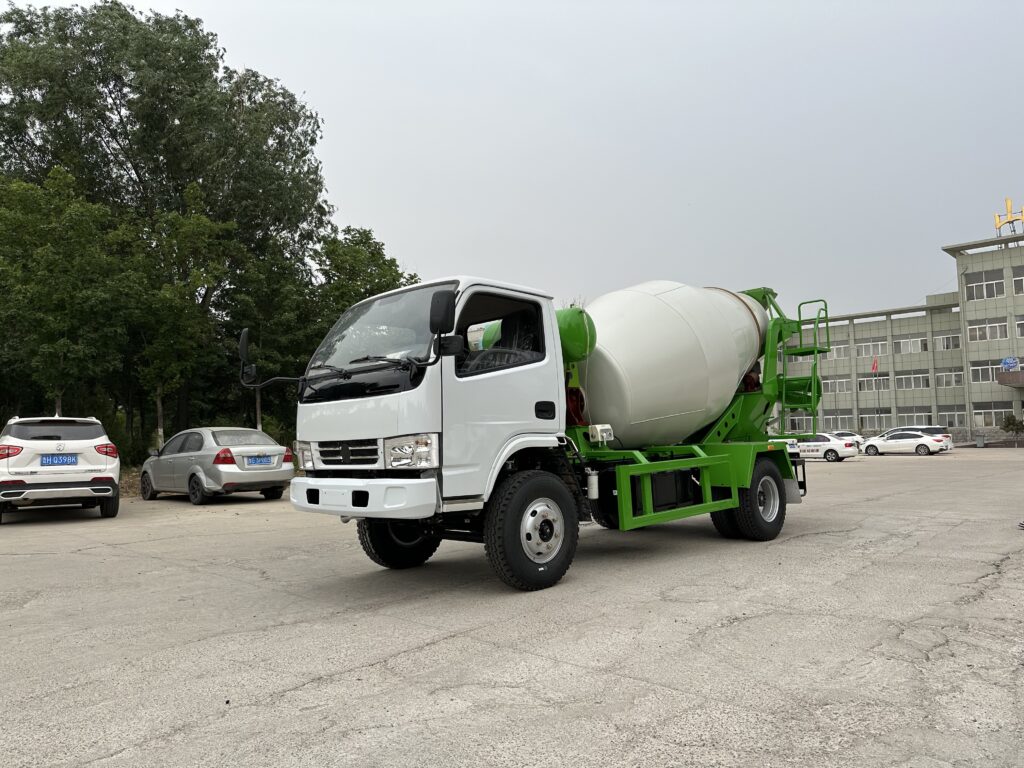
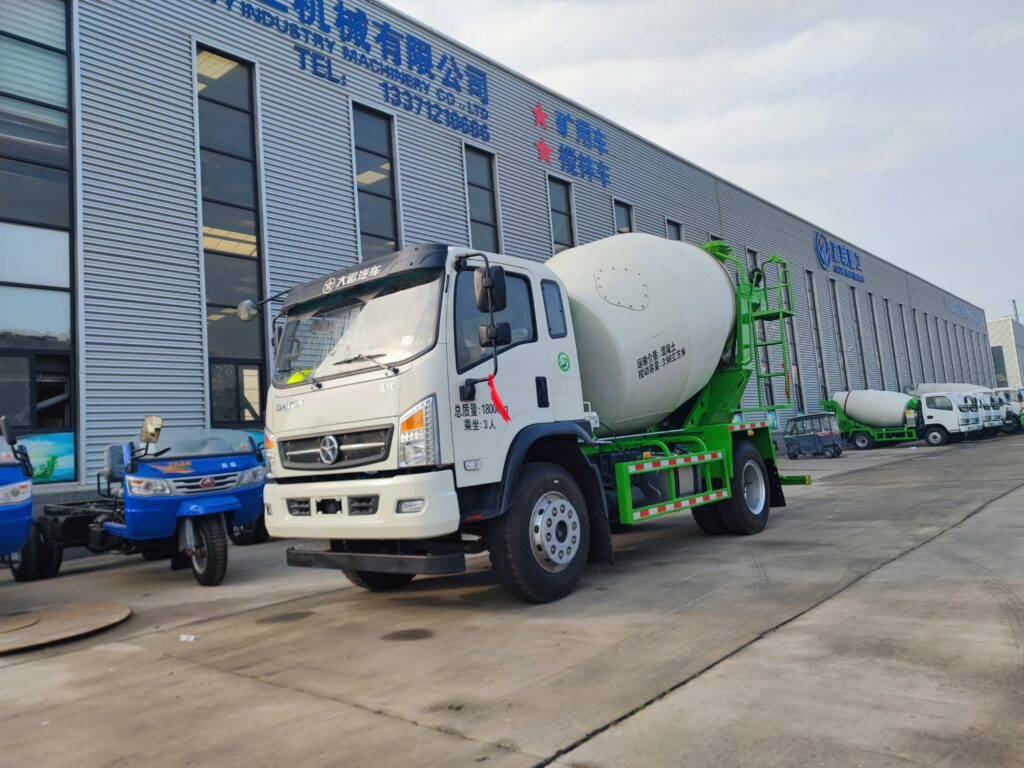
Choosing the right truck size is one of the most important steps when buying a concrete mixer truck. This Concrete Mixer Truck Capacity Guide explains how to choose between 2m³, 3m³, 4m³, 5m³, 6m³, and 8m³ models based on your project size, daily concrete demand, road conditions, and operating budget. The right capacity helps you deliver concrete efficiently without paying for a truck that is too large for your work or struggling with a truck that is too small.
For rural house construction, small building projects, road repairs, and remote job sites, a small concrete mixer truck can be a practical choice. However, the best capacity depends on more than the amount of concrete needed for one job. You should also consider how often the truck must make trips, whether the site has narrow access roads, and how much concrete your team can place in a given period.
1. Why Concrete Mixer Truck Capacity Matters
Concrete mixer truck capacity affects transport efficiency, vehicle size, purchase cost, and daily operating expenses. A larger truck can carry more concrete per trip, which may reduce the number of trips required. However, it may also need a larger chassis, more space to turn, and better road access.
A smaller truck may be easier to maneuver around villages, narrow streets, small construction sites, and areas with limited access. It can also make sense when each concrete pour is relatively small or when the truck needs to travel between several nearby jobs.
Before choosing a model, answer three questions:
- How many cubic meters of concrete do you normally need for one delivery or batch?
- How much concrete does your project use each day?
- Can the truck safely reach the site, turn around, and discharge concrete where it is needed?
Your answers will help you narrow down the right capacity before comparing chassis, engine options, hydraulic systems, and other specifications.
2. 2m³ Concrete Mixer Truck: For Very Small Jobs
A 2m³ concrete mixer truck is worth considering when concrete demand is low and access is difficult. It may suit small rural construction jobs, minor concrete repairs, small foundations, and work in locations where a larger vehicle is inconvenient.
This size can be useful when a contractor needs to deliver relatively small amounts of concrete to different locations instead of supplying a large volume at once. A compact configuration may also help in confined working areas, depending on the actual vehicle dimensions.
However, a 2m³ truck may require more trips when concrete demand increases. If the job needs several loads in quick succession, the extra travel and loading time can reduce productivity.
Choose a 2m³ model when:
- Your typical concrete requirement per trip is small.
- Site access is a major concern.
- You work on small projects or occasional concrete deliveries.
- You prefer a compact vehicle over a higher-capacity model.
Before ordering, confirm the rated working capacity and the complete truck’s dimensions. A smaller capacity does not automatically guarantee that the vehicle will fit every narrow road or restricted entrance.
3. 3m³ Concrete Mixer Truck: A Practical Choice for Small Projects
A 3m³ concrete mixer truck can offer a useful balance between carrying capacity and maneuverability. It is worth considering for rural house building, small contractor projects, local road repairs, and other jobs where concrete demand is higher than occasional minor work but does not justify a large truck.
For example, a contractor building several houses in a village may need a truck that can handle regular concrete deliveries while navigating roads that are not suitable for large vehicles. A 3m³ model may fit this type of operation if its dimensions, weight, and configuration match the site conditions.
This capacity may also be suitable for contractors who serve multiple small jobs in the same area. Instead of using a large truck that is difficult to maneuver or frequently carries less than its practical capacity, they can select a vehicle closer to their normal workload.
A 3m³ truck is worth comparing if you:
- Build houses or complete small construction projects.
- Work on rural roads or in compact job sites.
- Need a balance between load size and vehicle flexibility.
- Want a small truck that can handle regular work.
If your concrete demand is growing, compare the total operating cost of a 3m³ truck with a 4m³ model. The difference in capacity may affect how many trips you need each day.
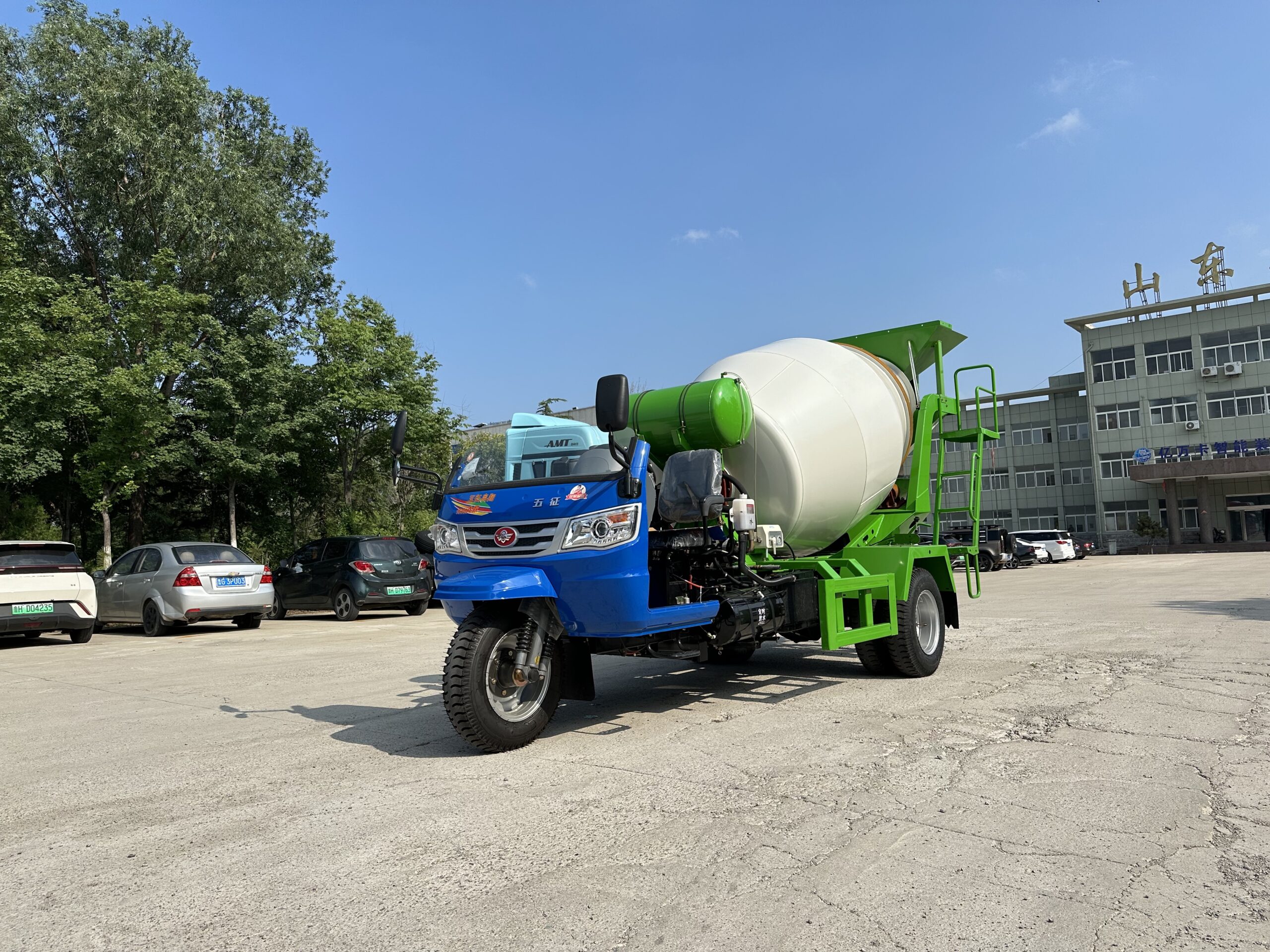 4. 4m³ Concrete Mixer Truck: For More Regular Concrete Demand
A 4m³ concrete mixer truck can be a good option for contractors who regularly handle small to medium concrete jobs. It offers more capacity per trip than a 2m³ or 3m³ model while remaining within the small-truck category for many specialized configurations.
Typical applications may include residential foundations, small building projects, local road construction, repair work, and jobs serving several customers in one area. The final suitability depends on the chassis, vehicle dimensions, road regulations, and site access.
Consider a simple example. If a project requires around 12m³ of concrete, a truck with a rated working capacity of 4m³ could theoretically cover that volume in three full loads. A 3m³ truck would need four full loads, while a 2m³ truck would need six. These are planning calculations only; actual trips depend on the permitted load, concrete supply, travel distance, and site conditions.
A 4m³ model may be worth choosing when:
- Your projects need more concrete per delivery.
- You want to reduce the number of trips compared with smaller models.
- Your roads and construction sites can accommodate the vehicle.
- You expect steady work rather than occasional small orders.
Do not choose a 4m³ truck based on capacity alone. Confirm the vehicle’s overall length, width, height, turning space, axle load, and rated concrete capacity before making a decision.
5. 5m³ Concrete Mixer Truck: For Growing Contractors
A 5m³ concrete mixer truck may suit contractors whose workload has increased beyond very small projects. It can be considered for regular residential construction, small commercial projects, roadwork, and other applications that need more concrete per trip.
The main benefit is the potential to move more concrete with fewer trips. This can be important when the mixing or loading point is some distance from the job site, or when a team needs a more consistent supply during a working day.
However, a higher capacity is only useful when the rest of the operation can support it. The road must accommodate the truck, the site must provide enough room for maneuvering, and the vehicle’s chassis and rated payload must be appropriate for the intended load.
A 5m³ model is worth comparing when:
- You regularly supply several cubic meters of concrete per delivery.
- Your projects have a predictable daily demand.
- Your loading point and job sites can handle a larger vehicle.
- Reducing repeated trips is a priority.
If most of your jobs still require only a small amount of concrete, a 3m³ or 4m³ model may remain the more practical investment.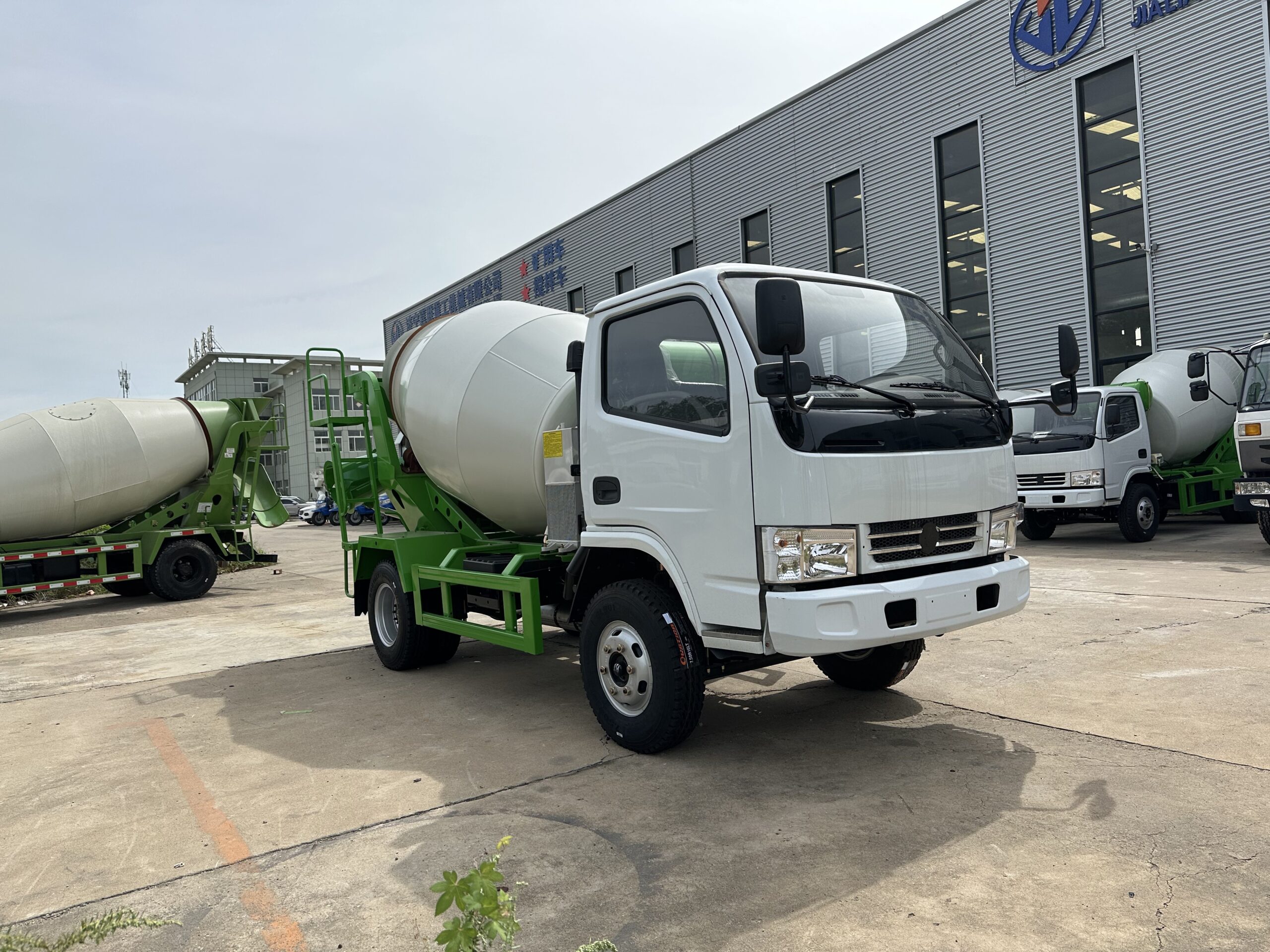
6. 6m³ Concrete Mixer Truck: For Higher Daily Output
A 6m³ concrete mixer truck may be suitable for contractors with larger daily concrete requirements, more continuous construction work, or regular delivery routes. Compared with smaller models, it can carry a larger volume per trip, provided the rated capacity and legal vehicle weight limits allow the intended load.
This size may be worth considering for larger residential projects, local infrastructure work, and construction sites that need repeated concrete deliveries. It is especially important to assess road width, turning radius, gradients, bridge restrictions, and the space available for unloading.
A larger truck is not always more productive. If access is difficult or concrete demand at the site is limited, waiting, maneuvering, or making partially loaded trips can reduce its advantages.
Choose a 6m³ model when the project demand justifies the additional capacity and the transport route can support the vehicle safely.
7. 8m³ Concrete Mixer Truck: For Larger and More Consistent Workloads
An 8m³ concrete mixer truck may be suitable for construction companies and concrete suppliers with relatively high and consistent delivery demand. It can reduce the number of trips needed for larger pours compared with small-capacity vehicles.
Potential applications include larger building projects, regular commercial construction, and infrastructure work where road access and vehicle weight limits permit this size.
Before choosing an 8m³ truck, check whether the loading facility can supply the required volume on schedule and whether the job site can receive concrete at the necessary rate. If the team cannot unload or place the concrete efficiently, additional truck capacity may not improve the overall operation.
An 8m³ truck is worth considering when:
- Your projects regularly require larger concrete deliveries.
- The transport route supports the vehicle’s size and loaded weight.
- The loading point and job site can coordinate delivery efficiently.
- Your operating plan benefits from fewer trips per project.
For smaller contractors working mainly on rural houses, narrow roads, or scattered small jobs, a 2m³ to 5m³ model may be a better match.
8. Compare Concrete Mixer Truck Capacities at a Glance
The following table is a general selection guide, not a specification for every truck model.
| Capacity | Typical applications | Main consideration |
|---|---|---|
| 2m³ | Very small jobs, minor repairs, restricted access | Compactness and low-volume demand |
| 3m³ | Rural house building, small projects, local repairs | Balance between capacity and maneuverability |
| 4m³ | Regular small construction and roadwork | More concrete per trip without moving to a larger class |
| 5m³ | Growing contractors and more frequent deliveries | Higher output and vehicle access |
| 6m³ | Larger residential projects and regular construction | Daily demand and route suitability |
| 8m³ | Larger projects and consistent concrete supply | Payload limits, site access, and delivery coordination |
The best option is the smallest capacity that can reliably meet your normal workload without creating too many trips. If your demand varies widely, compare your usual daily requirement with your busiest working days before deciding.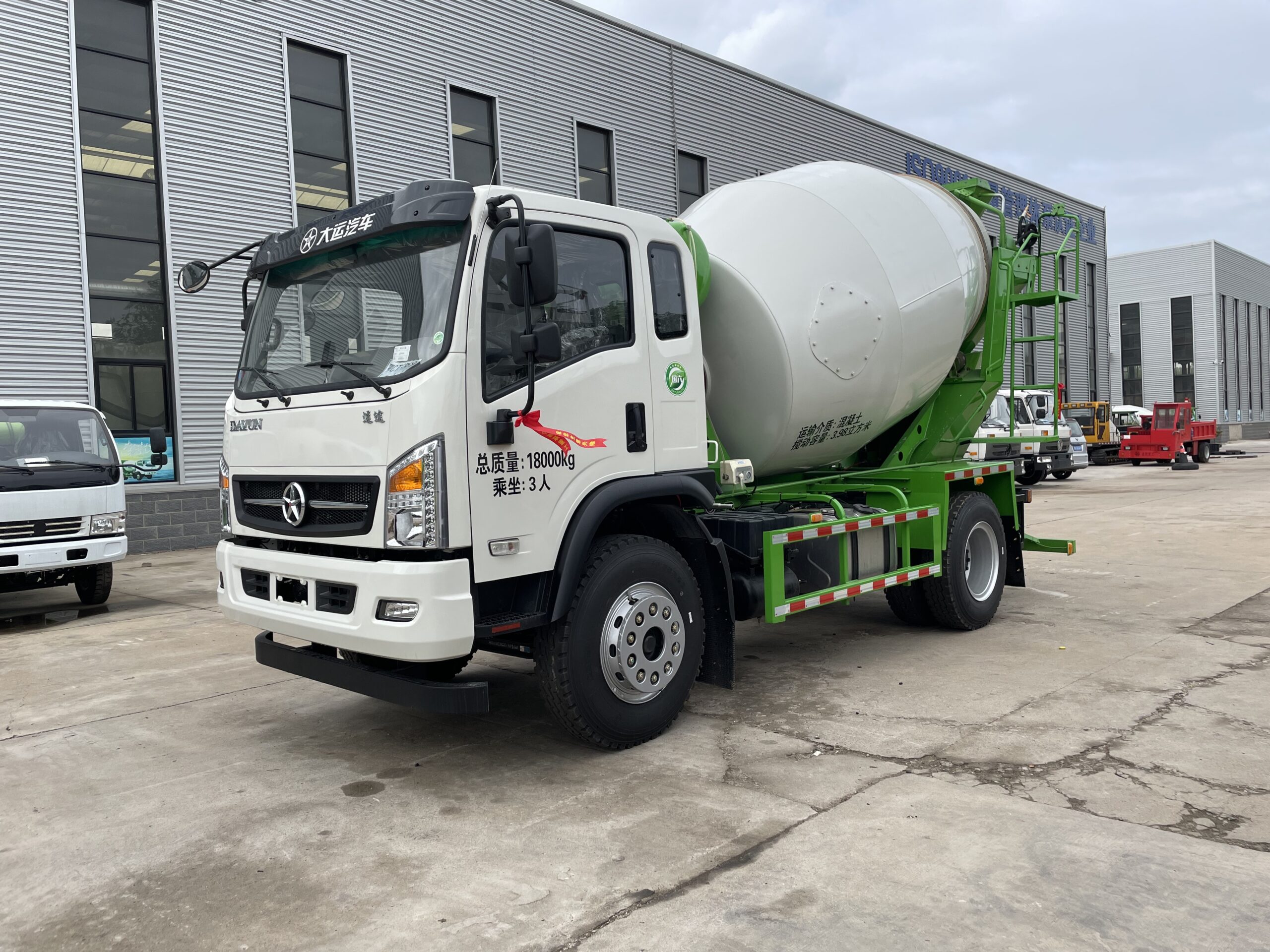
9. Calculate Your Concrete Demand Before Buying
A practical way to choose capacity is to estimate the concrete needed per project and per day.
For example, if a job requires 12m³ of concrete, the theoretical number of full loads would be:
- 2m³ capacity: 6 loads
- 3m³ capacity: 4 loads
- 4m³ capacity: 3 loads
- 5m³ capacity: 3 loads, with the final load partially filled
- 6m³ capacity: 2 loads
- 8m³ capacity: 2 loads, with the final load partially filled
These calculations assume the stated capacity is the usable rated volume and that the load can be divided as shown. Actual loading must follow the manufacturer’s ratings, the vehicle’s legal payload, and local regulations.
You should also consider the time required for loading, travel, unloading, and returning for the next load. A truck that carries more concrete may reduce the number of trips, but it will not necessarily finish the job faster if the road is slow or the site cannot accept concrete continuously.
10. Do Not Ignore Chassis, Dimensions, and Road Conditions
Capacity is only one part of a concrete mixer truck selection decision. Two trucks with similar rated capacities may have different dimensions, chassis configurations, power systems, and maneuverability.
When comparing models, check:
- Chassis and payload: Confirm that the chassis is suitable for the intended load and that the complete vehicle complies with local weight limits.
- Vehicle dimensions: Measure road width, entrance height, turning space, and any restrictions along the route.
- Engine and transmission: Match the powertrain to the expected load, gradients, and working conditions.
- Hydraulic system: Check that the system is properly matched to the drum and the intended operating requirements.
- Discharge arrangement: Make sure the outlet and discharge method suit the way concrete will be placed at the job site.
- Maintenance and support: Ask about spare parts, service arrangements, and the support available in your operating market.
If standard dimensions do not suit your project, a custom concrete mixer truck may be an option. Depending on the design and technical feasibility, buyers can discuss vehicle dimensions, chassis choices, and other configuration requirements with the manufacturer.
If you already own a compatible chassis, ask whether purchasing a concrete mixer body separately is possible. The chassis, payload, mounting structure, and hydraulic compatibility should be confirmed before ordering.
11. How to Choose the Right Capacity for Your Business
There is no single capacity that is best for every contractor. Your decision should reflect the work you actually do, not simply the largest truck your budget can buy.
For occasional small jobs and very restricted access, start by comparing 2m³ and 3m³ options. For rural house building and regular small projects, 3m³ and 4m³ models may provide a practical balance. If your daily workload is growing, compare 4m³ and 5m³ trucks. For larger projects with steady concrete demand and suitable roads, 6m³ and 8m³ models may be worth considering.
Before requesting a quotation, prepare these details:
- The capacity you are considering and the amount of concrete needed per job.
- The typical number of deliveries required each day.
- Road width, gradients, turning space, and any height restrictions.
- Your preferred chassis or whether you need a complete truck.
- Any required customization, including vehicle dimensions or discharge configuration.
- Your destination country and the applicable vehicle requirements.
A concrete mixer truck manufacturer can use this information to help compare suitable configurations and provide a more relevant quotation.
Conclusion: Choose Capacity Based on Real Workload
This Concrete Mixer Truck Capacity Guide shows why choosing a truck involves more than comparing cubic-meter figures. A 2m³ or 3m³ model may work well for very small projects and restricted access. A 4m³ or 5m³ truck can suit contractors handling more regular construction work, while 6m³ and 8m³ models may be more appropriate when concrete demand and road conditions support a larger vehicle.
The right choice balances concrete demand, trip frequency, site access, vehicle configuration, and total operating cost. Before you buy, confirm the rated capacity, complete vehicle dimensions, chassis and payload, and local requirements.
At JiaLian, we can discuss concrete mixer truck options for different project needs, including complete vehicles and customized mixer bodies. Share your target capacity, application, road conditions, and destination market to request a suitable configuration and quotation.