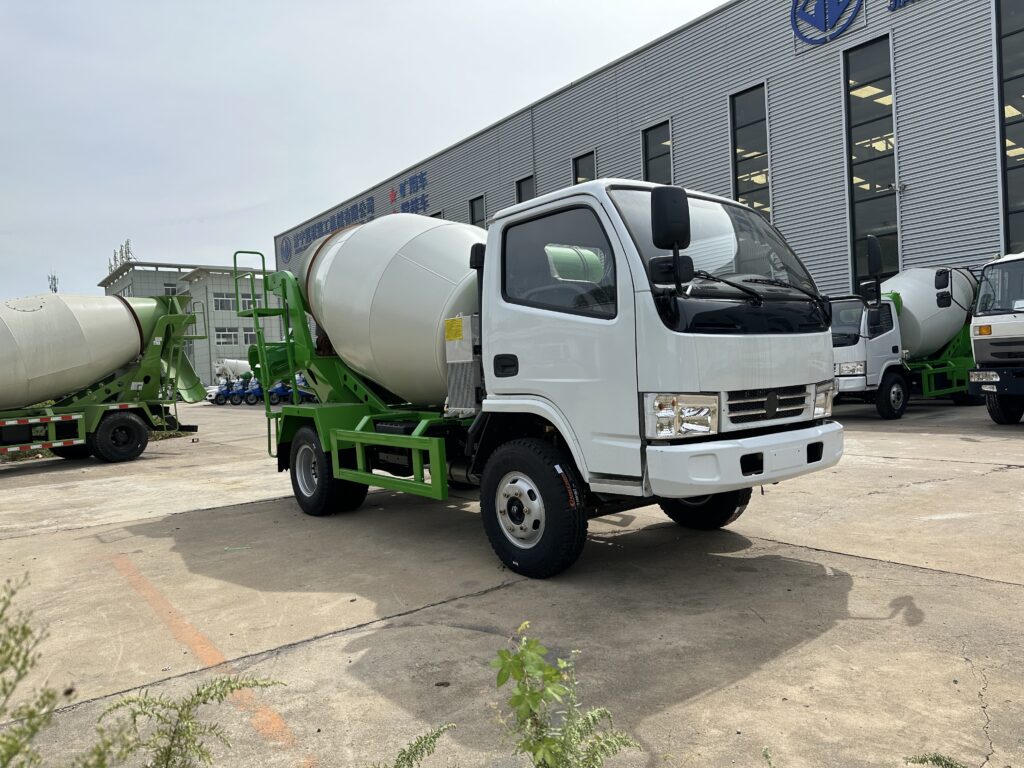
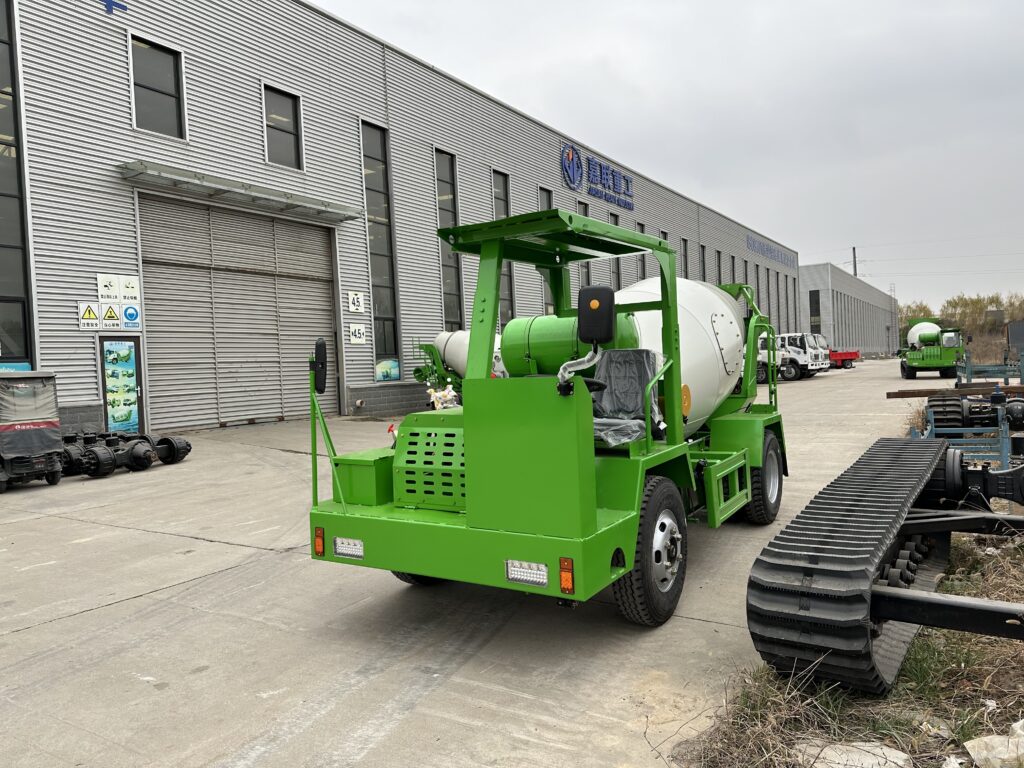
If you are looking for a Concrete Mixer Truck For Sale, price is only one part of the purchasing decision. The right truck also needs to match your concrete demand, road conditions, jobsite access, required capacity and operating method.
A concrete mixer truck can be configured in many different ways. The chassis, mixer capacity, drum configuration, discharge system, drivetrain, dimensions and other components can all affect how the truck performs at the jobsite.
For contractors, dealers and construction companies, understanding these options before requesting a quotation can make it easier to compare different trucks and choose a configuration that fits the actual project.
This guide explains what to consider when buying a concrete mixer truck, what information to provide when requesting a quote, and when a customized mixer truck may be a better option than a standard configuration.
What to Consider Before Buying a Concrete Mixer Truck
Before searching for a Concrete Mixer Truck For Sale, start with the working requirements.
The most important questions include:
- How much concrete do you need per batch?
- Where will the truck operate?
- What are the road conditions?
- How wide and high is the site entrance?
- How much working space is available?
- What type of concrete work will the truck perform?
- Do you need a standard or customized configuration?
- How many trucks do you need?
These details help determine the appropriate truck configuration.
A truck with a larger mixer capacity is not automatically the right choice. If the jobsite has narrow roads or limited space, overall vehicle dimensions may be just as important as capacity.
Choose the Right Concrete Mixer Truck Capacity
Capacity is one of the first specifications buyers usually consider.
A Concrete Mixer Truck Capacity should be selected according to the amount of concrete required and the transportation conditions.
For example, a smaller project may not need the same mixer capacity as a large construction project. At the same time, choosing a capacity that is too small may increase the number of trips required.
When comparing trucks, consider:
- Concrete required per batch
- Daily concrete demand
- Transportation distance
- Number of trips
- Jobsite access
- Available working space
If you are comparing different models, a Concrete Mixer Truck Specifications page can help you evaluate capacity together with dimensions, chassis and other technical information.
The goal is to select a capacity that works efficiently with the actual construction requirements.
Choose the Chassis Based on the Working Conditions
The chassis is another important part of a concrete mixer truck.
A Concrete Mixer Truck Chassis supports the mixer body and affects the truck’s overall dimensions, load capacity and driving characteristics.
When selecting a chassis, buyers should consider:
- Engine power
- Wheelbase
- Axle configuration
- Tire size
- Ground clearance
- Drivetrain
- Vehicle dimensions
- Road conditions
For normal paved roads, a standard road-going chassis may be sufficient.
For rough roads, steep access roads or other demanding conditions, the chassis configuration may need to be adjusted according to the project.
This is one reason why buyers should provide detailed working conditions when requesting a quotation rather than asking only for the truck price.
Compare Concrete Mixer Truck Configurations
Two trucks can have similar mixer capacities but different configurations.
When comparing a Concrete Mixer Truck Configuration, look at the complete vehicle rather than only the mixer drum.
Important areas include:
Mixer Drum
The mixer drum determines the concrete mixing capacity and is one of the main components of the truck.
Buyers should check:
- Rated capacity
- Drum dimensions
- Mixing performance
- Rotation system
- Material and construction
- Discharge arrangement
Chassis
The chassis needs to match the total vehicle configuration and working conditions.
Hydraulic System
The hydraulic system drives important mixer functions.
Depending on the model, buyers may need to consider:
- Hydraulic pump
- Hydraulic motor
- Hydraulic circuit
- Control system
- Maintenance requirements
Discharge System
The discharge arrangement determines how concrete leaves the mixer.
The required discharge configuration can depend on the construction site and the position where concrete needs to be placed.
Vehicle Dimensions
Width, height and length can become important when the truck needs to enter a restricted construction site.
For this reason, buyers should compare complete Concrete Mixer Truck Specifications, not just the mixer capacity.
Should You Buy a Standard or Customized Mixer Truck?
A standard truck can be a practical choice when the working conditions match an existing configuration.
However, some projects have specific requirements that cannot be met by a standard model.
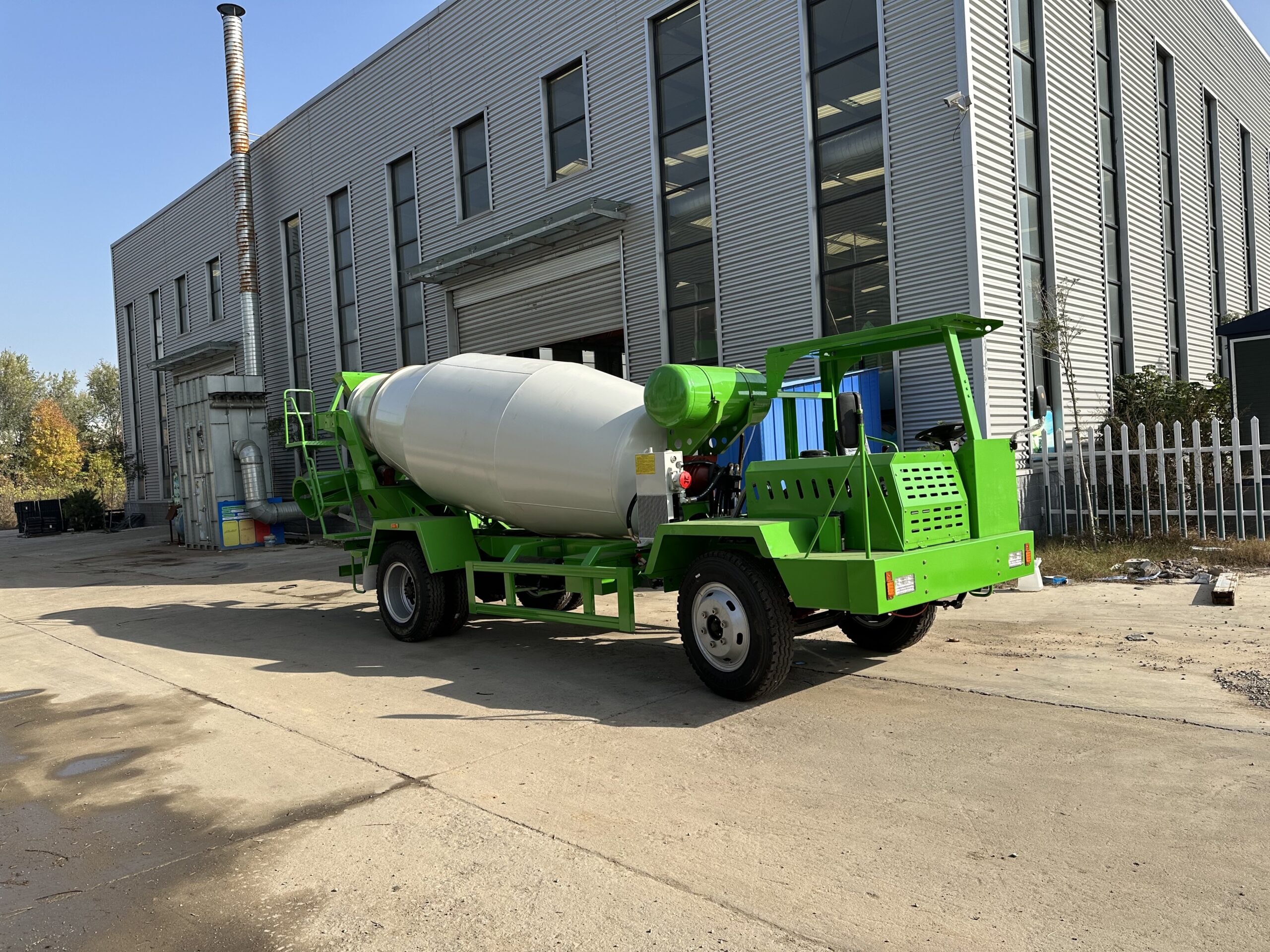
In these cases, a Custom Concrete Mixer Truck can be developed around the customer’s requirements.
Common customization requirements can include:
- Mixer capacity
- Vehicle width
- Vehicle height
- Vehicle length
- Chassis
- Drivetrain
- Tires
- Mixer drum
- Discharge configuration
- Hydraulic system
- Other project-specific equipment
For example, a customer may need a mixer truck with a specific overall height because of a low-clearance entrance.
Another customer may need a different chassis because the truck will operate on rough construction roads.
Instead of changing the way the project works to fit a standard truck, the vehicle configuration can sometimes be adjusted to fit the project.
 What Information Should You Provide When Requesting a Quote?
When looking for a Concrete Mixer Truck For Sale, a detailed inquiry usually provides more useful information than simply asking:
“How much is the truck?”
To receive a more accurate quotation, provide:
1. Required mixer capacity
For example, 3 m³, 4 m³ or another required capacity.
2. Project application
Tell the manufacturer whether the truck will be used for building construction, road work, rural construction, mining, tunnels or another application.
3. Road conditions
Explain whether the truck will operate on paved roads, dirt roads, mountain roads, steep roads or uneven construction roads.
4. Required dimensions
If the site has a restricted entrance, provide the maximum acceptable vehicle width and height.
5. Chassis requirements
If you already have a preferred chassis or brand, include that information in the inquiry.
6. Drivetrain requirements
For example, standard drive or 4-wheel drive, depending on the application.
7. Quantity
If you need several trucks, provide the required quantity so the supplier can prepare the quotation accordingly.
8. Destination
The destination can be provided when discussing transportation and delivery arrangements.
The more complete the information, the easier it is to discuss the appropriate configuration and quotation.
What Affects Concrete Mixer Truck Price?
The price of a concrete mixer truck depends on its complete configuration.
A Concrete Mixer Truck Price can be affected by:
- Chassis
- Mixer capacity
- Engine
- Drivetrain
- Hydraulic system
- Mixer drum
- Vehicle dimensions
- Discharge configuration
- Optional equipment
- Customization requirements
- Order quantity
This means that two trucks with similar-looking mixer bodies may have different prices because their chassis or configurations are different.
For this reason, it is better to compare the complete specifications and configuration together with the quotation.
A lower initial price does not necessarily mean the two trucks have the same configuration.
When Is a Custom Configuration Worth Considering?
Customization is particularly useful when the project has requirements that a standard truck cannot easily meet.
For example:
Limited Site Access
If the construction site has a narrow entrance, the truck width may need to be adjusted.
Low Clearance
If there are overhead restrictions, the overall truck height may need to be considered.
Special Road Conditions
If the truck needs to operate on rough or steep roads, chassis and drivetrain requirements may be different.
Specific Concrete Demand
If the required concrete volume does not match common standard capacities, a customized mixer configuration may be worth discussing.
Special Discharge Requirements
If concrete needs to be discharged in a specific direction or under restricted conditions, the discharge system may require a different configuration.
This is where a manufacturer with customization capability can provide more options than a seller offering only fixed models.
Buying From a Concrete Mixer Truck Manufacturer
When purchasing directly from a Concrete Mixer Truck Manufacturer, buyers can discuss the vehicle configuration with the production side instead of only choosing from finished stock.
This can be useful when you need:
- Specific mixer capacity
- Specific chassis
- Customized dimensions
- Special drivetrain
- Customized mixer body
- Special discharge configuration
- Multiple units with the same configuration
- Project-specific modifications
A manufacturer can also discuss whether a requested configuration is technically suitable for the intended application.
When comparing suppliers, look beyond the product photo and ask for the complete technical specifications.
Standard Concrete Mixer Truck vs Custom Concrete Mixer Truck
| Item | Standard Configuration | Custom Configuration |
|---|---|---|
| Mixer capacity | Standard options | Can be discussed according to requirements |
| Chassis | Existing models | Specific chassis can be requested |
| Vehicle dimensions | Standard | Can be adjusted when technically possible |
| Drivetrain | Standard configuration | Project-based options |
| Discharge system | Standard | Can be customized |
| Mixer body | Standard | Project-specific configuration |
| Best for | Common applications | Specific project requirements |
A standard truck can be suitable when the project conditions are straightforward.
A customized truck becomes more useful when the project has specific dimensions, capacity, chassis or operating requirements.
 How to Compare Different Concrete Mixer Trucks For Sale
When comparing several trucks, create a simple specification list.
Compare:
- Mixer capacity
- Overall dimensions
- Chassis
- Engine
- Drivetrain
- Wheelbase
- Ground clearance
- Hydraulic system
- Mixer drum
- Discharge system
- Warranty and after-sales support
- Customization options
This makes it easier to see the actual differences between different offers.
Do not compare trucks based only on the listed price.
A proper comparison should consider the complete configuration and whether the truck meets the project’s requirements.
Questions to Ask Before Ordering
Before placing an order, buyers can confirm the following points with the supplier:
- What is the actual mixer capacity?
- What chassis is used?
- What are the overall dimensions?
- What engine is installed?
- What drivetrain is included?
- What hydraulic system is used?
- How is concrete discharged?
- Can the truck dimensions be customized?
- Can the mixer body be customized?
- Can the chassis be changed?
- What information is needed for a final quotation?
- What is included in the quoted configuration?
This checklist can help avoid misunderstandings between the buyer and supplier.
How to Request a Concrete Mixer Truck Quote
If you are ready to purchase a Concrete Mixer Truck For Sale, you can send the manufacturer the following information:
Project:
What type of construction project will the truck be used for?
Capacity:
What mixer capacity do you need?
Road conditions:
What type of roads will the truck use?
Dimensions:
Are there any limits on truck height, width or length?
Chassis:
Do you have a preferred chassis or brand?
Configuration:
Do you need 4WD, a special discharge system or other equipment?
Quantity:
How many units do you need?
Destination:
Where will the trucks be delivered?
With these details, the manufacturer can recommend a configuration and prepare a quotation based on the actual requirements.
Choose a Concrete Mixer Truck Based on Your Project
Buying a Concrete Mixer Truck For Sale should not start with price alone.
The better approach is to define the project requirements first, then choose the capacity, chassis and configuration.
For a standard application, an existing model may be sufficient.
For projects with special road conditions, limited access, specific dimensions or unusual operating requirements, a customized configuration may be more suitable.
The right truck is the one whose capacity, chassis, dimensions and configuration match the actual jobsite.
If you are looking for a Concrete Mixer Truck For Sale, send us your required capacity, project application, road conditions, chassis requirements and any special configuration requirements. We can discuss the available truck options and provide a quotation based on your project needs.