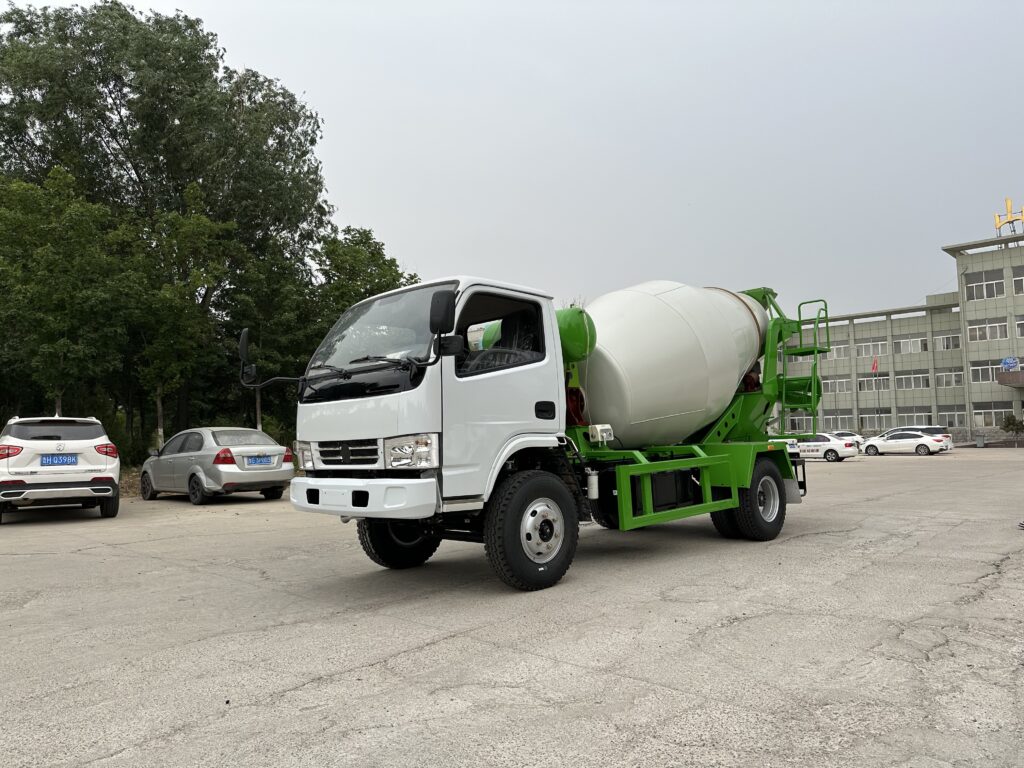

Not every construction site has a smooth road. Some projects are located in muddy fields, mountain areas, soft ground, and remote locations where ordinary wheeled vehicles struggle to move.
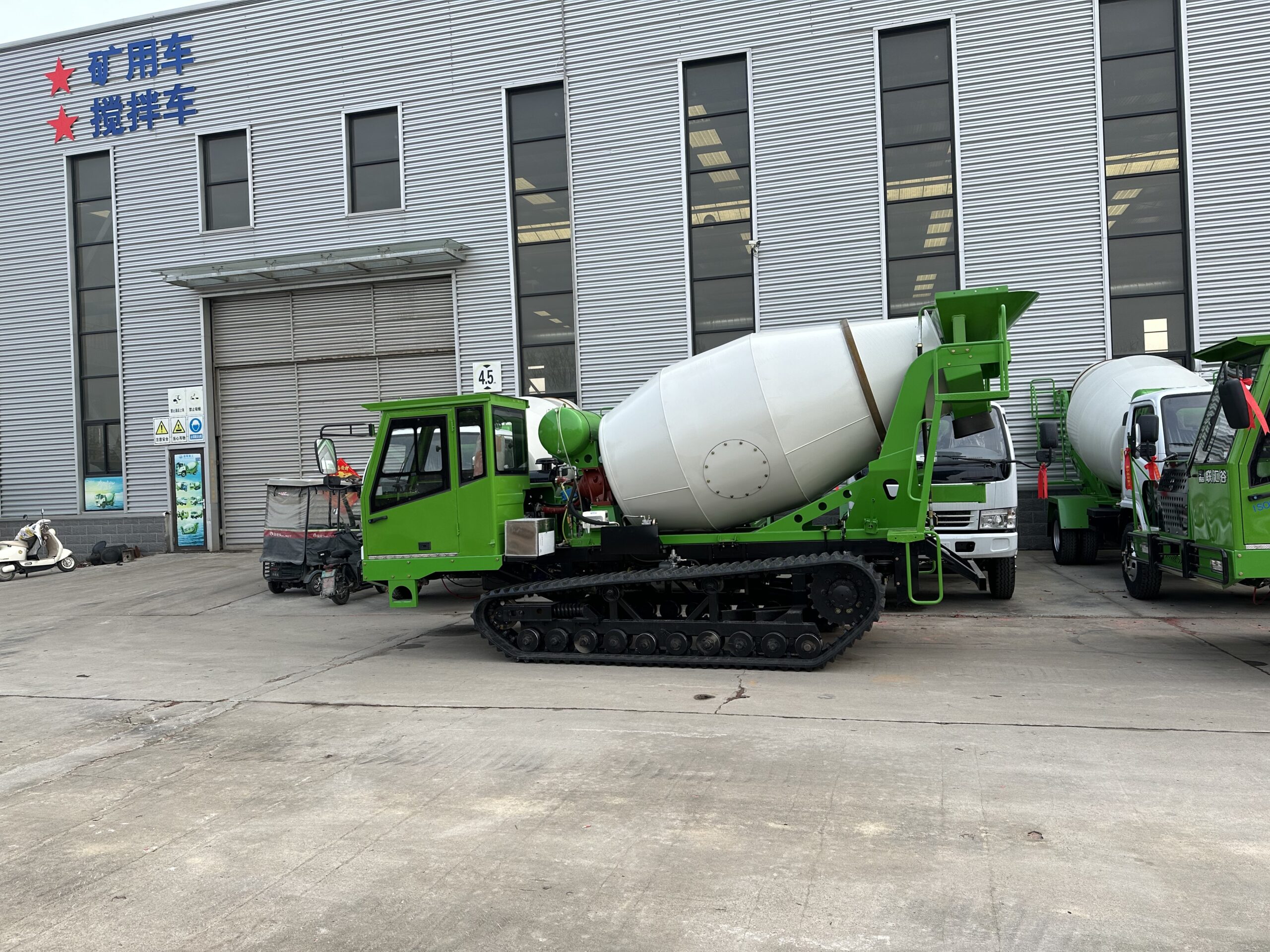
A Crawler Concrete Mixer Truck is designed for these challenging working conditions. Instead of relying on conventional wheels, it uses a tracked undercarriage to travel across uneven and soft ground. This design can provide better traction and distribute the vehicle’s weight over a larger contact area, helping it access construction sites that are difficult for standard mixer trucks to reach.
For contractors working on rural construction, mountain projects, road repairs, and remote job sites, a crawler concrete mixer truck can be a practical solution for concrete transportation and mixing.
In this guide, we will explain how crawler concrete mixer trucks work, their main advantages, where they are used, and how to choose the right configuration for your project.
1. What Is a Crawler Concrete Mixer Truck?
A Crawler Concrete Mixer Truck is a concrete mixing and transportation vehicle equipped with a tracked chassis instead of a traditional wheeled chassis.
The tracked undercarriage allows the vehicle to move across soft, muddy, uneven, and rough surfaces. Compared with conventional tires, tracks can provide a larger ground contact area and help reduce ground pressure.
The vehicle generally consists of several main systems:
- Crawler chassis: Supports the vehicle and provides mobility on challenging ground.
- Engine and power system: Supplies power for vehicle movement and related equipment.
- Mixer drum: Stores, mixes, or agitates concrete during transportation.
- Hydraulic system: Controls drum rotation and other hydraulic functions, depending on the design.
- Discharge system: Helps unload concrete at the required construction location.
Different projects require different configurations. Some crawler concrete mixers are designed as compact machines for small construction sites, while others use larger tracked carriers with customized mixer drums for demanding off-road transportation.
The correct design depends on the required concrete capacity, ground conditions, transportation distance, and working environment.
2. Why Choose a Crawler Concrete Mixer Truck?
The main reason to choose a crawler mixer truck is its ability to access difficult construction areas.
Better Mobility on Muddy and Soft Ground
On muddy roads, wet soil, and loose ground, ordinary tires may lose traction or become stuck.
A crawler chassis uses continuous tracks to distribute the vehicle’s weight over a larger contact area. This can reduce ground pressure and improve mobility on soft surfaces.
For projects located in muddy construction areas, fields, or remote locations, this design can make concrete transportation more practical.
Suitable for Uneven and Rough Terrain
Construction sites are not always level. Some areas contain rocks, uneven surfaces, loose soil, and construction debris.
A tracked undercarriage can help the vehicle maintain contact with the ground while traveling over uneven terrain.
However, actual performance depends on track width, ground clearance, chassis design, vehicle weight, and the condition of the working surface.
Improved Access to Remote Construction Sites
Some construction projects are far from paved roads and conventional concrete supply routes.
A crawler concrete mixer truck can help contractors transport concrete closer to the working area when ordinary vehicles cannot easily access the site.
This is especially useful for remote road construction, mountain projects, rural infrastructure, and certain mining applications.
Reduced Dependence on Suitable Roads
Wheeled mixer trucks usually need roads that can support their weight and provide sufficient traction.
Tracked vehicles can work in certain areas where road conditions are poor or unfinished. This gives contractors more flexibility when planning concrete transportation.
It is important to remember that crawler vehicles are generally designed for job-site operation. They may need to be transported by trailer between distant construction locations rather than driven on public roads.
3. Where Is a Crawler Concrete Mixer Truck Used?
Crawler concrete mixer trucks are especially useful when construction sites have difficult ground conditions or limited vehicle access.
Mountain Construction
Mountain projects often involve steep roads, uneven surfaces, and narrow construction routes.
A crawler mixer truck may help deliver concrete to working areas that are difficult for conventional vehicles to reach.
Before using the vehicle on slopes, contractors should confirm its rated gradeability, load limits, braking system, and operating restrictions.
Muddy Construction Sites
Rainy weather can make construction roads soft and slippery. Wheeled vehicles may have difficulty moving through muddy areas, especially when carrying heavy loads.
The tracked chassis can provide better ground contact and traction in suitable muddy conditions.
This makes crawler concrete mixer trucks worth considering for projects where ground conditions change frequently.
Rural House Building
Some rural construction sites do not have fully developed roads. Access routes may consist of soil, gravel, or uneven ground.
A compact crawler concrete mixer truck can help small contractors move concrete closer to the building area without relying entirely on paved roads.
Road Construction and Repair
Road construction projects often involve unfinished surfaces, temporary access routes, and different ground conditions.
Crawler mixer trucks can be used to transport and discharge concrete in selected work areas where tracked mobility is beneficial.
Mining and Remote Projects
Mining areas and remote industrial projects may have rough access roads and limited transportation infrastructure.
A tracked concrete mixer can provide a practical option for moving concrete within certain restricted or difficult-to-access working areas.
The required configuration should be evaluated according to the site’s load requirements, ground conditions, safety rules, and transportation distance.
4. Crawler Concrete Mixer Truck vs. Wheeled Concrete Mixer Truck
Both crawler and wheeled concrete mixer trucks transport and mix concrete, but their chassis designs serve different working conditions.
| Comparison | Crawler Concrete Mixer Truck | Wheeled Concrete Mixer Truck |
|---|---|---|
| Chassis | Tracked undercarriage | Wheel-based chassis |
| Ground contact | Larger continuous contact area | Contact through individual tires |
| Muddy ground | Suitable for many soft-ground applications | May have difficulty in deep mud |
| Uneven terrain | Designed for challenging job-site surfaces | Depends on tire, chassis, and suspension design |
| Road travel | Usually intended for job-site operation | Better suited to conventional road transportation |
| Maintenance | Requires track and undercarriage maintenance | Requires tire and wheel maintenance |
| Typical applications | Muddy sites, remote areas, rough terrain | General construction sites and road transportation |
Neither design is suitable for every project.
If your construction site has good roads and requires frequent travel over long distances, a wheeled mixer truck may be more practical.
If the main challenge is soft ground, muddy access routes, or difficult terrain, a crawler concrete mixer truck may be worth considering.
 5. Important Configurations to Check Before Buying
Choosing a crawler mixer truck requires more than checking whether it has tracks. The chassis, engine, mixing system, and vehicle dimensions must work together.
Crawler Chassis and Track Design
The crawler chassis directly affects the vehicle’s mobility and stability.
Before purchasing, check:
- Track width and ground contact length
- Track material and construction
- Overall vehicle weight
- Ground clearance
- Chassis stability
- Rated load capacity
- Turning and steering arrangement
Rubber tracks may be suitable for some construction surfaces, while other applications may require different track designs.
The choice should depend on the actual ground conditions and expected working hours.
Engine and Power System
The engine needs to provide sufficient power for both vehicle movement and the equipment installed on the chassis.
Consider the following:
- Engine power
- Fuel consumption
- Cooling system
- Transmission arrangement
- Hydraulic power requirements
- Maintenance accessibility
The engine and power system should be matched to the loaded vehicle weight and working conditions, rather than selected by horsepower alone.
Mixer Drum Capacity
The mixer drum capacity should match the amount of concrete required for each working cycle.
A smaller capacity may be suitable for compact sites and lower concrete demand. A larger capacity can reduce the number of transportation trips, but it also increases the total vehicle load and may require a stronger chassis.
When comparing models, check the actual rated concrete carrying capacity rather than relying only on the drum’s geometric volume.
Hydraulic Mixing and Discharge System
The hydraulic system controls important functions of the mixer drum.
A suitable system should provide stable drum rotation and controlled concrete discharge under the intended operating conditions.
Pay attention to:
- Hydraulic pump and motor matching
- Drum rotation control
- Mixing and agitation performance
- Discharge structure
- Hydraulic oil cooling
- Maintenance and inspection access
The mixing system should be selected according to the concrete mix, transportation time, and discharge requirements.
Vehicle Dimensions and Stability
A crawler vehicle must fit the available construction route and remain stable when carrying concrete.
Check the overall length, width, height, loaded weight, center of gravity, and turning space.
For sloped or uneven sites, the manufacturer’s operating limits should be confirmed before work begins.
6. How to Choose the Right Crawler Concrete Mixer Truck Capacity
Capacity selection should start with the project’s daily concrete demand and transportation conditions.
For small and medium-sized construction projects, different capacity options may be considered according to the working environment.
- 2m³–3m³: Suitable for evaluating compact configurations for smaller construction areas and restricted access routes.
- 4m³–5m³: Worth considering when the project requires a balance between carrying capacity and vehicle dimensions.
- 6m³–8m³: May suit projects with greater concrete demand, provided the crawler chassis can safely support the loaded vehicle.
These are general selection ranges, not guaranteed standard configurations. The available capacity and safe payload must be confirmed with the manufacturer.
Before making a decision, consider:
- How much concrete is required per working cycle?
- How far must the vehicle travel?
- What is the ground condition?
- How much space is available for turning and unloading?
- What is the maximum safe load of the crawler chassis?
- How frequently does the vehicle need to return for concrete?
For more detailed comparisons, review the Concrete Mixer Truck Capacity Guide and the relevant Concrete Mixer Truck Specifications.
 7. Customized Crawler Concrete Mixer Trucks for Different Projects
Different construction sites have different requirements. A standard configuration may not be suitable for every project.
Customization can help match the vehicle to the actual working conditions.
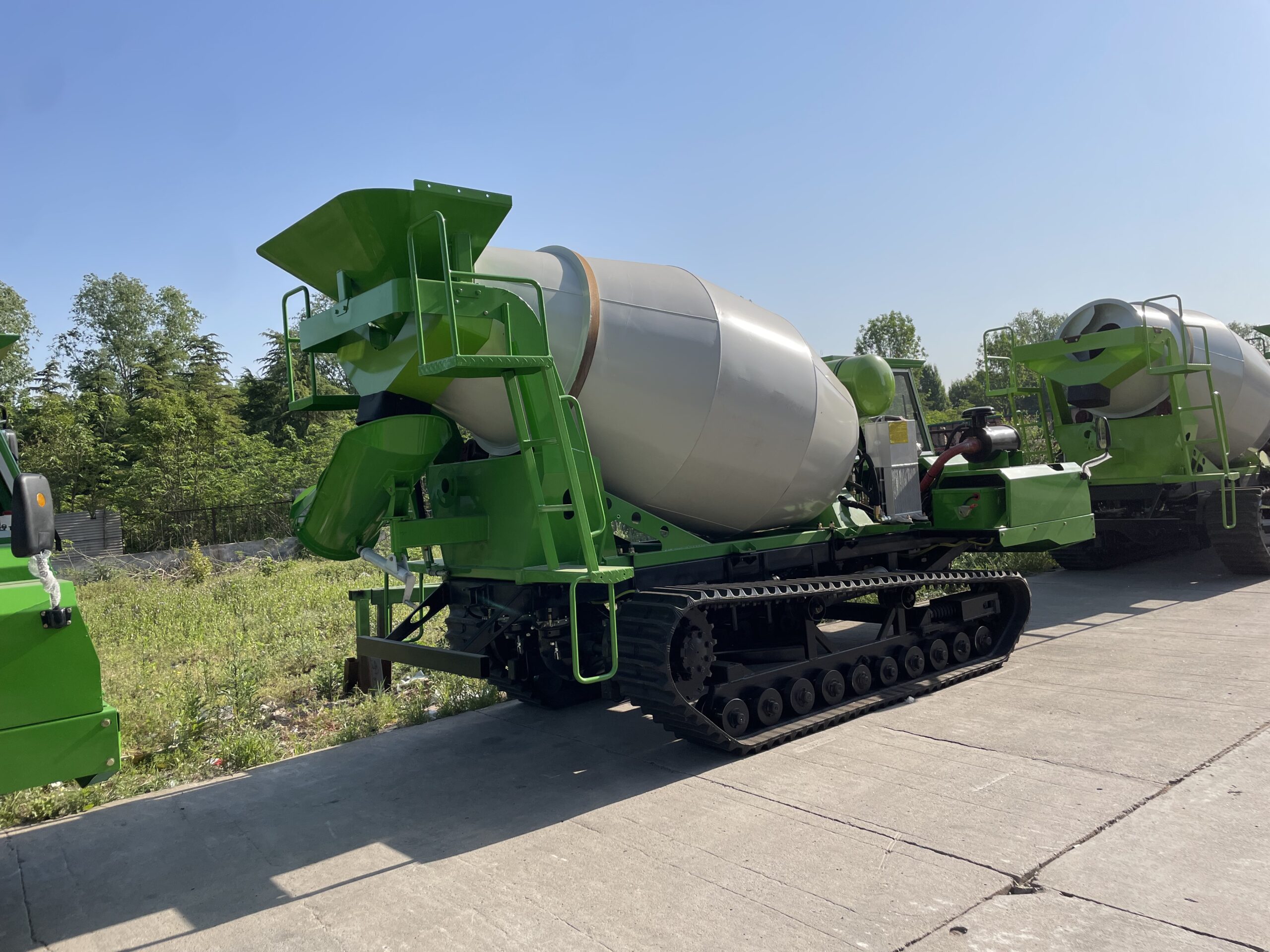
Depending on technical feasibility, possible customization areas include:
- Crawler chassis dimensions
- Track width and chassis structure
- Overall vehicle height and width
- Mixer drum capacity
- Engine configuration
- Hydraulic system
- Discharge structure
- Operator controls and safety equipment
For example, a narrow mountain construction route may require a more compact vehicle width. A muddy construction site may require a suitable track design and ground clearance. A project with higher concrete demand may require a different drum and chassis combination.
A Customized Concrete Mixer Truck should be designed according to the required carrying capacity, ground conditions, and working environment.
If you already have a suitable tracked chassis, you can also discuss whether a customized Concrete Mixer Body can be installed to meet your concrete transportation requirements.
8. What Should You Confirm Before Ordering?
Before purchasing a crawler concrete mixer truck, prepare the following project information:
- What type of construction project will the vehicle serve?
- Is the ground muddy, soft, rocky, or uneven?
- What is the required concrete carrying capacity?
- What is the maximum slope along the working route?
- What are the route’s width and height restrictions?
- How far does the vehicle need to transport concrete?
- What type of concrete mixing and discharge system is required?
- Will the vehicle operate in hot, rainy, or dusty conditions?
- How will the vehicle be transported between different job sites?
- What spare parts and maintenance support are available?
Providing these details helps the manufacturer recommend a configuration that matches your project instead of simply offering a standard model.
9. Why Work with a Crawler Concrete Mixer Truck Manufacturer?
A crawler concrete mixer truck combines a tracked chassis with a concrete mixing system. Both parts need to be properly matched to achieve safe and reliable operation.
Working directly with a Concrete Mixer Truck Manufacturer allows contractors to discuss chassis selection, drum capacity, vehicle dimensions, and customization requirements in one process.
When comparing manufacturers, pay attention to:
- Available crawler chassis options
- Mixer drum configurations
- Technical specifications
- Customization capabilities
- Production and inspection procedures
- Spare parts availability
- After-sales support
A reliable supplier should help you understand whether the proposed configuration is suitable for your ground conditions and concrete transportation requirements.
Conclusion: Is a Crawler Concrete Mixer Truck Right for Your Project?
A Crawler Concrete Mixer Truck is a practical option for construction projects where muddy ground, soft soil, uneven surfaces, and remote access make conventional wheeled transportation difficult.
Its tracked chassis can improve ground contact and help the vehicle reach challenging work areas. However, the right choice still depends on the actual load, track design, engine power, drum capacity, vehicle dimensions, and site conditions.
At JiaLian, we focus on concrete mixer truck manufacturing and customization. We can discuss complete vehicle configurations and mixer body options according to your project requirements.
If you need a crawler concrete mixer truck for mountain construction, muddy sites, road projects, or remote job sites, contact us with your required capacity and working conditions. We will help you evaluate a suitable configuration and provide a quotation.