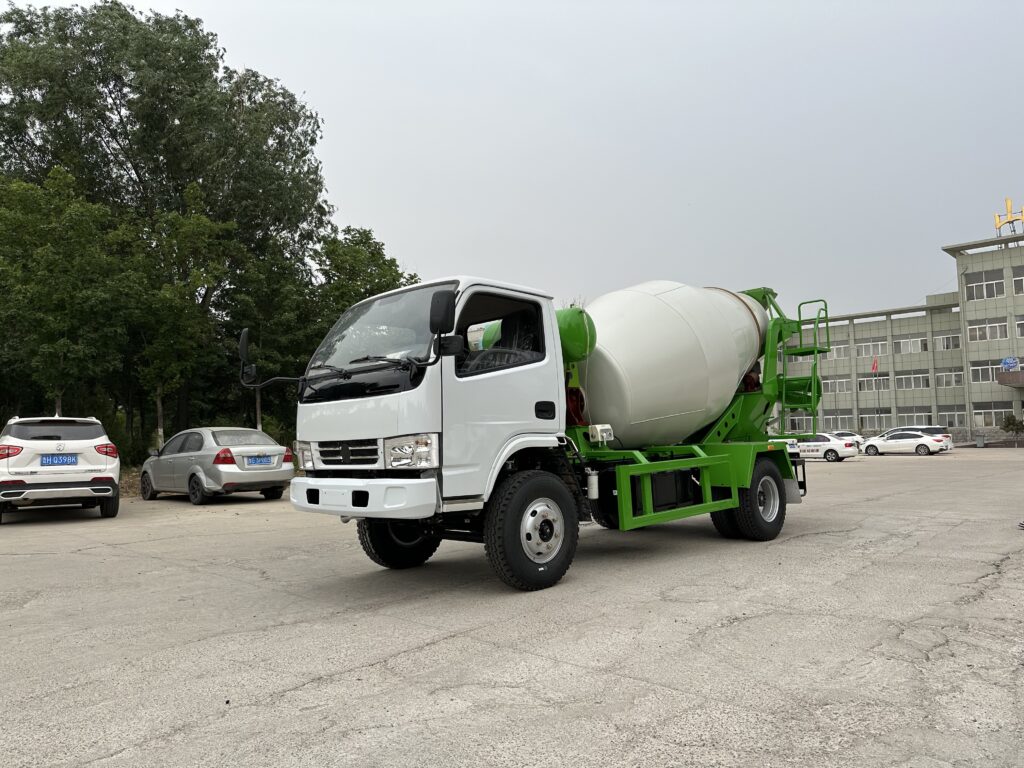

Working on muddy roads, steep slopes, rocky ground, or remote construction sites can make concrete transportation difficult. A standard two-wheel-drive truck may struggle when road conditions become challenging, especially when carrying a heavy load. A 4WD Concrete Mixer Truck is designed to provide better traction by delivering engine power to all four wheels, making it a practical option for certain demanding construction environments.
For contractors working in rural areas, mountain regions, mines, road construction projects, and remote job sites, four-wheel drive can help improve vehicle mobility. However, choosing a 4WD truck is not simply about selecting a vehicle with four driven wheels. The chassis, engine, transmission, axle configuration, ground clearance, mixing capacity, and actual road conditions all need to match the project.
This guide explains how a four-wheel-drive concrete mixer truck works, where it is useful, what advantages it offers, and how to choose the right model for your business.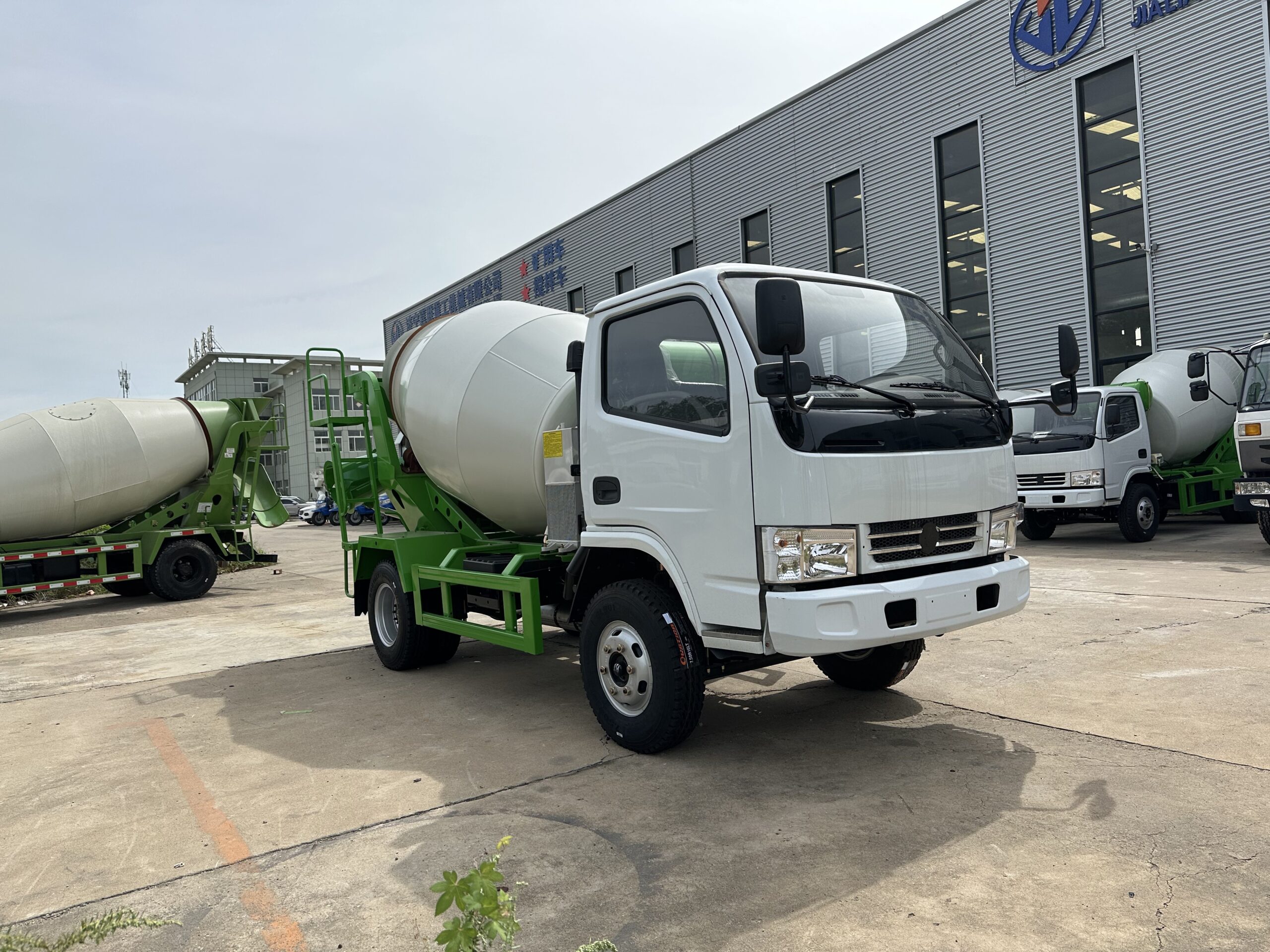
1. What Is a 4WD Concrete Mixer Truck?
A 4WD concrete mixer truck is a concrete transportation vehicle equipped with a four-wheel-drive system. Unlike a conventional two-wheel-drive vehicle, which sends driving power to only two wheels, a 4WD system can deliver power to all four wheels.
This configuration helps the truck maintain traction when driving on slippery, uneven, or loose surfaces. It can be particularly useful when a construction site is located far from paved roads or requires the vehicle to travel through difficult terrain.
A typical 4WD concrete mixer truck consists of several main systems:
- Vehicle chassis: Supports the cab, engine, mixing drum, and other equipment.
- Four-wheel-drive system: Transfers engine power to all four wheels.
- Engine and transmission: Provide the power and torque needed for driving and climbing.
- Mixing drum: Stores and continuously mixes concrete during transportation.
- Hydraulic system: Drives the mixing drum and controls its rotation.
- Discharge system: Allows concrete to be unloaded at the construction site.
It is important to understand that the 4WD system drives the vehicle wheels, while the hydraulic system operates the mixing drum. They perform different functions and should be evaluated separately.
2. Why Choose a Four-Wheel-Drive Concrete Mixer Truck?
The main reason to choose a 4WD concrete mixer truck is improved traction in difficult driving conditions. When a truck carries concrete across muddy, sandy, or uneven ground, the driving wheels need sufficient grip to move the vehicle safely.
Here are several advantages worth considering.
Better Traction on Muddy Roads
Muddy roads can become slippery, especially after heavy rain. A two-wheel-drive truck may have difficulty moving forward if its driven wheels lose grip.
A properly configured 4WD system can distribute driving power across all four wheels, helping the vehicle maintain traction when road conditions are poor.
This can be useful for rural construction, temporary access roads, and remote job sites.
More Suitable for Uneven Ground
Construction sites are not always flat. Rocks, loose soil, uneven surfaces, and damaged roads can make vehicle movement more difficult.
Four-wheel drive can help improve traction when different wheels encounter surfaces with different grip levels. However, ground clearance, axle design, suspension, tires, and vehicle weight also affect overall off-road performance.
Better Support for Slopes
When transporting concrete on uphill or downhill routes, the vehicle needs suitable power, traction, and braking performance.
A 4WD configuration may help the truck maintain driving traction on suitable slopes. The actual climbing ability depends on engine torque, transmission ratios, tire grip, vehicle load, gradient, and road surface.
Always confirm the manufacturer’s rated climbing ability rather than assuming that every 4WD truck can handle the same slope.
More Flexible Access to Construction Sites
Some construction projects are located in areas where road infrastructure is limited. A 4WD concrete mixer truck may provide more flexibility when traveling between the main road and the job site.
For contractors working in villages, mountainous areas, mines, and remote locations, this can make a difference when selecting transportation equipment.
3. Where Is a 4WD Concrete Mixer Truck Used?
A four-wheel-drive concrete mixer truck is especially worth considering when road conditions are an important part of the construction challenge.
Rural House Construction
In some rural areas, construction roads are narrow, unpaved, or uneven. During the rainy season, dirt roads can become muddy and difficult for ordinary trucks to pass.
A small 4WD concrete mixer truck may be suitable for transporting concrete to rural house-building projects, depending on the road width, vehicle dimensions, and site conditions.
Mountain Construction Projects
Mountain construction sites often involve slopes, uneven roads, and changing ground conditions. A suitable four-wheel-drive configuration can help improve traction when the truck travels on these routes.
Before choosing a model, check the road gradient, turning space, ground clearance, and braking requirements.
Mining and Quarry Projects
Mining and quarry areas may have rough access roads, loose stones, and uneven surfaces. Concrete may be needed for equipment foundations, workshops, retaining structures, and other construction work.
A 4WD concrete mixer truck can be considered when the access route requires additional traction. The chassis, tires, protection components, and load capacity should be selected according to the actual site environment.
Road Construction and Repair
Road construction projects do not always take place on finished roads. Temporary access routes may contain loose soil, gravel, or muddy sections.
A four-wheel-drive mixer truck may help contractors transport concrete to these locations, especially when the project requires repeated trips between the concrete supply point and the work area.
Remote Construction Sites
Some projects are far from concrete batching plants and paved transportation routes. In these locations, vehicle mobility and reliable operation are important.
A 4WD truck may be a suitable option when the route includes difficult ground conditions. Buyers should also consider maintenance access, spare parts availability, and the distance to local service providers.
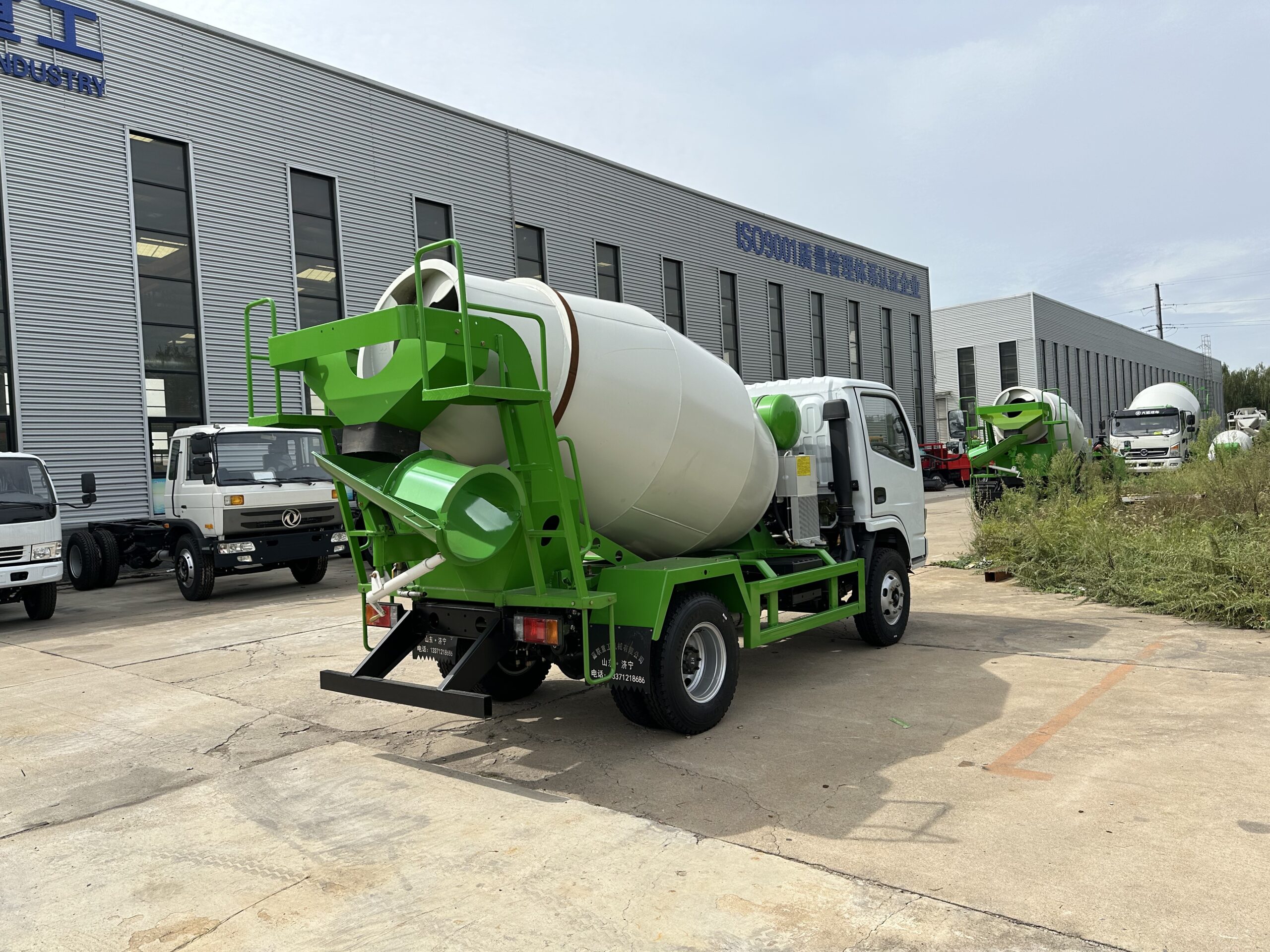 4. 4WD vs. 2WD Concrete Mixer Truck: What Is the Difference?
Both two-wheel-drive and four-wheel-drive concrete mixer trucks can be suitable for construction work. The right choice depends on the roads, load, and working environment.
| Comparison | 2WD Concrete Mixer Truck | 4WD Concrete Mixer Truck |
|---|---|---|
| Driving power | Delivered to two wheels | Delivered to all four wheels |
| Traction | Suitable for many normal road conditions | Better potential traction on difficult surfaces |
| Muddy roads | More dependent on grip at the driven wheels | More suitable when additional traction is needed |
| Uneven terrain | Depends on chassis and road conditions | Can provide better mobility with suitable chassis design |
| Slopes | Depends on power, tires, and road grip | Can offer additional traction on suitable slopes |
| Configuration | Often simpler | May involve additional drivetrain components |
| Maintenance | Depends on the vehicle design | More drivetrain components may require maintenance |
| Best application | Regular paved or relatively good roads | Challenging roads and demanding job sites |
One important point: 4WD does not automatically mean that a truck is suitable for every off-road environment. Tire selection, differential locks, axle strength, suspension, ground clearance, and vehicle weight distribution are also important.
If your truck mainly travels on paved roads and well-maintained construction routes, a 2WD model may be sufficient. If it frequently needs to travel through mud, loose soil, steep access roads, or rough terrain, a 4WD model is worth comparing.
5. Important Configurations to Check When Buying a 4WD Mixer Truck
Choosing the right four-wheel-drive concrete mixer truck requires looking at the complete vehicle, not just its drivetrain.
Engine and Transmission
The engine must provide sufficient power and torque for the vehicle’s loaded weight and working environment.
Transmission ratios are also important. Low-speed operation can be useful when driving through difficult construction areas or moving slowly on slopes.
Ask the manufacturer about engine power, maximum torque, transmission type, and the available driving modes.
Four-Wheel-Drive System
Check how the 4WD system transfers power to the axles and whether it includes additional traction features.
Depending on the vehicle design, relevant components may include:
- Transfer case
- Front and rear differentials
- Differential locks
- Axle configuration
- Drive mode selection
Not every 4WD truck has the same system. Ask for the actual drivetrain configuration instead of relying only on the 4WD label.
Tires and Ground Clearance
Tires are the direct contact point between the truck and the road. Their size, tread pattern, load rating, and suitability for the working surface all affect traction.
Ground clearance is another important consideration. A truck with insufficient clearance may have difficulty passing over rocks, ruts, and uneven ground.
Choose tires and ground clearance according to the actual site conditions and the manufacturer’s vehicle design.
Chassis and Load Capacity
The chassis must support the complete vehicle, including the cab, engine, mixing drum, hydraulic system, and concrete load.
When comparing different models, check the rated payload, axle loads, frame structure, wheelbase, and overall dimensions.
A 4WD system cannot compensate for an unsuitable chassis or excessive vehicle loading.
Hydraulic System and Mixing Drum
The mixing drum needs a suitable hydraulic pump, motor, and reducer to maintain the required rotation during transportation.
The hydraulic system should be matched to the drum capacity and operating requirements. Buyers should also check drum dimensions, mixing performance, discharge arrangements, and maintenance access.
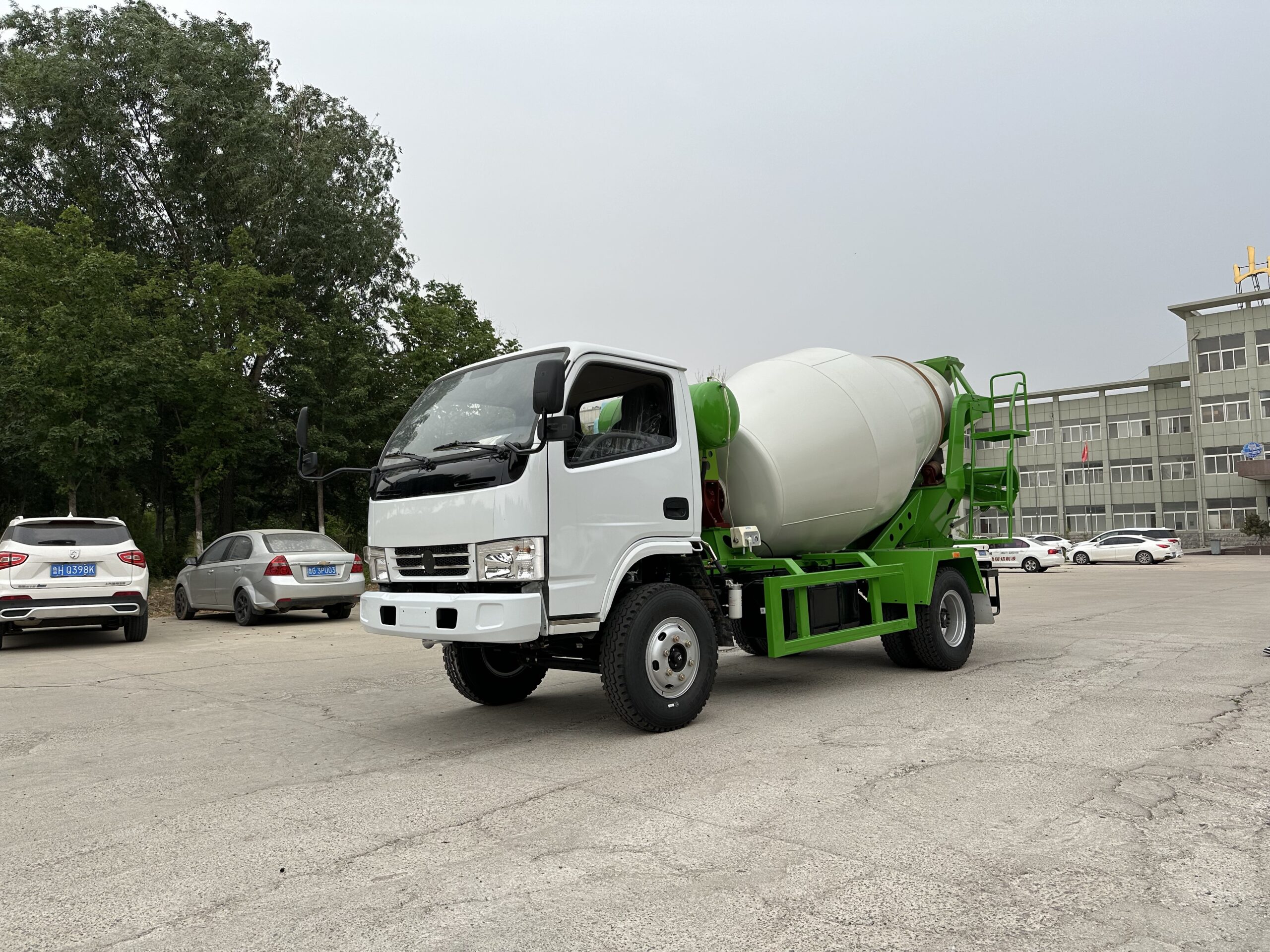 6. How to Choose the Right 4WD Concrete Mixer Truck Capacity?
Four-wheel drive is only one part of the selection process. You also need to choose a mixing capacity that matches your daily concrete demand.
For small construction projects and difficult access roads, 2m³ to 8m³ models are worth comparing.
2m³ 4WD Concrete Mixer Truck
A 2m³ model may suit small rural projects, minor construction work, and locations where access is particularly difficult. It is worth considering when concrete demand per delivery is relatively low.
3m³ 4WD Concrete Mixer Truck
A 3m³ model can be a practical option for rural house construction, small contractors, and local construction projects that require regular concrete transportation.
4m³ 4WD Concrete Mixer Truck
A 4m³ model may suit contractors who need more concrete per delivery while still requiring a relatively compact vehicle configuration.
5m³ to 8m³ 4WD Concrete Mixer Truck
Larger-capacity models may be suitable for projects with higher concrete demand and more regular transportation requirements. However, buyers must confirm that the chassis, vehicle dimensions, payload, and road conditions are appropriate.
Do not select capacity based only on the amount of concrete the drum can hold. The actual rated working capacity and legal vehicle load must be confirmed before ordering.
7. Can a 4WD Concrete Mixer Truck Be Customized?
Different construction projects have different requirements. Standard vehicle configurations may not always match the road conditions, working space, or concrete demand at your site.
Depending on the chassis and technical feasibility, a manufacturer may be able to discuss customization of:
- Mixing capacity
- Chassis configuration
- Vehicle width and length
- Ground clearance
- Engine and transmission options
- Tire configuration
- Mixing drum design
- Discharge arrangement
For example, a contractor working in a mountain area may need a different chassis and tire configuration from someone working on muddy village roads.
If you already own a suitable 4WD chassis, you may also consider purchasing a customized concrete mixer body separately. Before production, the manufacturer should confirm the chassis compatibility, rated load, mounting structure, and hydraulic system requirements.
Customization should always be based on actual operating conditions and engineering requirements. The goal is to create a vehicle that works reliably, not simply to add more features.
8. What Should You Consider Before Purchasing?
Before purchasing a 4WD concrete mixer truck, prepare information about your project and transportation route.
Here is a practical checklist:
- Road conditions: Are the roads muddy, sandy, rocky, steep, or uneven?
- Project location: Will the truck work in villages, mountains, mines, or remote construction areas?
- Concrete demand: How many cubic meters of concrete are needed per delivery and per day?
- Vehicle dimensions: Are there restrictions on road width, entrance height, or turning space?【】【】
- Drivetrain: What type of 4WD system and axle configuration does the truck use?
- Load capacity: Can the chassis safely support the complete vehicle and intended concrete load?
- Maintenance: Are spare parts and technical support available in your country?
- Customization: Do you need a complete vehicle or a mixer body for an existing chassis?
Providing photos or videos of your working environment can also help the manufacturer understand your requirements and recommend a suitable configuration.
For more details about vehicle parameters, you can also review the Concrete Mixer Truck Specifications before making a final decision.
9. Why Work with a Concrete Mixer Truck Manufacturer?
When purchasing a 4WD concrete mixer truck, choosing a suitable manufacturer is important. The vehicle’s chassis, drivetrain, mixing drum, hydraulic system, and load capacity need to work together.
A manufacturer that understands complete vehicle configuration and customization can help you compare different options based on your project requirements.
At JiaLian, we focus on concrete mixer trucks and customized solutions for different construction environments. We can discuss complete mixer trucks and customized mixer bodies according to the customer’s chassis and project requirements.
Whether you need a 2m³, 3m³, or 4m³ small 4WD concrete mixer truck, the final configuration should match your road conditions, daily concrete demand, and operating environment.
Conclusion: Is a 4WD Concrete Mixer Truck Right for Your Project?
A 4WD Concrete Mixer Truck can be a practical choice for contractors working on muddy roads, steep slopes, rough terrain, and remote construction sites. By delivering driving power to all four wheels, it can provide additional traction when compared with a suitable two-wheel-drive configuration.
However, four-wheel drive alone does not determine the vehicle’s performance. Engine torque, transmission, tires, ground clearance, chassis strength, load capacity, and hydraulic mixing system all matter.
Before purchasing, evaluate your actual road conditions and daily concrete demand. Then choose the capacity and configuration that match your project.
At JiaLian, we can discuss customized complete concrete mixer trucks and mixer bodies for different working environments. Tell us your required capacity, road conditions, and destination country to request a suitable configuration and quotation.