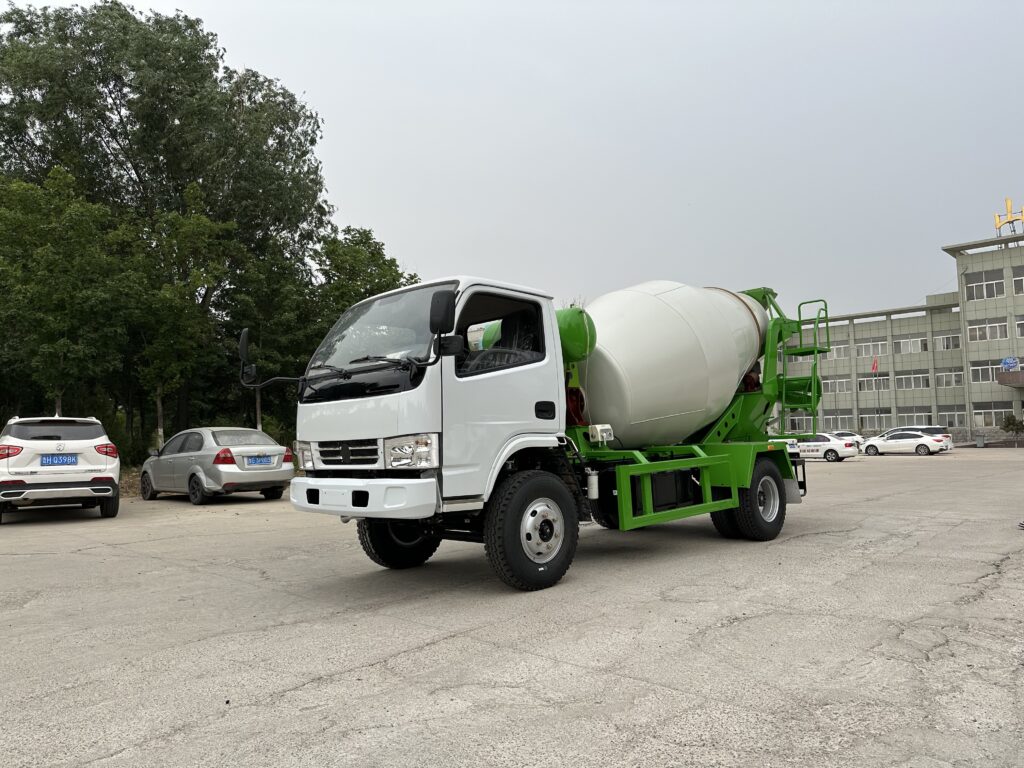
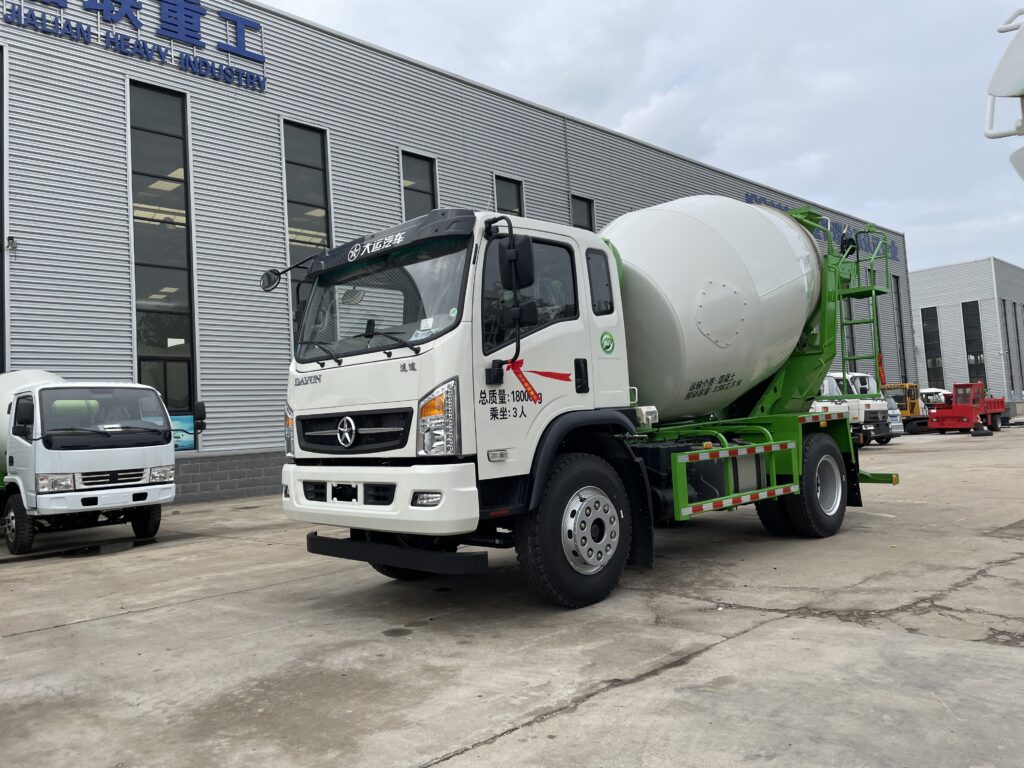
Finding a suitable Concrete Mixer Truck For Narrow Access Roads can be challenging when construction sites are located in villages, residential areas, mountain roads, or places with limited access. A standard concrete mixer truck may be too wide, too long, or difficult to turn in these environments. Choosing a compact truck with suitable dimensions can make concrete transportation easier and help contractors reach more job sites.
For rural house building, small construction projects, and local road repairs, a small concrete mixer truck can be a practical solution. However, a smaller capacity alone does not guarantee that a truck can pass through a narrow road. Vehicle width, overall length, height, turning radius, chassis configuration, and road conditions all need to be considered before purchasing.
This guide explains what to check when choosing a concrete mixer truck for narrow roads and how customization can help match the vehicle to your actual working environment.
1. Why Are Narrow Access Roads a Challenge for Concrete Mixer Trucks?
Not every construction site has wide and well-maintained roads. In many rural areas and developing regions, contractors need to transport concrete through narrow village streets, small entrances, uneven roads, and restricted construction areas.
A large concrete mixer truck may encounter several problems:
- Limited road width: The vehicle may not have enough clearance to pass between buildings, walls, or roadside obstacles.
- Difficult turning: Narrow intersections and tight corners can make turning challenging.
- Height restrictions: Low entrances, overhead structures, and covered passages may prevent taller vehicles from entering.
- Limited unloading space: Even if the truck reaches the site, there may not be enough room to position the vehicle for concrete discharge.
- Poor road conditions: Uneven surfaces, steep slopes, and muddy roads can create additional driving difficulties.
These problems can delay construction and increase transportation costs. Therefore, selecting a truck based on actual road conditions is just as important as choosing its mixing capacity.
2. Choose a Compact Concrete Mixer Truck for Narrow Roads
When working in restricted areas, vehicle dimensions should be one of the first things to consider.
A compact concrete mixer truck may be easier to operate in narrow streets and small construction sites than a larger vehicle. Depending on the model, a shorter body and narrower vehicle structure can help improve maneuverability.
However, compact design should not come at the expense of practical working requirements. The truck still needs a suitable chassis, enough rated load capacity, and a mixing system that matches the intended application.
When comparing different models, pay attention to:
- Overall vehicle width
- Overall vehicle length
- Vehicle height
- Wheelbase
- Turning radius
- Ground clearance
- Rated load and mixing capacity
Do not judge a truck only by its appearance. Ask the manufacturer for actual vehicle dimensions and drawings so you can compare them with the roads and entrances at your construction site.
3. Measure the Road Before Choosing the Truck
One of the most common mistakes when buying a concrete mixer truck is choosing a model before checking the access road.
A road may look wide enough when viewed from the entrance, but the actual route could contain narrow corners, roadside walls, utility poles, or other obstacles.
Before selecting a vehicle, measure the following areas:
Road width
Measure the narrowest section of the route, not just the average road width. Leave enough clearance on both sides for safe vehicle movement.
Entrance width
If the truck needs to enter a construction site through a gate or passage, measure the usable entrance width and check for obstacles on either side.
Turning space
A truck may pass through a narrow road but still be unable to turn at the end. Check intersections, corners, and the space available for reversing or changing direction.
Height clearance
Measure the lowest overhead obstacle along the route, including gates, branches, cables, and covered passages.
Road surface and slope
Check whether the route includes steep slopes, muddy sections, uneven ground, or weak road surfaces. These conditions affect chassis and tire selection.
Providing these measurements to the manufacturer makes it easier to identify a suitable vehicle configuration.
 4. How to Choose the Right Capacity for Narrow Access Roads
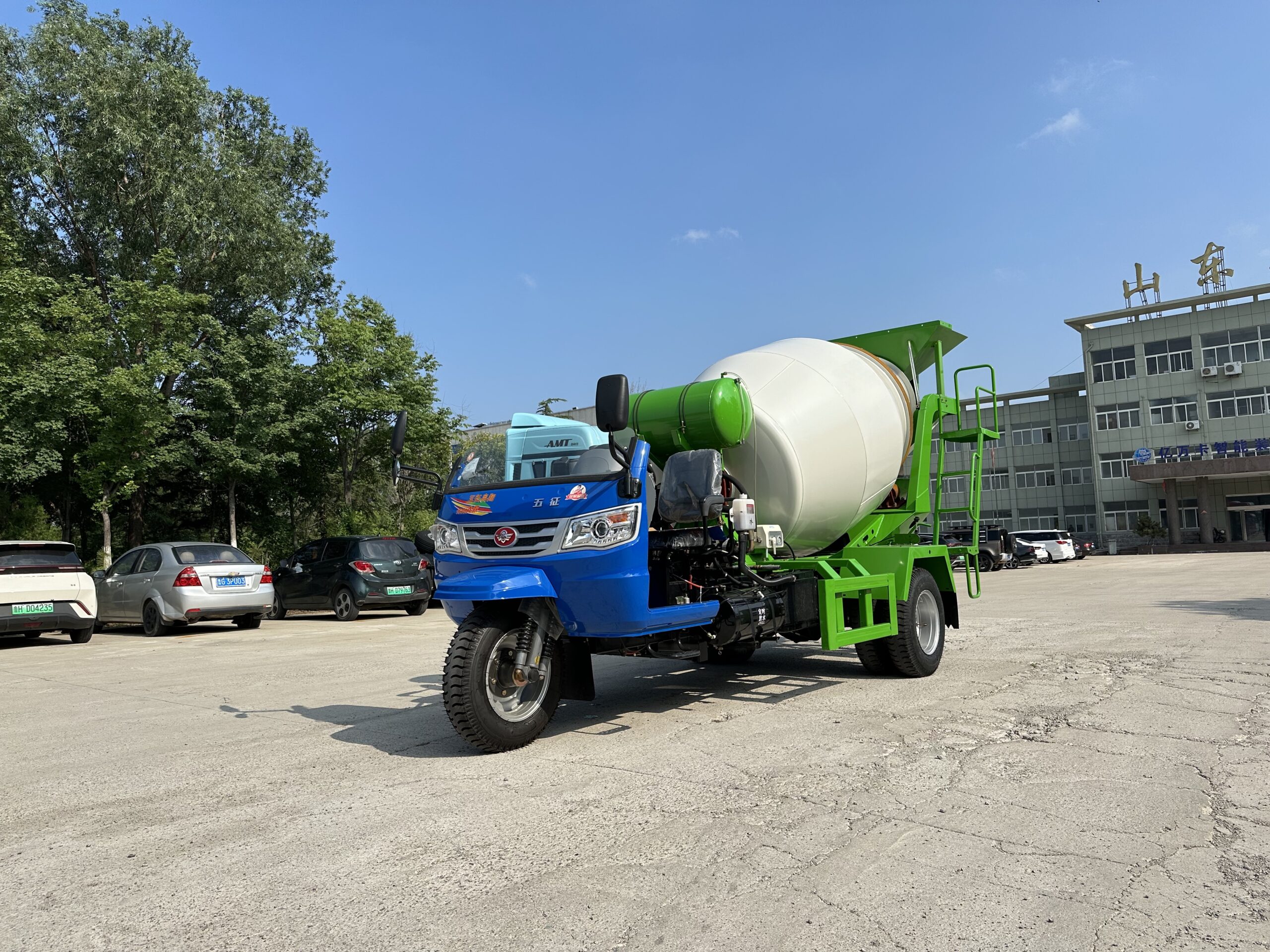
Capacity is another important factor. A larger drum can transport more concrete per trip, but it may also require a larger chassis and a bigger vehicle structure.
For narrow access roads, many contractors start by comparing small-capacity models.
2m³ Concrete Mixer Truck
A 2m³ model may be suitable for very small construction projects, rural house repairs, and locations with particularly limited access. It is worth considering when each delivery requires only a small amount of concrete.
3m³ Concrete Mixer Truck
A 3m³ model can provide a practical balance for rural house building and small construction projects. It may suit contractors who need regular concrete deliveries but still need a relatively compact vehicle.
4m³ Concrete Mixer Truck
A 4m³ model may be suitable for contractors with higher daily concrete demand. Before choosing this capacity, confirm that the chassis dimensions and overall vehicle size are compatible with the access road.
5m³ and Larger Models
Larger-capacity trucks can reduce the number of trips required, but they may be more difficult to operate in very narrow areas. Consider them only after checking road width, turning space, vehicle weight, and site access.
The right capacity is not necessarily the smallest one. It is the capacity that matches your concrete demand while allowing the complete vehicle to reach and operate at your construction site.
5. Chassis Selection Matters for Narrow Road Performance
The chassis directly affects the truck’s overall dimensions, load capacity, driving performance, and maneuverability.
When choosing a concrete mixer truck for narrow access roads, consider the following factors:
- Wheelbase: A suitable wheelbase can help balance vehicle stability and maneuverability.
- Vehicle width: The chassis width must fit the available road space.
- Drive configuration: Choose a configuration according to road conditions, gradients, and traction requirements.
- Ground clearance: This is important when the route includes uneven surfaces or obstacles.
- Rated load: The chassis must safely support the complete vehicle and its intended load.
For example, a contractor working mainly on narrow but relatively flat village roads may have different requirements from someone operating on narrow, muddy, and uneven mountain roads.
There is no single chassis configuration that works for every narrow-road project. The best choice depends on the route, vehicle capacity, and actual working conditions.
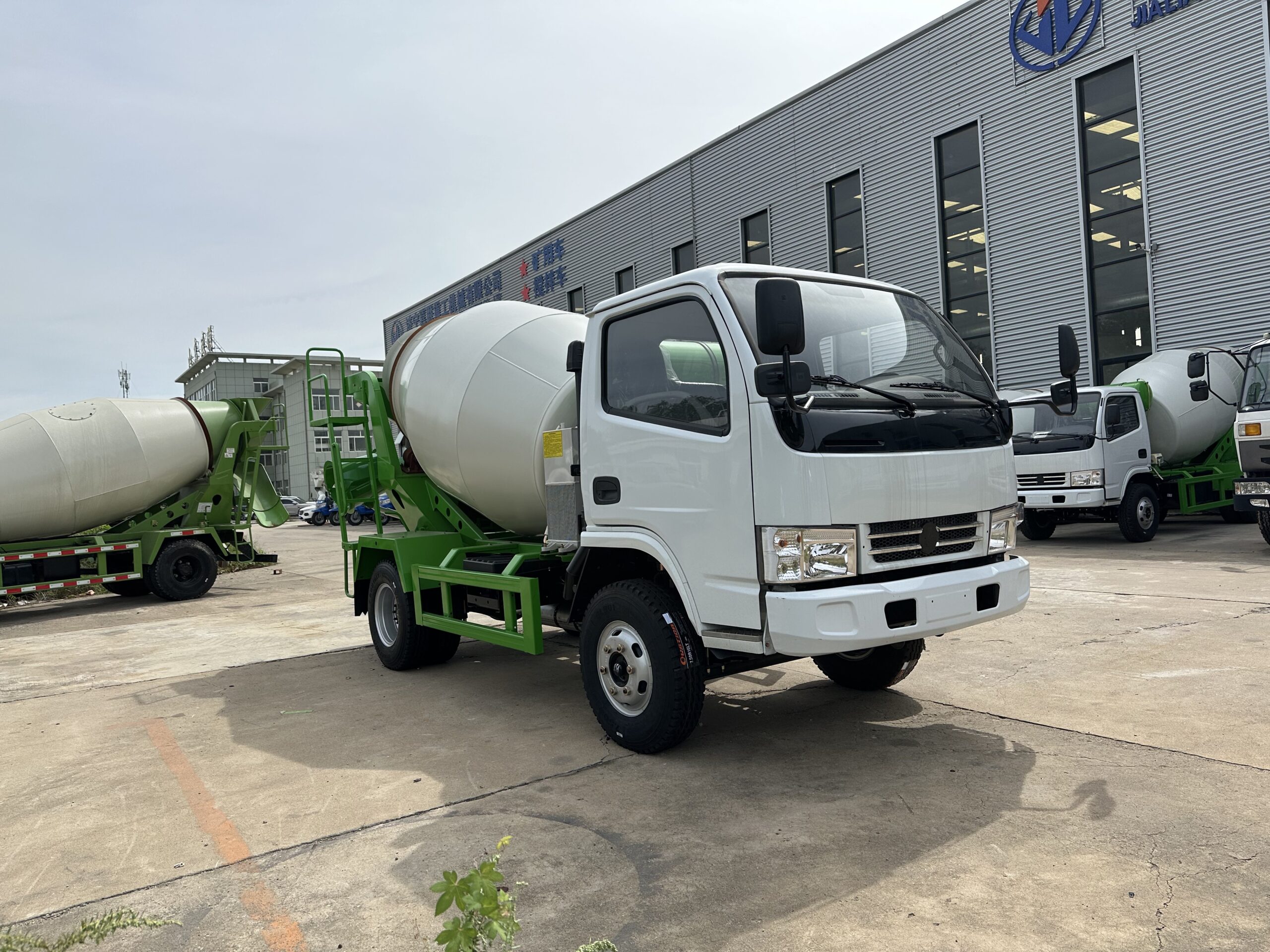 6. Customization Can Help Solve Narrow Road Access Problems
Sometimes, standard concrete mixer truck dimensions simply do not match the construction site. In this situation, a customized vehicle may be worth considering.
Depending on technical feasibility and chassis limitations, the manufacturer may be able to discuss adjustments to vehicle width, overall length, height, chassis selection, and other configurations.
For example, if a construction site has a low entrance, vehicle height may need special attention. If the road is narrow and has several tight corners, overall width, wheelbase, and turning space become more important.
Customization should always be based on real measurements and engineering requirements. Reducing vehicle dimensions without considering stability, load capacity, and structural strength can create problems during operation.
A professional manufacturer should evaluate the complete vehicle configuration rather than simply making individual parts smaller.
7. Consider the Mixing Drum and Discharge System
The mixing drum is another important part of the vehicle. Its capacity, dimensions, mounting position, and hydraulic drive system need to match the chassis.
When selecting a compact truck, make sure the mixing drum is designed to work properly with the complete vehicle. A smaller truck still needs a reliable mixing and discharge arrangement.
You should also consider the unloading area. Some construction sites have limited space around the truck, so the discharge direction and outlet arrangement may affect how easily concrete can be placed.
Before ordering, discuss:
- Mixing capacity and drum dimensions
- Hydraulic system configuration
- Drum rotation requirements
- Discharge outlet design
- Available space for unloading
If you already own a suitable truck chassis, you can also ask whether a customized Concrete Mixer Body is available separately. The manufacturer should first confirm chassis compatibility, mounting structure, payload, and hydraulic requirements.
8. Complete Truck or Customized Mixer Body: Which Should You Choose?
When purchasing equipment for narrow access roads, you may have two options: buying a complete concrete mixer truck or purchasing a mixer body for an existing chassis.
Option 1: Complete Concrete Mixer Truck
A complete vehicle is suitable for buyers who need the chassis, mixing drum, hydraulic system, and related equipment supplied as one complete solution.
This option allows the overall vehicle configuration to be considered together, which is particularly important when working with restricted road dimensions.
Option 2: Customized Concrete Mixer Body
If you already own a compatible chassis, purchasing a mixer body separately may be an alternative. This can be useful when you want to use an existing vehicle platform.
However, the chassis must be suitable for the drum capacity, total weight, mounting structure, and hydraulic system. Compatibility should be confirmed before production.
The right option depends on your existing equipment, project requirements, and budget.
9. What Should You Ask the Manufacturer Before Ordering?
Before buying a concrete mixer truck for narrow access roads, provide the manufacturer with enough information to evaluate your requirements.
Here are some useful questions:
- Can the vehicle width and overall length meet my road conditions?
- What is the complete vehicle’s height?
- What is the turning radius?
- Which chassis options are available?
- Can the vehicle dimensions be customized?
- What mixing capacities are available?
- Can you customize a mixer body for my existing chassis?
- Can you provide vehicle drawings and detailed specifications?
It is also helpful to share photos or videos of the narrow road, entrance, and construction site. These details can help the manufacturer better understand the actual working environment.
For more information about vehicle configurations, review the Concrete Mixer Truck Specifications before comparing different models.
 10. Why Choose a Manufacturer That Offers Custom Solutions?
When standard vehicles cannot meet your access requirements, working directly with a manufacturer that understands customization can make the selection process easier.
A manufacturer can discuss the complete vehicle structure, chassis, mixing drum, hydraulic system, and dimensions together. This is important because changing one part of the vehicle may affect other components.
At JiaLian, we focus on concrete mixer trucks and customized solutions for different construction requirements. We can discuss complete concrete mixer trucks as well as customized mixer bodies for compatible chassis.
Whether you need a 2m³, 3m³, or 4m³ small concrete mixer truck, the configuration should be selected according to your project, road conditions, and transportation requirements.
Conclusion: Choose a Concrete Mixer Truck That Can Reach Your Job Site
A suitable Concrete Mixer Truck For Narrow Access Roads should do more than carry concrete. It must also pass through the access road, turn safely, reach the working area, and discharge concrete efficiently.
Before choosing a model, check road width, entrance dimensions, turning space, height restrictions, chassis configuration, and mixing capacity. If standard models do not meet your requirements, discuss customization with the manufacturer.
At JiaLian, we can discuss customized complete concrete mixer trucks and mixer bodies according to different project requirements.
Tell us your required capacity, road width, entrance height, and destination country. Our team can help you discuss a suitable configuration and provide a quotation.