
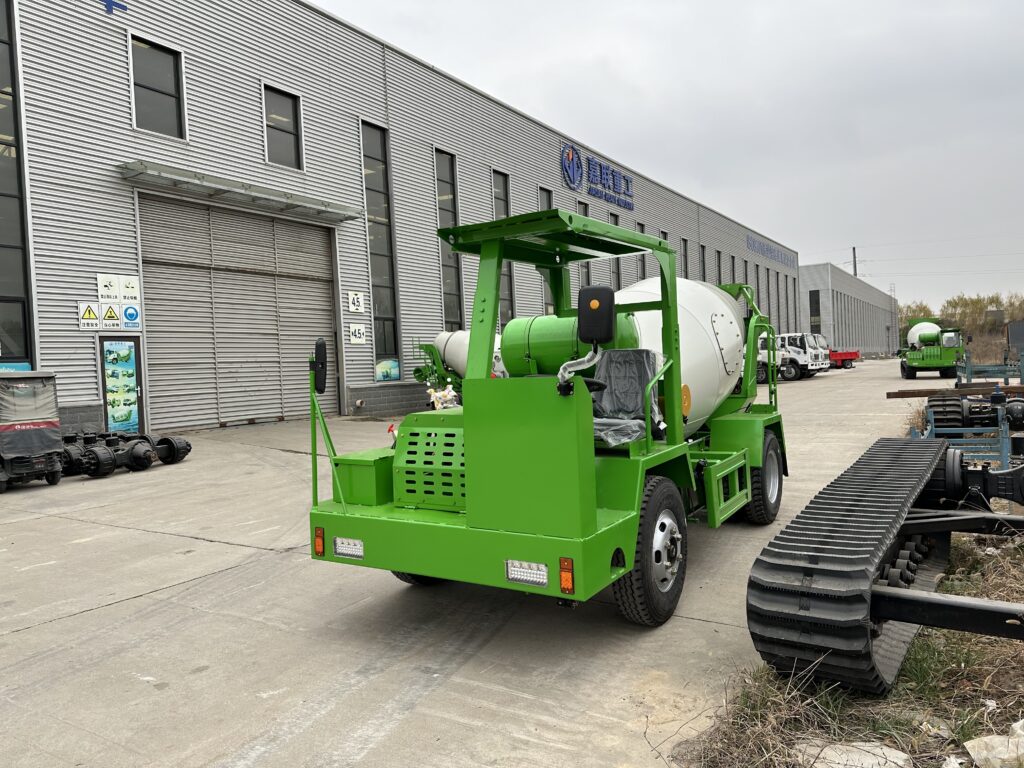
Construction projects do not all have the same requirements.
A mixer truck used for a city building project may need a different configuration from one working on a mountain road, mining site, tunnel project, or rural construction site.
The difference is not always the mixer capacity.
Vehicle dimensions, chassis, engine, drive system, discharge height, hydraulic system, and other specifications can also affect whether the truck is suitable for a particular job.
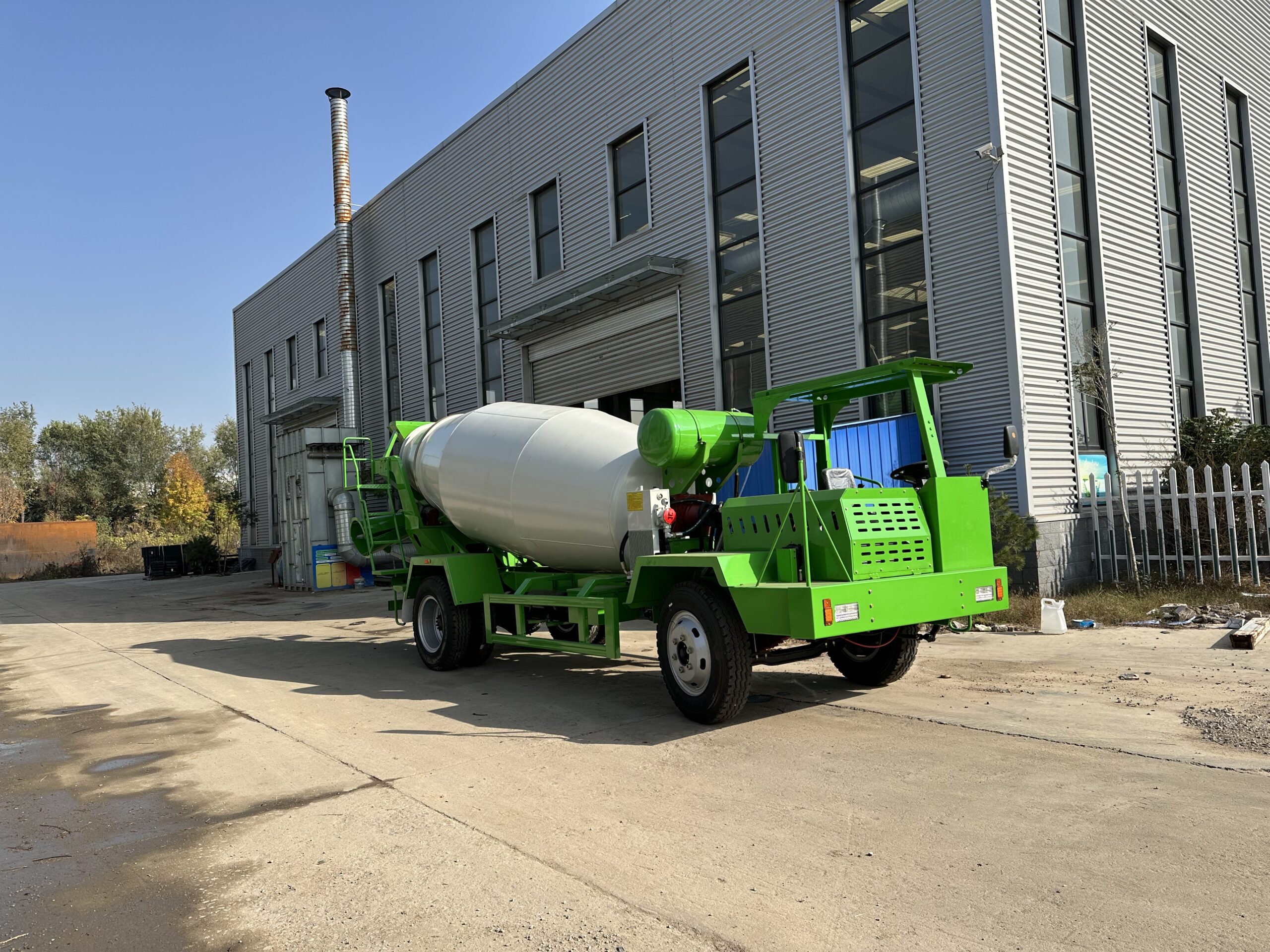
A Concrete Mixer Truck With Customized Specifications allows customers to select or adjust important specifications according to their actual construction requirements.
Instead of choosing a standard truck and accepting specifications that may not match the project, customers can discuss their requirements with the manufacturer before production.
Why Do Concrete Mixer Trucks Need Customized Specifications?
A standard mixer truck is designed for common working conditions.
However, construction projects can vary significantly.
For example, one customer may need a compact truck for a narrow construction road, while another may need a four-wheel-drive vehicle for rough terrain.
A third customer may require a specific chassis or discharge height.
These different requirements can affect the final truck configuration.
Customized specifications are therefore useful when the standard specifications do not fully match the project.
The purpose of customization is simple:
Build the mixer truck around the actual job requirements.
What Specifications Can Be Customized?
The available options depend on the manufacturer and specific truck model.
Common specifications that may be discussed include:
- Mixer capacity
- Chassis
- Engine
- Vehicle dimensions
- Drive system
- Wheel configuration
- Discharge height
- Chute configuration
- Hydraulic system
- Fuel system
- Cab configuration
Not every project requires changes to all of these components.
The best approach is to identify the specifications that actually affect the way the truck will be used.
Customized Mixer Capacity
Mixer capacity is one of the first specifications customers need to determine.
The appropriate capacity depends on the project’s concrete requirements.
For example, a smaller project may not require a large mixer truck.
A Small Concrete Mixer Truck For Small Projects can be considered when concrete demand is relatively limited.
Larger construction projects may require a higher-capacity mixer to reduce the number of trips required during daily operation.
When selecting capacity, consider:
- Concrete required per cycle
- Daily concrete demand
- Transportation distance
- Number of working cycles
- Available road conditions
- Working space
The goal is to choose a capacity that matches the project rather than simply selecting the largest available option.
Custom Chassis Options
The chassis is an important part of the complete mixer truck.
Different projects can have different requirements for chassis size, load capacity, driving performance, and road conditions.
Customers may have a preferred chassis brand or may need a chassis that matches local operating conditions.
A Concrete Mixer Truck With Custom Chassis can be developed according to the required vehicle configuration, depending on the manufacturer’s available options.
The chassis should be selected together with the mixer capacity and expected operating environment.
Customized Vehicle Dimensions
Vehicle dimensions can become critical when access to the construction site is restricted.
The truck may need to pass through:
- Narrow roads
- Small entrances
- Low-clearance areas
- Restricted construction zones
- Tight turning areas
A Concrete Mixer Truck With Custom Dimensions can be considered when standard vehicle dimensions do not fit the available space.
Important dimensions include:
- Overall length
- Overall width
- Overall height
- Wheelbase
- Ground clearance
Before customization, customers should provide accurate measurements of the construction site and access roads.
Custom Drive System
The drive system should match the road conditions.
A project located in an urban area with paved roads may have different requirements from a project located on steep or uneven terrain.
For challenging working environments, a Concrete Mixer Truck With 4 Wheel Drive can provide additional traction.
Four-wheel drive may be useful for:
- Mountain roads
- Gravel roads
- Muddy roads
- Slopes
- Uneven construction roads
However, four-wheel drive is not necessary for every project.
The drive system should be selected according to the actual working conditions.
Customized Discharge Requirements
Concrete does not always need to be discharged in the same way.
The required discharge position can vary from one project to another.
Customers may have specific requirements for:
- Discharge height
- Chute length
- Chute arrangement
- Discharge direction
- Working distance
For example, a project may require concrete to be discharged into a foundation located below the truck or into a restricted working area.
These requirements should be discussed before production so the discharge system can be configured accordingly.
Custom Engine And Power Configuration
The engine is another important specification.
The required power depends on the vehicle configuration, mixer capacity, operating conditions, and road environment.
A truck operating mainly on flat paved roads may have different power requirements from one working on steep construction roads.
Engine selection should therefore be considered together with:
- Vehicle weight
- Mixer capacity
- Drive system
- Road conditions
- Expected load
Rather than choosing the highest-power engine available, the better approach is to select an engine that matches the complete vehicle configuration.
Customized Hydraulic System
The hydraulic system plays an important role in mixer truck operation.
It can be involved in functions such as:
- Mixer drum rotation
- Concrete discharge
- Chute operation
- Other hydraulic functions
The hydraulic configuration should match the truck’s design and working requirements.
For customized vehicles, the hydraulic system should be considered together with the mixer drum, engine, transmission, and other components.
Customized Specifications For Different Construction Sites
Different job sites can require different truck specifications.
Urban Construction
Urban projects may place more emphasis on:
- Compact dimensions
- Turning space
- Road access
- Vehicle height
Rural Construction
Rural construction sites may involve less-developed roads and longer transportation distances.
A Small Concrete Mixer Truck For Rural Construction can be considered when the project involves smaller buildings, houses, roads, or other local construction.
Mountain Construction
Mountain projects can involve:
- Steep slopes
- Narrow roads
- Uneven terrain
- Limited access
A suitable drive system and vehicle size become more important.
Mining Projects
Mining sites may require greater attention to:
- Traction
- Ground clearance
- Chassis
- Vehicle durability
- Road conditions
For particularly challenging conditions, a Concrete Mixer Truck For Difficult Terrain may be considered.
Remote Construction
Remote projects may have limited access to concrete supply facilities.
In these cases, a self-loading configuration can provide additional flexibility.
A Self Loading Concrete Mixer Truck For Remote Areas can combine material loading, mixing, transportation, and discharge in one machine.
Custom Specifications For Special Projects
Some construction projects have requirements that are not covered by standard truck configurations.
Examples include:
- Tunnel construction
- Mining construction
- Infrastructure projects
- Mountain projects
- Restricted construction sites
- Remote projects
- Specialized engineering
For these applications, the customer should provide detailed information about the working environment.
A Custom Concrete Mixer Truck For Special Applications can then be considered based on the specific project requirements.
Customization should focus on practical requirements rather than adding unnecessary specifications.
How To Choose The Right Specifications
Choosing customized specifications should start with the construction site.
Step 1: Define The Project
Identify the type of project and the main tasks the mixer truck will perform.
Step 2: Check The Access Conditions
Measure:
- Road width
- Entrance width
- Maximum height
- Turning space
- Road slope
Step 3: Determine Concrete Demand
Estimate how much concrete is needed per cycle and per day.
Step 4: Determine The Required Mobility
Consider whether the truck will operate on:
- Paved roads
- Gravel roads
- Dirt roads
- Slopes
- Uneven terrain
- Temporary construction roads
Step 5: Confirm Discharge Requirements
Determine where and how the concrete needs to be discharged.
Step 6: Discuss Specifications With The Manufacturer
Provide all relevant information to the manufacturer before confirming the final configuration.
This allows the manufacturer to recommend specifications that work together rather than selecting each component separately.
Why The Complete Configuration Matters
A concrete mixer truck is a complete working vehicle.
Changing one specification can affect other parts of the vehicle.
For example, increasing mixer capacity can affect:
- Vehicle weight
- Chassis requirements
- Engine requirements
- Drive system
- Braking
- Overall dimensions
Similarly, changing vehicle dimensions can affect the chassis and mixer configuration.
This is why customized specifications should be evaluated as a complete system.
The objective is not to select the maximum specification for every component.
The objective is to create a balanced configuration for the actual project.
Customized Specifications For Small Projects
Small construction projects often have different equipment requirements from large infrastructure projects.
Contractors may need a compact truck that can enter smaller construction sites while still providing enough concrete for daily work.
A Small Concrete Mixer Truck For Small Projects can be suitable for:
- House construction
- Small foundations
- Rural roads
- Drainage projects
- Small commercial buildings
- Local infrastructure
The required mixer capacity, dimensions, and chassis can be selected according to the project.
Customized Specifications For Difficult Terrain
Terrain can significantly affect the required vehicle configuration.
For projects involving steep slopes, rough roads, or uneven ground, customers should provide information about the actual terrain.
Important factors include:
- Maximum slope
- Road surface
- Ground condition
- Road width
- Vehicle access
- Required concrete capacity
A suitable configuration may include four-wheel drive, appropriate ground clearance, and a chassis matched to the expected operating conditions.
The right choice depends on the actual job site.
What Information Should You Send To The Manufacturer?
When requesting a customized concrete mixer truck, provide as much project information as possible.
Useful information includes:
- Project type
- Destination country
- Required mixer capacity
- Preferred chassis
- Road conditions
- Road width
- Maximum slope
- Required vehicle dimensions
- Required discharge height
- Concrete transportation distance
- Quantity required
Photos, videos, drawings, and basic site measurements can also help.
The manufacturer can use this information to understand the actual application and recommend suitable specifications.
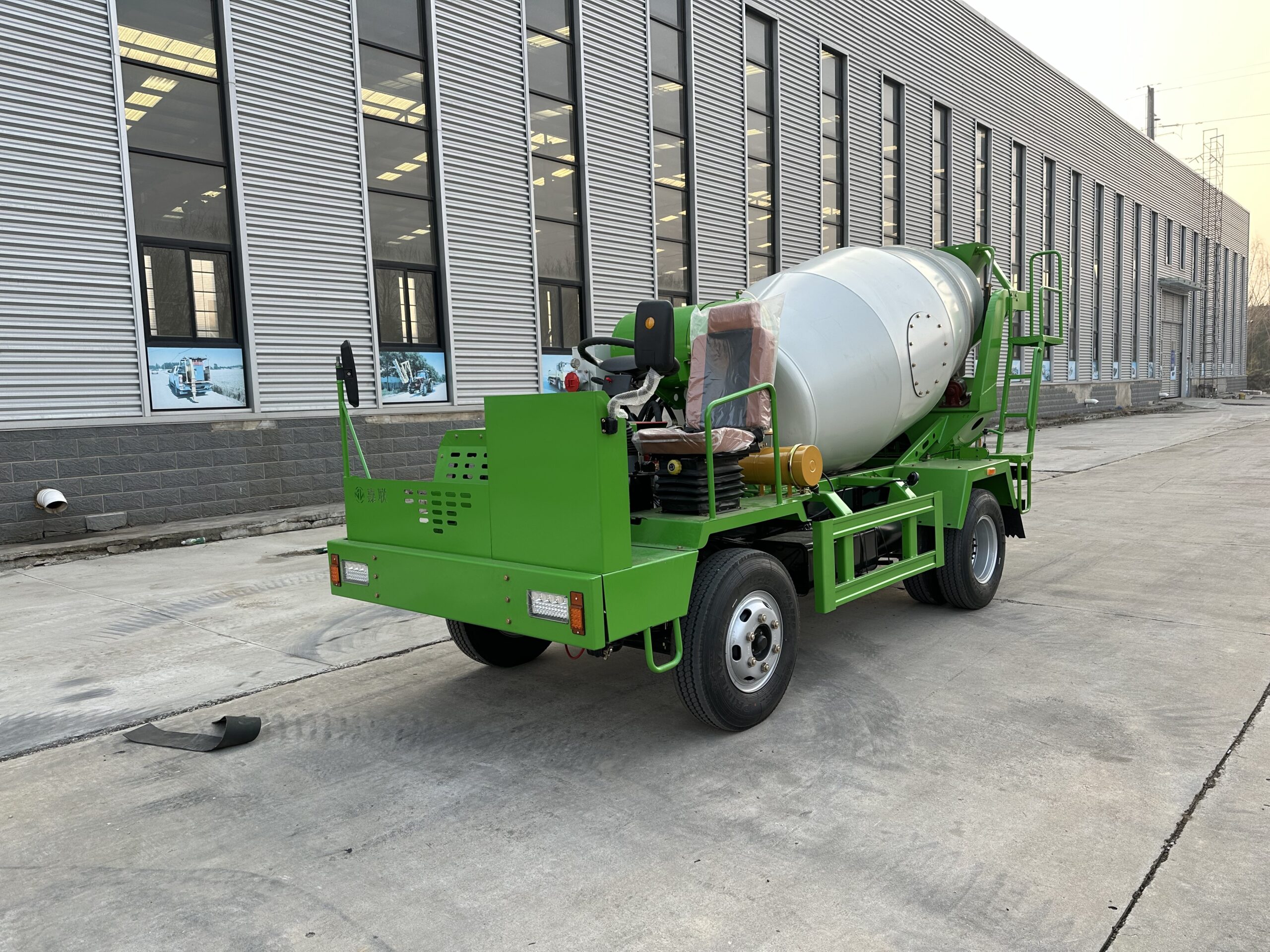 How Does The Customization Process Work?
A typical process can be simple.
1. Send Project Requirements
Provide information about the construction project and working conditions.
2. Confirm Basic Specifications
Discuss mixer capacity, chassis, dimensions, drive system, and discharge requirements.
3. Review The Configuration
The manufacturer prepares the proposed vehicle configuration.
4. Confirm The Details
Both sides confirm the technical specifications before production.
5. Production
The mixer truck is manufactured according to the confirmed configuration.
6. Inspection
The completed vehicle can be inspected before delivery according to the agreed requirements.
This process helps reduce misunderstandings about the final truck specifications.
 How To Find A Custom Mixer Truck Manufacturer
Choosing the right supplier is important when buying a customized vehicle.
An experienced Custom Concrete Mixer Truck Manufacturer should be able to discuss more than the basic mixer capacity.
The manufacturer should understand how:
- Chassis
- Mixer capacity
- Engine
- Drive system
- Vehicle dimensions
- Hydraulic system
- Discharge system
work together as one complete vehicle.
Customers should also ask for clear specifications before confirming an order.
Is A Customized Mixer Truck More Expensive?
The final price depends on the specifications.
Factors that can influence the price include:
- Chassis
- Mixer capacity
- Engine
- Drive system
- Vehicle dimensions
- Hydraulic components
- Discharge configuration
- Special equipment
Not every customization increases the cost significantly.
Some changes may simply involve selecting a different available configuration.
The most practical approach is to customize only the specifications required by the project.
Conclusion
A Concrete Mixer Truck With Customized Specifications provides flexibility for construction projects with specific requirements.
Mixer capacity, chassis, vehicle dimensions, drive system, engine, hydraulic system, and discharge configuration can all affect how the truck performs at the job site.
The right specifications depend on the actual project.
A compact truck may be better for restricted construction sites, while four-wheel drive may be more suitable for challenging roads. A larger mixer may be appropriate for projects with higher concrete demand, while a self-loading configuration can provide additional flexibility for remote construction.
The key is to start with the job site and then determine which specifications are actually needed.
Before requesting a quotation, provide the manufacturer with information about the project, road conditions, concrete requirements, vehicle dimensions, and discharge requirements.
With the right specifications, the mixer truck can be built around the work it needs to perform rather than forcing the project to adapt to a standard vehicle.
