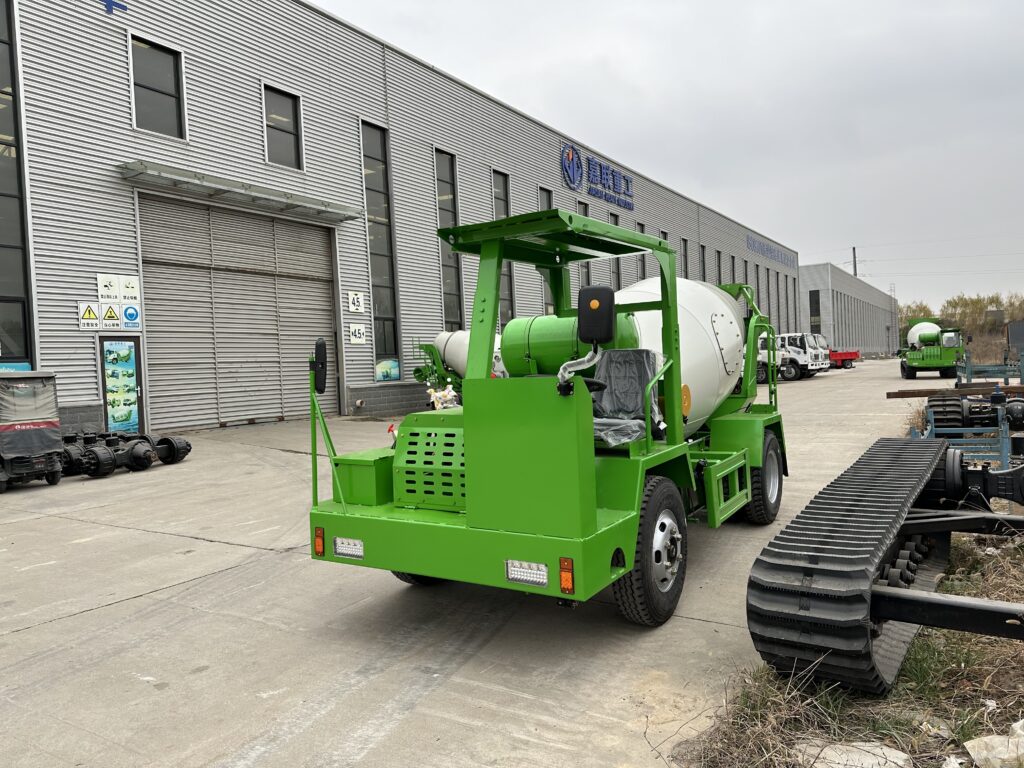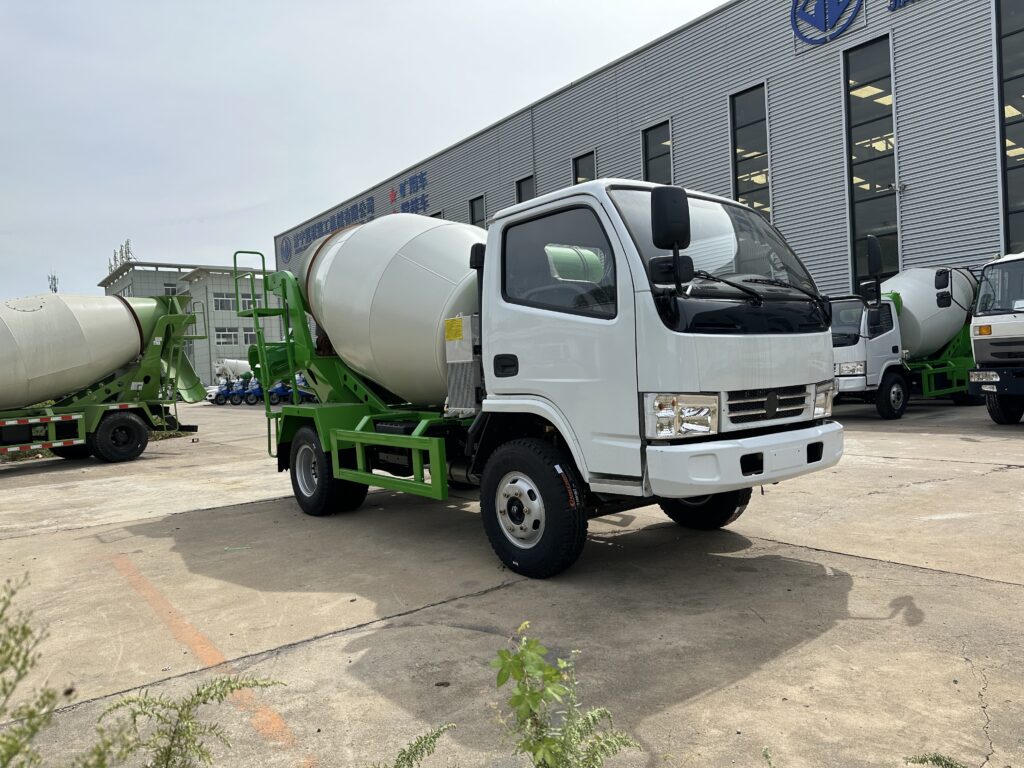

Different construction projects have different concrete requirements. A truck that works well for a building project may not be the right choice for a mountain road, rural house or infrastructure project.
When choosing a Concrete Mixer Truck For Construction Projects, contractors should look beyond mixer capacity. Project type, concrete demand, road conditions, site access, transportation distance, discharge requirements and truck configuration all need to be considered.
For example, a building project may prioritize concrete capacity and discharge access, while a mountain construction project may require more attention to vehicle dimensions, drivetrain and road conditions.
This guide explains how to choose a concrete mixer truck according to different construction projects.
How to Choose a Concrete Mixer Truck for Different Projects
The first step is to identify the type of construction project.
Common applications include:
- Building construction
- House construction
- Road construction
- Road repair
- Rural construction
- Infrastructure projects
- Mountain construction
- Small construction projects
- Remote construction
- Difficult terrain projects
Each application can have different requirements for mixer capacity, chassis, vehicle dimensions and operating configuration.
Instead of choosing one truck for every situation, contractors can start with the actual working conditions of the project.
Concrete Mixer Truck For Building Construction
Building construction can include residential houses, commercial buildings, foundations and other structures.
For these projects, the concrete mixer truck needs to supply concrete consistently to the construction area.
A Concrete Mixer Truck For Building Construction should be selected according to:
- Required concrete volume
- Distance from loading point to construction site
- Site access
- Road width
- Discharge location
- Available working space
For larger building projects, contractors may need a higher-capacity mixer truck to reduce the number of trips.
For smaller residential construction, a compact or smaller mixer truck may be more practical when site access is limited.
The key is to match the mixer capacity with the actual concrete demand rather than selecting a truck only by project name.
Concrete Mixer Truck For House Construction
House construction often takes place on smaller sites where space and access can be limited.
A residential project may have a narrow entrance, nearby buildings or a rural access road.
A Concrete Mixer Truck For House Construction should therefore consider both concrete demand and vehicle dimensions.
Important factors include:
- House foundation requirements
- Concrete volume
- Road width
- Vehicle height and width
- Turning space
- Discharge position
For rural house construction, a Small Concrete Mixer Truck For Rural Construction can be considered when the required concrete volume is relatively limited.
If the construction road is narrow, the overall dimensions of the truck may be just as important as its mixer capacity.
Concrete Mixer Truck For Road Construction
Road construction has different requirements from building construction.
Concrete may be used for pavement, drainage structures, road edges, culverts, foundations and other road-related work.
A Concrete Mixer Truck For Road Construction should be selected based on:
- Road length
- Concrete volume
- Transportation distance
- Road access
- Construction speed
- Discharge location
- Road surface conditions
For a large road project, higher mixer capacity may reduce the number of trips between the concrete source and the work area.
For smaller road repairs or rural road projects, a smaller or more compact configuration may be easier to operate.
The right truck depends on the actual concrete requirements and road conditions.
Concrete Mixer Truck For Road Repair
Road repair projects can be very different from new road construction.
A repair project may only require concrete for specific sections of the road, drainage channels, damaged pavement or supporting structures.
A Concrete Mixer Truck For Road Repair should be able to reach the repair location and position itself close to the concrete placement area.
Contractors should check:
- Road width
- Traffic conditions
- Repair area
- Concrete demand
- Vehicle positioning space
- Access and exit routes
For rural road repairs, vehicle dimensions and road conditions may become more important than maximum mixer capacity.
Concrete Mixer Truck For Rural Construction
Rural construction can include houses, farm buildings, roads, drainage systems and small infrastructure projects.
Access roads may be narrow, uneven or unfinished.
A Concrete Mixer Truck For Rural Construction should therefore be selected according to both the project and the road conditions.
Contractors should consider:
- Road width
- Road surface
- Ground conditions
- Slope
- Concrete demand
- Transportation distance
- Jobsite space
For smaller rural projects, a compact truck may provide a practical balance between mixer capacity and vehicle size.
For projects with particularly difficult access, contractors may also consider a Self Loading Concrete Mixer Truck For Remote Areas.
 Concrete Mixer Truck For Infrastructure Projects
Infrastructure projects can include drainage, bridges, culverts, roads, retaining structures and other public or private construction works.
The concrete demand can vary significantly depending on the project.
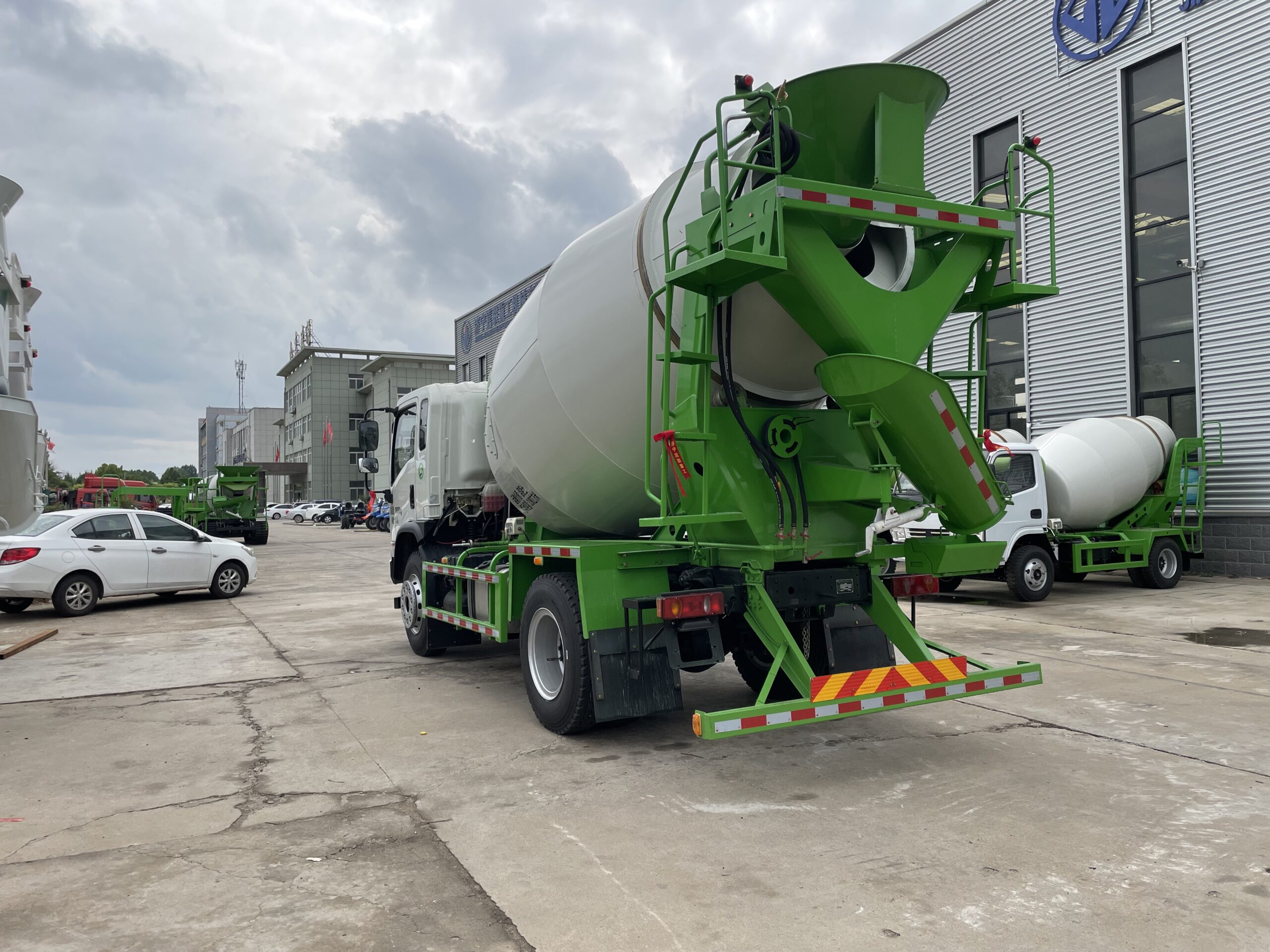
A Concrete Mixer Truck For Infrastructure Projects should therefore be selected according to the specific construction task rather than simply choosing a standard capacity.
For larger infrastructure projects, contractors may prioritize:
- Higher concrete capacity
- Longer operating cycles
- Transportation efficiency
- Chassis configuration
- Continuous concrete supply
For smaller infrastructure work, a compact mixer may be more suitable when access is limited.
The project schedule and concrete placement requirements should also be considered.
Concrete Mixer Truck For Mountain Construction
Mountain construction creates additional challenges for vehicle access.
The truck may need to operate on:
- Narrow mountain roads
- Steep sections
- Gravel roads
- Dirt roads
- Uneven surfaces
- Sharp turns
A Concrete Mixer Truck For Mountain Construction should be selected based on the complete road conditions.
Contractors should provide information about:
- Road width
- Maximum slope
- Ground conditions
- Turning space
- Transportation distance
- Concrete demand
Depending on the truck model and application, a Concrete Mixer Truck With 4 Wheel Drive may be considered when additional traction is required.
However, drivetrain is only one part of the configuration. Tires, chassis, ground clearance and vehicle weight should also be evaluated.
Concrete Mixer Truck For Small Construction Projects
Not every construction project requires a large mixer truck.
Small projects can include:
- House construction
- Small commercial buildings
- Drainage work
- Retaining walls
- Road repairs
- Rural construction
- Small foundations
For these applications, a Concrete Mixer Truck For Small Projects can be selected according to the actual concrete requirement.
A smaller mixer may also be easier to use when the jobsite has limited space.
However, contractors should calculate concrete demand before selecting capacity.
If the truck is too small, the project may require too many trips. If the truck is too large, site access and positioning may become more difficult.
Self Loading Concrete Mixer Truck For Construction Projects
Some construction projects are located far from ready-mix suppliers or have limited access to loading equipment.
In these situations, a Self Loading Concrete Mixer Truck can be considered.
A self-loading mixer combines several functions in one vehicle, including material loading, concrete mixing, transportation and discharge.
This configuration can be useful for certain:
- Rural construction projects
- Remote construction
- Mountain projects
- Small infrastructure projects
- Difficult-access construction sites
The contractor should still evaluate the project’s concrete demand, terrain, transportation distance and required operating method before selecting this type of truck.
 How to Choose Mixer Capacity for Different Projects
Mixer capacity should be connected to the actual project requirements.
A simple way to evaluate capacity is to consider:
Concrete demand per cycle + transportation distance + number of trips + site access.
For example, a small residential project may not require the same capacity as a large road construction project.
When comparing capacities, contractors should ask:
- How much concrete is needed each day?
- How much concrete is required at one time?
- How far is the loading point?
- How many trips can the truck make?
- Can the truck reach the construction site easily?
- Is there enough space for the selected truck?
This approach can help contractors choose capacity based on the project rather than choosing a truck only by its advertised size.
How Road Conditions Affect Truck Selection
The construction road is another important factor.
Two projects with the same concrete requirement may need completely different trucks if their access roads are different.
A flat urban construction site may allow a larger truck.
A mountain project with a narrow dirt road may require a more compact configuration.
Before ordering a Concrete Mixer Truck For Construction Projects, check:
- Road width
- Road surface
- Slope
- Turning radius
- Ground conditions
- Roadside obstacles
- Entry and exit routes
For difficult terrain projects, contractors should also evaluate the chassis and drivetrain.
How Jobsite Size Affects Truck Selection
The construction site itself can determine whether a truck is practical.
A larger truck may have sufficient capacity but still be difficult to position on a small site.
This can happen around:
- House foundations
- Narrow building sites
- Existing structures
- Rural roads
- Drainage projects
- Mountain construction
Measure the site entrance and working area before ordering.
Important dimensions include:
- Truck width
- Truck height
- Truck length
- Wheelbase
- Turning space
This information can help the manufacturer recommend a suitable configuration.
How Discharge Requirements Affect the Choice
The truck must eventually discharge concrete at the required location.
Therefore, contractors should consider the discharge arrangement before purchasing.
Ask:
- Where will the truck stop?
- How far does the concrete need to reach?
- Is there enough space around the truck?
- Does the truck need to reposition?
- Are there buildings, walls or other obstacles?
A suitable Concrete Mixer Truck Discharge System can be particularly important on small or restricted construction sites.
Choosing the Chassis for Different Construction Projects
The chassis should match the project environment.
For urban building projects, road access may be the main concern.
For rural and mountain projects, contractors may need to pay more attention to:
- Drivetrain
- Tires
- Ground clearance
- Wheelbase
- Vehicle dimensions
- Axle configuration
The Concrete Mixer Truck Chassis should be considered together with the mixer body.
This is important because the complete truck needs to work as one system.
When Should Contractors Choose a Customized Truck?
Standard configurations may not meet every project’s requirements.
Customization can be considered when a contractor needs a specific combination of:
- Mixer capacity
- Vehicle dimensions
- Chassis
- Drivetrain
- Tires
- Discharge arrangement
- Hydraulic system
- Operating configuration
A Concrete Mixer Truck With Customized Specifications can be discussed when the project has specific technical or dimensional requirements.
For special construction applications, a Custom Concrete Mixer Truck For Special Applications may also be considered.
The available customization options depend on the truck model and manufacturer.
A Simple Selection Guide by Project Type
| Construction Project | Main Selection Considerations |
|---|---|
| Building construction | Capacity, site access, discharge |
| House construction | Compact size, capacity, road width |
| Road construction | Capacity, transportation distance, road conditions |
| Road repair | Compact size, access, discharge |
| Rural construction | Road conditions, dimensions, capacity |
| Infrastructure projects | Capacity, operating cycle, chassis |
| Mountain construction | Road width, slope, drivetrain, tires |
| Small projects | Compact size, capacity, maneuverability |
| Remote projects | Access, transportation, loading method |
| Difficult terrain | Chassis, tires, drivetrain, ground clearance |
This comparison shows why there is no single mixer truck configuration for every construction project.
How to Request the Right Mixer Truck
When contacting a manufacturer, contractors can provide the following information:
- Project type
- Required mixer capacity
- Construction location
- Road width
- Road surface
- Slope conditions
- Transportation distance
- Required truck dimensions
- Chassis requirements
- Drivetrain requirements
- Discharge requirements
- Quantity required
Photos or videos of the construction road can also help the manufacturer understand the working conditions.
The more specific the project information, the easier it is to discuss the appropriate truck configuration.
Conclusion
Choosing a Concrete Mixer Truck For Construction Projects starts with understanding the project itself.
Building construction, road construction, rural construction, infrastructure projects, mountain construction and small projects can all have different requirements.
Contractors should consider concrete capacity, vehicle dimensions, chassis, drivetrain, road conditions, jobsite space and discharge requirements together.
For projects with unusual access conditions or specific technical requirements, customized configurations can also be considered.
Instead of choosing one standard truck for every project, contractors can select the mixer truck according to the actual construction environment and concrete demand.
If you are looking for a Concrete Mixer Truck For Construction Projects, send us your project type, required capacity, road conditions, chassis requirements and other specifications. We can discuss a truck configuration based on your actual construction needs.