Solar photovoltaic foundation projects often require concrete supply across large and open job sites. The work may look simple from a distance, but the actual construction environment can be challenging. Equipment may need to move across soft ground, desert surfaces, temporary roads or remote areas where standard trucks cannot always reach the foundation points efficiently.
Choosing a concrete mixer for a solar project is not only about capacity. Buyers need to consider distance between foundation points, road preparation, soil condition, daily concrete demand, discharge method and whether the machine can move reliably in the project area. A practical equipment choice can reduce delays and make foundation pouring more organized.
Why Solar Foundation Projects Need Flexible Equipment
Photovoltaic foundation construction usually includes many repeated concrete tasks. Each foundation point may require a controlled amount of concrete, and the machine may need to move frequently. In remote solar farms, a concrete plant or large delivery truck may not always be close to the working area. This creates demand for flexible mixing and transport equipment.
The site layout can also be spread out. Machines may need to travel between rows, foundation lines and temporary access roads. If the route is soft, sandy or narrow, normal road-going equipment may have difficulty. A suitable mixer should support stable movement, practical capacity and efficient discharge for repeated foundation work.
Challenges of Desert, Soft Ground and Remote Sites
Many solar projects are built in open areas, including desert or semi-desert environments. These sites can have loose surface material, wind-blown sand and long distances between working points. After rain or site preparation, some areas may become soft or uneven. In these conditions, equipment access becomes a key part of the construction plan.
Remote sites may also have limited repair resources. Buyers should choose equipment that is practical to operate and inspect. Simple maintenance access, stable mixing and clear communication with the supplier are important because a small equipment problem can delay repeated foundation work.
Recommended Equipment Types
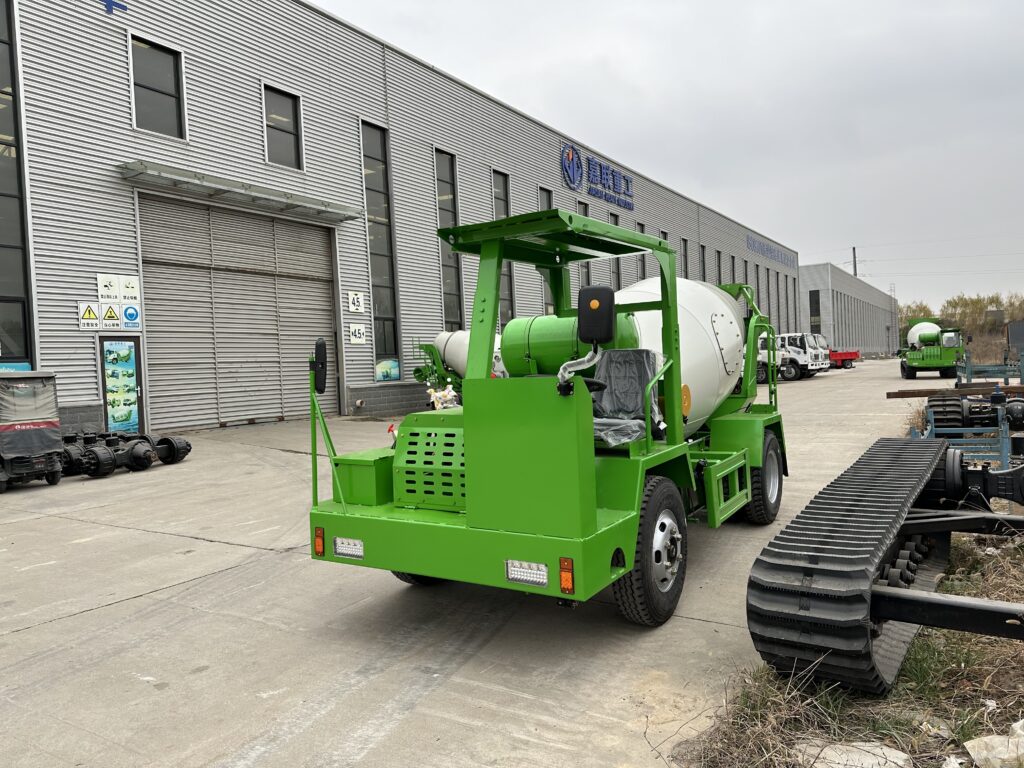
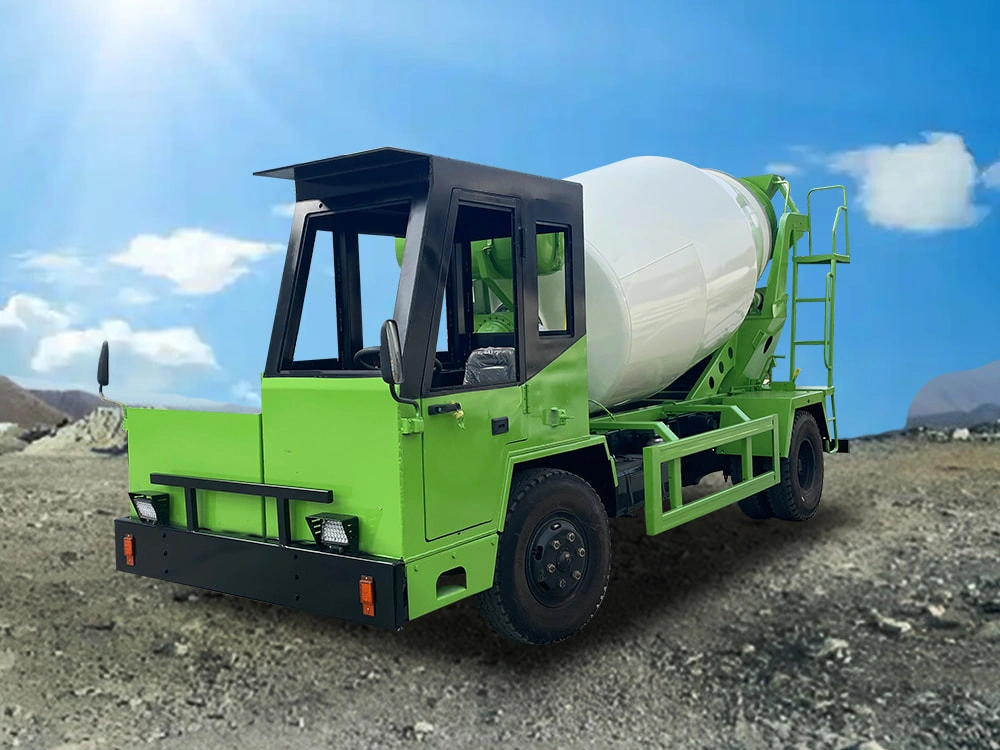
For road-accessible solar projects, a truck-mounted concrete mixer may be practical if the access roads are stable. It can support daily concrete transport and delivery where movement is mostly on prepared roads. For soft ground, sandy areas or rough temporary roads, crawler or track-type equipment may be more suitable because it improves traction and site access.
Some buyers may need custom configuration for capacity, chassis, tank structure or discharge system. The right solution depends on how far the mixer must travel, how many foundation points are planned, whether the roads are prepared and how the concrete will be discharged at each point.
How to Match Capacity with Foundation Work
Capacity should match the project rhythm. A machine that is too small may require too many trips, while a machine that is too large may be difficult to move across weak ground or narrow routes. For small and medium projects, practical capacity options can help balance mobility and concrete supply.
Buyers should estimate daily concrete demand, average distance between mixing or loading point and foundation location, and whether concrete needs to be supplied continuously or in batches. This information helps the supplier recommend a more suitable capacity range without relying on guesswork.
Custom Configurations for Solar Projects
Solar photovoltaic projects may require different configurations from ordinary building construction. Depending on site condition, buyers may discuss crawler or track support, tank structure, discharge method, color, logo and export document support. If the project is located in a remote or sandy area, access and traction should be discussed early.
Customization should be based on working conditions rather than appearance only. The main purpose is to help the machine operate more smoothly in the solar farm environment. Photos, route descriptions and foundation layout information can make the recommendation more accurate.
What Information Buyers Should Send
When requesting a quotation, send the project type, required capacity, road condition, ground condition, destination country and quantity. If possible, include photos or videos of the construction site. For solar projects, it is also useful to mention whether the site is desert, soft ground, rural land or prepared road access.
If the project has special requirements for discharge direction, working space or local branding, include those details in the inquiry. This allows the supplier to prepare a more practical recommendation and quotation.
Final Recommendation
A concrete mixer for solar photovoltaic foundation projects should be selected according to access, ground condition and concrete demand. Truck-mounted mixers can be suitable for prepared roads, while crawler or track equipment may be more practical for soft ground, desert construction and remote sites. The best model is the one that supports stable foundation pouring without creating unnecessary access problems.
Planning Equipment Around the Construction Sequence
Solar foundation work usually follows a repeated sequence: move to the foundation point, prepare the concrete, discharge, then move to the next position. If equipment movement is slow or unstable, the entire sequence becomes inefficient. This is why access route planning should be discussed together with capacity and discharge requirements.
Buyers should consider whether one machine will serve many foundation points in a day or whether several smaller machines are more practical. The answer depends on site size, distance, ground condition and available operators. In some projects, a smaller and more mobile configuration can be more useful than a larger machine that has difficulty moving across the solar farm. Clear project information helps the supplier recommend a configuration that supports the actual construction rhythm.
Need help selecting equipment for your job site? Send us your road condition, required capacity and destination for recommendation.