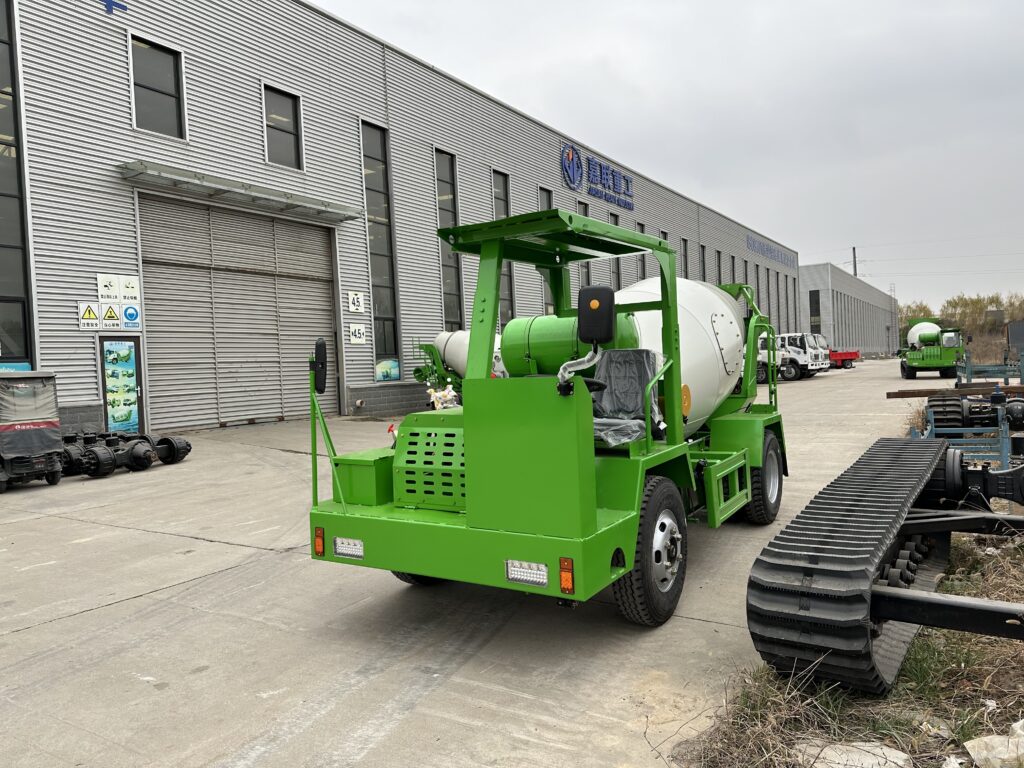
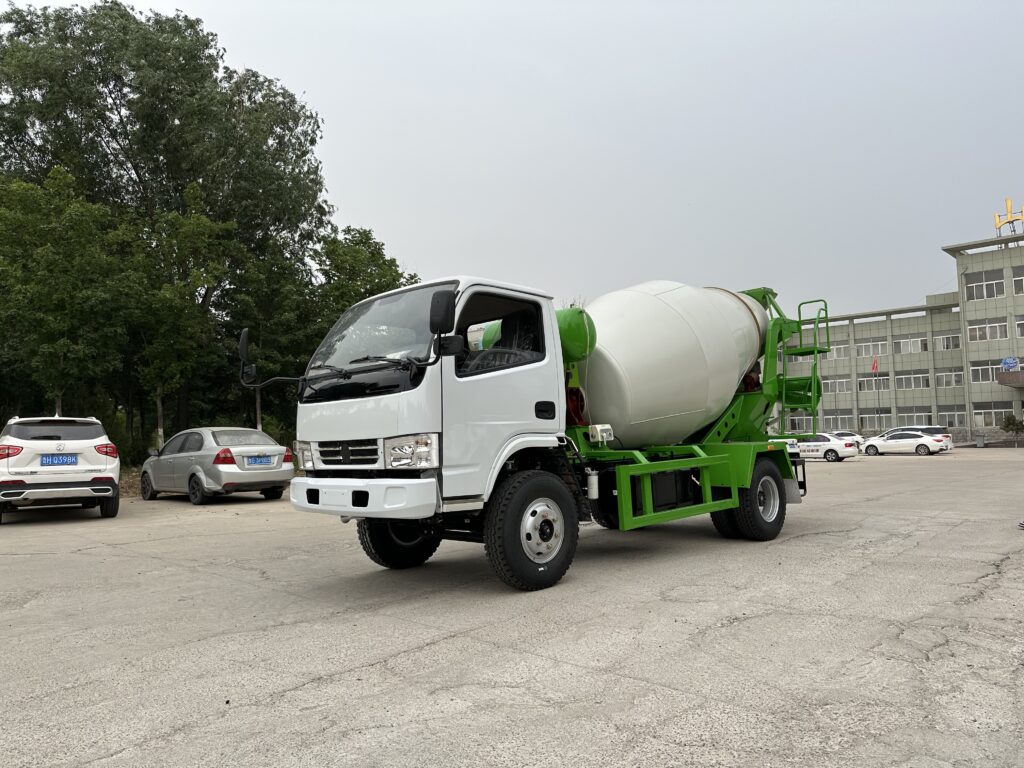
A concrete mixer truck with hydraulic system uses hydraulic power to control the rotation and operation of the mixer drum. Compared with a simple mechanical transmission layout, a hydraulic system provides a flexible way to transfer engine power to the drum and control its rotation speed and direction.
For construction projects, the hydraulic system is not just an auxiliary component. It is one of the key systems that affects drum rotation, mixing performance, discharge control, operating stability and overall reliability.
Understanding how the hydraulic system works can help buyers choose the right mixer truck and communicate more accurately with a manufacturer when requesting a specific configuration.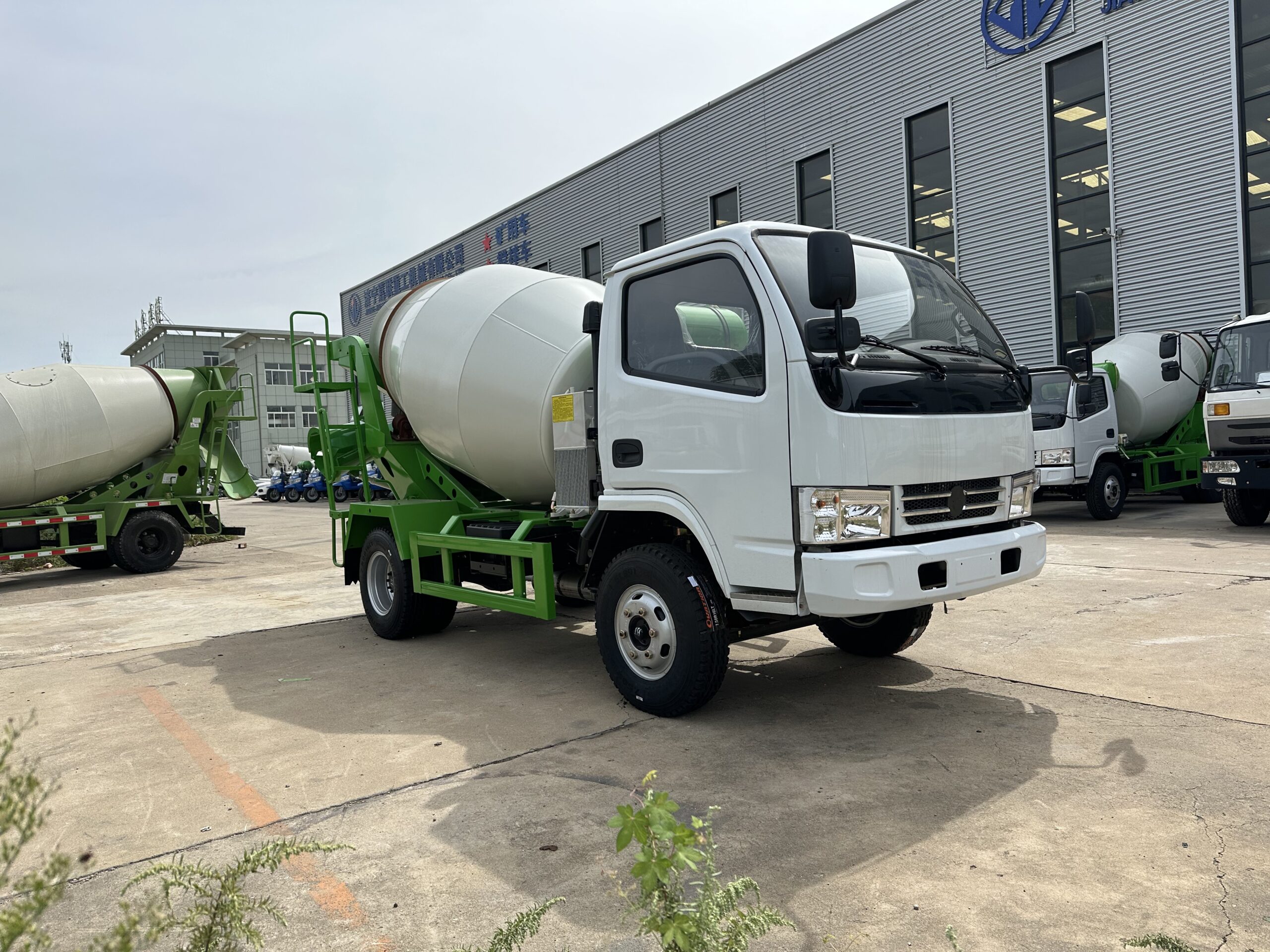
What Is a Hydraulic System on a Concrete Mixer Truck?
The hydraulic system on a concrete mixer truck is a power transmission and control system that uses pressurized hydraulic oil to transfer power.
A typical concrete mixer hydraulic system may include several major components:
- Hydraulic pump
- Hydraulic motor
- Hydraulic oil tank
- Hydraulic hoses and pipes
- Control valves
- Hydraulic filters
- Pressure control components
- Drum drive mechanism
The exact configuration can vary according to the mixer truck model, drum capacity, chassis and application.
The basic operating principle is relatively straightforward.
The engine provides mechanical power. The hydraulic pump converts this mechanical power into hydraulic flow and pressure. The hydraulic oil then travels through the hydraulic circuit to the hydraulic motor. The hydraulic motor converts hydraulic energy back into mechanical rotation, which drives the mixer drum.
This creates a controlled power transmission path:
Engine → Hydraulic Pump → Hydraulic Oil → Hydraulic Motor → Drum Drive → Mixer Drum
This arrangement allows the operator to control the drum without directly connecting the engine to the drum through a simple mechanical transmission.
How Does a Concrete Mixer Truck Hydraulic System Work?
The working process of a concrete mixer truck with hydraulic system can be divided into several stages.
1. Engine Provides Power
The truck engine is the main source of power.
Depending on the vehicle design, engine power can be transferred to the hydraulic pump through a suitable power take-off or other mechanical connection.
The hydraulic pump then starts circulating hydraulic oil through the system.
2. Hydraulic Pump Generates Flow and Pressure
The hydraulic pump is one of the most important components in the system.
Its job is to move hydraulic oil through the circuit and provide the hydraulic flow required by the hydraulic motor.
The actual pump type, displacement and working pressure depend on the system design. These parameters should be matched with the hydraulic motor and drum drive requirements rather than selected independently.
This is important because an incorrectly matched hydraulic pump can affect drum rotation and system efficiency.
3. Hydraulic Motor Converts Hydraulic Energy
The pressurized hydraulic oil reaches the hydraulic motor.
The motor converts hydraulic energy into rotary mechanical power.
This rotary output is then transferred through the drum drive mechanism to rotate the mixer drum.
Therefore, the concrete mixer truck hydraulic motor plays a direct role in the drum drive system.
4. Hydraulic Circuit Controls Drum Operation
The hydraulic control system determines how hydraulic oil flows through the circuit.
By changing the oil flow direction, the operator can control the direction of drum rotation.
This is important because the mixer drum normally needs to perform different operations during construction:
- Mixing concrete
- Keeping concrete in motion during transportation
- Discharging concrete
- Returning to the mixing direction after discharge
The exact control arrangement depends on the mixer design.
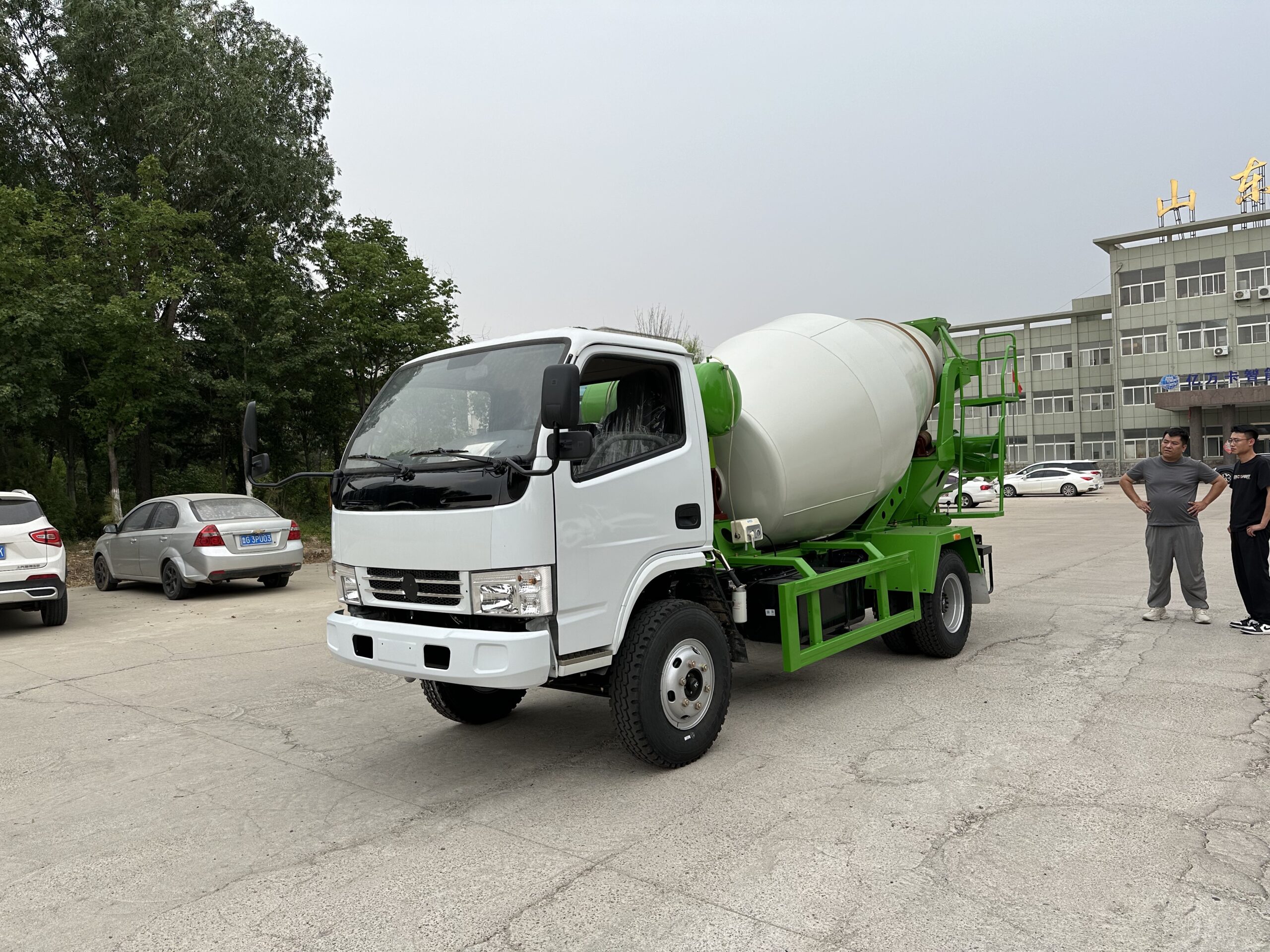 Main Components of a Hydraulic Concrete Mixer Truck
A hydraulic mixer system is made up of multiple components that work together. A problem in one component can affect the performance of the entire system.
Hydraulic Pump
The pump provides hydraulic flow to the system.
When selecting a concrete mixer truck hydraulic pump, the pump should be matched with the required hydraulic motor, operating pressure, flow rate and engine power.
A larger pump is not automatically better. The complete hydraulic circuit needs to be properly matched.
Hydraulic Motor
The hydraulic motor converts hydraulic energy into mechanical rotation.
Its output torque and speed need to correspond with the requirements of the mixer drum.
The motor must also work within the pressure and flow range specified by the hydraulic system design.
Hydraulic Oil Tank
The hydraulic oil tank stores the working fluid and provides a reservoir for the hydraulic circuit.
It also helps manage heat dissipation and allows contaminants or air bubbles to be separated from the oil under suitable system conditions.
The tank capacity should be appropriate for the hydraulic system rather than simply being selected based on truck size.
Hydraulic Hoses and Pipes
Hydraulic hoses and pipes transfer oil between system components.
Because hydraulic systems operate under pressure, hose selection, connection quality and routing are important.
Poor hose routing can increase wear, while loose or damaged connections may result in hydraulic oil leakage.
Control Valves
Control valves regulate hydraulic oil flow and determine how the hydraulic motor operates.
The valve arrangement is related to drum rotation, operating control and discharge operation.
Hydraulic Filter
The hydraulic filter helps remove contaminants from the hydraulic oil.
Clean hydraulic oil is important because contamination can accelerate wear of pumps, motors and valves.
Why Is Hydraulic Drive Important for the Mixer Drum?
The mixer drum needs controlled rotation rather than simply continuous high-speed rotation.
During mixing, the drum needs an appropriate rotation speed to help combine cement, aggregates, water and other materials.
During transportation, the drum may continue rotating at a controlled speed to help maintain the concrete mixture.
During discharge, the drum needs to rotate in the opposite direction so the internal blades move the concrete toward the discharge opening.
This makes hydraulic drive particularly important for drum control.
A well-matched hydraulic drive concrete mixer truck should provide stable drum rotation under the working conditions for which the vehicle was designed.
However, drum performance is not determined by the hydraulic system alone. Drum design, internal blades, transmission components, engine power and operating conditions also affect the final result.
Hydraulic System and Drum Torque
Torque is an important technical parameter when discussing a mixer drum.
Concrete inside the drum creates a significant rotating load, particularly when the drum is loaded.
The hydraulic motor needs to generate enough torque through the drive system to rotate the drum under the expected operating conditions.
In simplified terms, hydraulic motor output depends on hydraulic pressure, motor displacement and mechanical efficiency.
The relationship can be expressed conceptually as:
Hydraulic Power ≈ Pressure × Flow
And the mechanical output of the hydraulic motor is affected by:
Motor Torque ≈ Hydraulic Pressure × Motor Displacement
Actual output depends on component efficiency and system losses.
This is why choosing a hydraulic system based only on engine horsepower is not enough. The pump, motor, pressure, flow, drum load and transmission ratio need to be considered together.
Hydraulic Pressure and Flow: What Is the Difference?
Pressure and flow are two different hydraulic parameters.
Hydraulic pressure is related to the force or torque that the system can produce.
Hydraulic flow is related to the speed at which hydraulic components operate.
For a mixer drum:
- Higher available torque helps the system handle resistance.
- Appropriate hydraulic flow helps achieve the required drum rotation speed.
- Excessive pressure or flow does not automatically mean better performance.
- The pump and motor must be correctly matched.
For this reason, buyers should ask manufacturers for the complete hydraulic system specification instead of looking at only one parameter.
Hydraulic System vs. Mechanical Drum Drive
Different mixer trucks can use different power transmission designs.
A hydraulic drive offers several practical advantages for mixer drum control.
Flexible Power Transmission
Hydraulic components allow engine power to be transferred to the drum through a hydraulic circuit.
This provides flexibility when designing different chassis and mixer configurations.
Easier Drum Direction Control
Hydraulic control can make forward and reverse drum rotation straightforward for the operator.
This is especially important during concrete discharge.
Adjustable Drum Speed
Depending on the hydraulic circuit and control system, drum speed can be adjusted according to operating requirements.
Suitable for Different Mixer Configurations
A hydraulic system can be designed around different drum capacities, chassis types and vehicle layouts.
For example, the hydraulic configuration of a Small Concrete Mixer Truck For Small Projects may be different from that of a larger construction mixer.
Hydraulic Systems for Different Concrete Mixer Trucks
Not every mixer truck requires the same hydraulic configuration.
The hydraulic system should be selected according to the complete vehicle design.
Small Concrete Mixer Trucks
Small mixer trucks normally focus on compact dimensions, maneuverability and practical operation.
A Hydraulic System For Concrete Mixer Truck should be appropriately sized for the drum capacity and vehicle power.
For narrow roads and smaller construction projects, buyers may also consider a Small Concrete Mixer Truck For Rural Construction, where vehicle dimensions and operating conditions can be important factors.
Four-Wheel-Drive Mixer Trucks
For construction sites with uneven or difficult ground conditions, drivetrain configuration becomes more important.
A Concrete Mixer Truck With 4 Wheel Drive can provide additional traction where the vehicle specification calls for four-wheel drive.
In this type of application, the hydraulic drum system and vehicle drivetrain should be considered separately because they perform different functions.
The drivetrain moves the truck.
The hydraulic system drives and controls the mixer drum.
Difficult Construction Conditions
For sites involving rough roads, slopes or limited access, the overall vehicle configuration needs to match the jobsite.
AConcrete Mixer Truck For Difficult Terrainmay require attention to chassis configuration, ground clearance, hydraulic system layout and protection of hydraulic components.
The hydraulic system should be designed for the actual working environment rather than treated as an isolated component.
Common Hydraulic Problems on Concrete Mixer Trucks
Understanding common hydraulic problems can make troubleshooting easier.
Hydraulic Oil Leakage
Oil leakage can occur around hoses, fittings, seals or hydraulic components.
A visible oil leak should not simply be ignored because insufficient hydraulic oil can affect system operation and potentially damage components.
Drum Rotation Becomes Weak
If the drum has insufficient torque, possible causes can include:
- Insufficient hydraulic pressure
- Incorrect hydraulic oil level
- Hydraulic pump problems
- Hydraulic motor wear
- Hydraulic valve problems
- Excessive internal leakage
- Incorrect system adjustment
A professional inspection should determine the actual cause rather than replacing components randomly.
Drum Speed Is Unstable
Unstable drum rotation can be related to hydraulic flow, air in the hydraulic circuit, contamination, valve problems or mechanical resistance.
The hydraulic circuit and mechanical drive should both be checked.
Hydraulic Oil Overheating
Excessive heat may result from high system pressure, excessive internal leakage, insufficient cooling or incorrect component matching.
Long-term operation at abnormal temperatures can shorten component life.
 How to Maintain a Concrete Mixer Hydraulic System
Regular maintenance is essential for hydraulic equipment.
For a concrete mixer truck with hydraulic system, operators should pay attention to several basic areas.
Check Hydraulic Oil
Maintain the correct hydraulic oil level and use the oil recommended for the system.
Different hydraulic systems may require different oil specifications, so the manufacturer’s recommendation should be followed.
Inspect Hydraulic Hoses
Check hoses and connections regularly for:
- Oil leakage
- Cracks
- Abrasion
- Swelling
- Loose fittings
Damaged hoses should be replaced properly.
Keep Hydraulic Oil Clean
Contaminated hydraulic oil can damage precision components.
Filters should be inspected and replaced according to the manufacturer’s maintenance requirements.
Monitor Abnormal Noise
Unusual noise from the pump or hydraulic motor can indicate a potential problem.
Early inspection can help prevent a small fault from becoming a larger system failure.
Check Drum Operation
The operator should pay attention to changes in:
- Drum rotation speed
- Drum rotation direction
- Starting performance
- Discharge performance
- Hydraulic noise
Changes in normal operating behavior can provide early warning of hydraulic or mechanical problems.
How to Choose a Concrete Mixer Truck With Hydraulic System
When purchasing a hydraulic mixer truck, do not evaluate the hydraulic system separately from the vehicle.
A better approach is to evaluate the entire power and working system.
1. Confirm Mixer Capacity
Determine how much concrete the vehicle needs to handle for each working cycle.
Capacity affects drum size, drum weight, drive requirements and chassis selection.
2. Check Engine Power
The engine must provide enough power for vehicle movement and the hydraulic system according to the manufacturer’s design.
3. Check Pump and Motor Matching
Ask for the hydraulic pump and motor specifications.
The two components should be properly matched in terms of flow, pressure, displacement and expected operating conditions.
4. Consider the Working Environment
Think about the actual jobsite:
- Paved roads
- Rural roads
- Construction sites
- Narrow access roads
- Slopes
- Rough terrain
- Tunnels
- Mines
The working environment influences the required chassis and drivetrain configuration.
5. Ask About Maintenance
Before purchasing, ask about hydraulic oil specifications, filter replacement, recommended maintenance intervals and availability of replacement parts.
A technically suitable truck should also be practical to maintain.
What Information Should You Give the Manufacturer?
If you want a customized hydraulic mixer truck, providing detailed project information can help the manufacturer recommend a suitable configuration.
Useful information includes:
- Required concrete capacity
- Chassis preference
- Engine requirements
- Road conditions
- Maximum vehicle dimensions
- Required drum rotation speed
- Working environment
- Discharge requirements
- Expected daily workload
- Local maintenance conditions
For special construction conditions, additional information about the site can also be useful.
This allows the manufacturer to match the concrete mixer truck hydraulic system with the rest of the vehicle instead of selecting hydraulic components independently.
Why Work With a Hydraulic Mixer Truck Manufacturer?
Hydraulic systems involve multiple components that need to work together.
A professional Hydraulic Mixer Truck Manufacturer can evaluate the relationship between the chassis, engine, hydraulic pump, hydraulic motor, drum, control system and working conditions.
This is particularly important for customized vehicles.
Instead of asking only for a certain hydraulic pump or motor, buyers should explain what the truck needs to accomplish.
The manufacturer can then determine a suitable hydraulic configuration based on the actual application.
Frequently Asked Questions
What does a hydraulic system do on a concrete mixer truck?
The hydraulic system transfers engine power to the mixer drum and controls drum rotation. It can also provide controlled forward and reverse rotation for mixing and discharge.
What are the main components of a concrete mixer hydraulic system?
Common components include a hydraulic pump, hydraulic motor, oil tank, hoses, pipes, control valves and hydraulic filters. The exact configuration varies by vehicle.
Does a hydraulic mixer truck use hydraulic power to move the truck?
Not necessarily. The hydraulic system used for the mixer drum and the truck’s driving system are separate functions. The vehicle drivetrain moves the truck, while the hydraulic system can drive the mixer drum.
How often should hydraulic oil be changed?
The replacement interval depends on the hydraulic system, oil type, operating environment and manufacturer’s maintenance requirements. Always follow the specific maintenance schedule for the vehicle.
Can the hydraulic system be customized?
Yes. Hydraulic components can be selected and matched according to drum capacity, engine power, required drum performance, chassis configuration and working conditions. Customization should be performed as a complete system rather than changing one component without checking compatibility.
Choosing the Right Hydraulic Configuration
A concrete mixer truck with hydraulic system is more than a truck equipped with a hydraulic pump and motor. The hydraulic system is a complete power transmission circuit in which the pump, motor, valves, oil, hoses and drum drive need to work together.
For buyers, the most important point is not simply choosing the highest pressure or largest hydraulic component. The better approach is to match the hydraulic system with the mixer drum capacity, engine power, chassis, working environment and required operating performance.
For standard construction projects or special applications, a properly matched hydraulic configuration can provide reliable drum control and make the mixer truck easier to operate and maintain.
If you are looking for a concrete mixer truck with customized hydraulic specifications, provide your required capacity, chassis, working conditions and discharge requirements. The appropriate hydraulic configuration can then be selected according to the complete vehicle design.