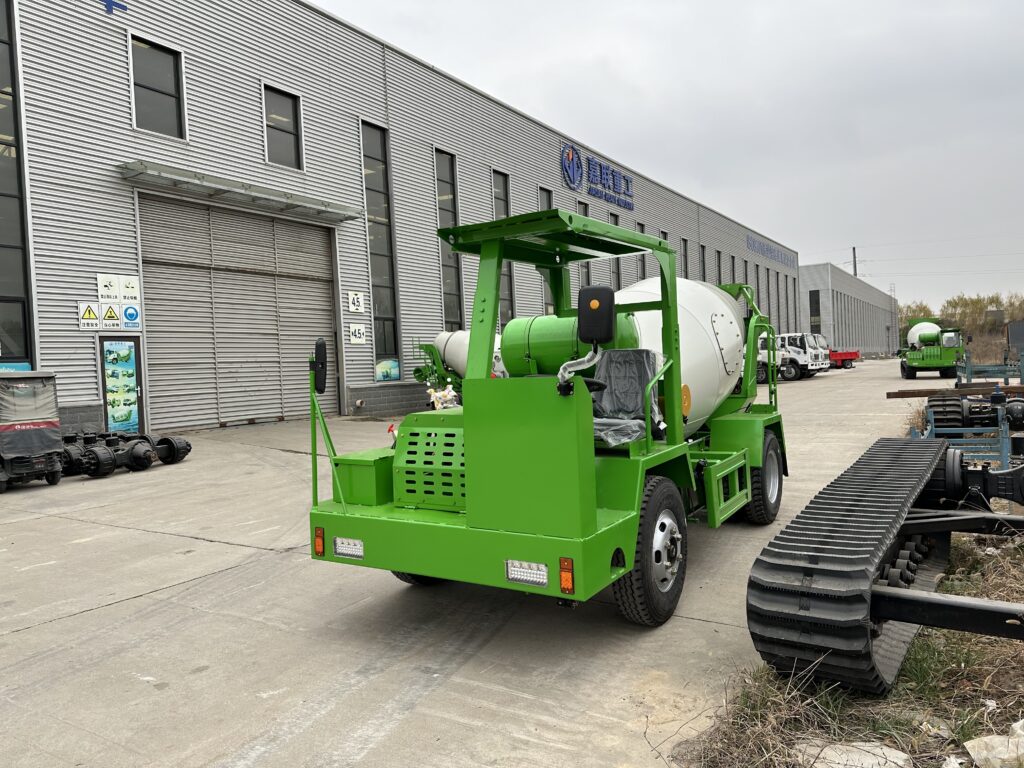

Concrete is one of the most important materials in building construction. It is used for foundations, footings, columns, beams, floors, walls and many other structural and non-structural applications.
A Concrete Mixer Truck For Building Construction provides a practical way to transport freshly mixed concrete from the mixing location to the construction site while keeping the concrete moving during transportation.
However, not every building project requires the same type of mixer truck. A large commercial building, a residential house and a small rural construction project can have very different requirements for concrete volume, vehicle size, access and discharge.
Choosing the right mixer truck starts with understanding the actual building project.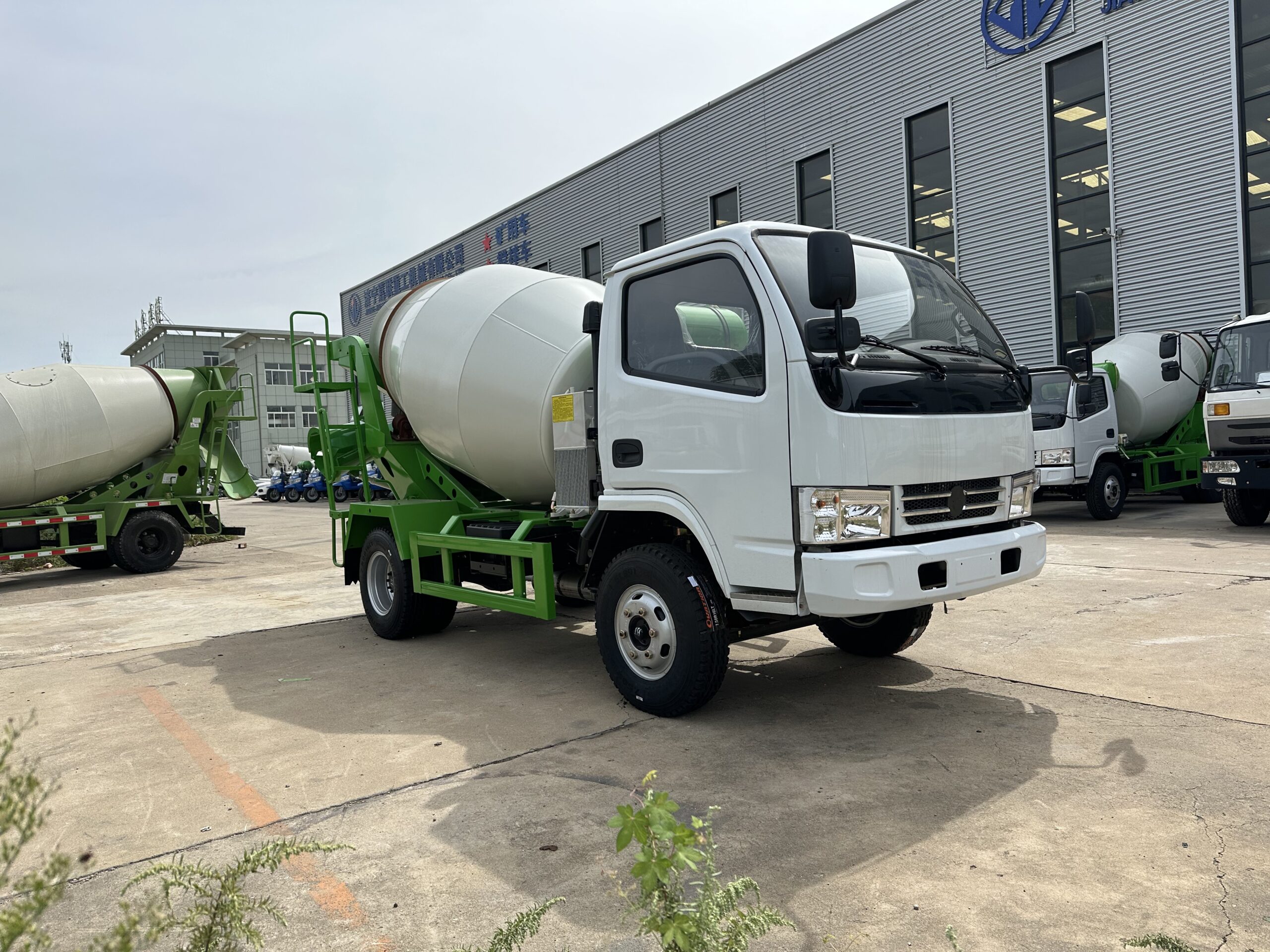
Concrete Mixer Truck For House Construction
House construction is one of the most common applications for small and medium-sized concrete mixer trucks.
Concrete may be required at different stages of the project, including foundation work, columns, beams, floors, driveways and other concrete structures.
A Concrete Mixer Truck For House Construction should therefore be selected according to the size of the house, concrete demand and conditions around the construction site.
A large truck may work well on an open construction site with wide access roads. However, residential construction can sometimes take place on narrow roads or in areas with limited working space.
In these situations, a compact mixer truck may be easier to position and operate.
For smaller residential projects, a Small Concrete Mixer Truck For Building Construction can be considered when the required concrete volume is relatively limited.
Concrete Mixer Truck For Foundation Work
The foundation is one of the first major stages of many building projects where concrete is required.
Concrete can be used for footings, foundation slabs, foundation beams, columns and other structural elements depending on the building design.
A Concrete Mixer Truck For Foundation Work needs to deliver concrete to the construction area in a way that matches the placement process.
Before choosing a truck, contractors should consider:
- Required concrete volume
- Foundation size
- Distance from the mixing location to the site
- Site access
- Ground conditions
- Discharge position
- Available working space
Foundation construction can involve large amounts of concrete in a relatively short period, but smaller buildings may require much less.
For this reason, mixer truck capacity should be matched to the project instead of automatically selecting the largest available vehicle.
Concrete Mixer Truck For Building Foundations
Building foundations often require concrete to be delivered to specific areas of the construction site.
A Concrete Mixer Truck For Building Foundations can be used to transport concrete for different foundation applications depending on the project design.
The truck needs to reach the construction area and position itself close enough to the concrete placement point.
Site access is particularly important.
A building site may be located beside a wide paved road, inside a residential neighborhood or on an unfinished access road. These conditions can affect the appropriate vehicle size and chassis configuration.
If access is limited, a smaller vehicle may provide more flexibility.
For projects with specific site conditions, the mixer truck can also be configured around requirements such as vehicle dimensions, chassis type and discharge arrangement.
Concrete Mixer Trucks for Residential Construction
Residential construction projects can vary considerably in size.
A single-family house may require a relatively small amount of concrete compared with an apartment building or large residential development.
A Concrete Mixer Truck For Residential Construction should therefore be considered according to the actual construction schedule and concrete demand.
For example, a contractor building several houses may need a different concrete delivery solution from a contractor repairing or constructing one small house.
Important factors include:
- Number of buildings
- Concrete volume
- Construction schedule
- Road access
- Distance to the mixing location
- Required discharge location
- Available space around the building
The objective is to match the mixer truck with the construction process rather than simply choosing a vehicle based on drum size.
 Concrete Mixer Truck Capacity for Building Projects
Capacity is an important consideration when selecting a mixer truck for building construction.
The correct Concrete Mixer Truck Capacity depends on how much concrete is needed at the construction site and how frequently deliveries are required.
A small house foundation may require a different capacity from a multi-story building.
A smaller mixer truck may be suitable when:
- The project is relatively small
- Concrete demand is limited
- The construction site has narrow access
- The truck needs to move between several small locations
- The project is located in a residential or rural area
A larger mixer truck may be considered when the project requires greater quantities of concrete and the site provides sufficient access and working space.
Capacity should therefore be considered together with transportation distance, site access and construction schedule.
Concrete Mixer Truck For Construction Sites
Construction sites can have very different operating conditions.
Some sites are located beside major roads, while others are inside residential areas, villages or undeveloped construction zones.
A Concrete Mixer Truck For Construction Sites should be able to work within the actual space available at the project.
Vehicle width and height can become important when entering a construction site through narrow roads or gates.
Turning space is another consideration. If the truck cannot easily position itself near the concrete placement area, the discharge process may become more complicated.
Contractors should therefore check the site before selecting a mixer truck.
Questions to consider include:
- How wide is the access road?
- Is there enough room for the truck to turn?
- Is the site entrance high enough?
- Where will the truck discharge concrete?
- How far is the concrete placement area from the site entrance?
- Is the ground paved, gravel or unfinished?
These practical details can influence the appropriate truck configuration.
Concrete Mixer Truck For Small Building Projects
Not every building project is a large construction project.
Small houses, extensions, workshops, farm buildings and other structures may require concrete but have limited working space and relatively low concrete demand.
A compact mixer truck can be useful in these situations.
A Concrete Mixer Truck For Small Building Projects can be configured around the actual project size, access conditions and concrete requirements.
This can be particularly relevant for contractors working on several small projects rather than one large construction site.
Instead of using the same truck configuration for every job, the vehicle can be selected according to the expected working environment.
Concrete Mixer Truck For Rural House Construction
Building construction is not limited to cities.
Rural housing projects may have different road and site conditions from urban construction. Access roads can be narrow or unfinished, and construction sites may be located farther from centralized concrete supply facilities.
A Concrete Mixer Truck For Rural House Construction can be considered when the project requires a compact vehicle that can work around smaller construction sites.
Vehicle dimensions, chassis selection and concrete capacity can all be considered according to the local construction conditions.
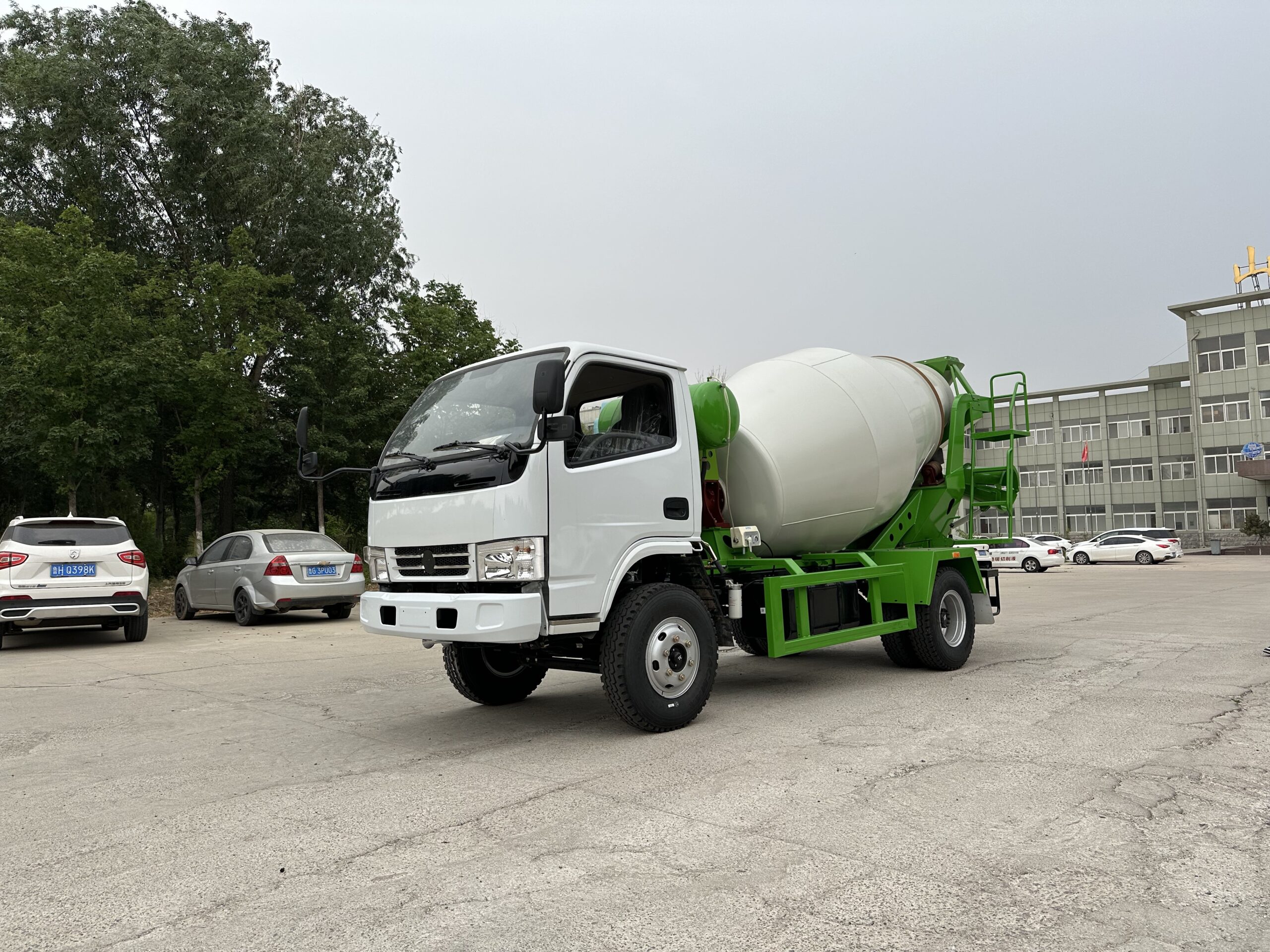
For projects involving poor or uneven access roads, drivetrain selection may also become important. Depending on the truck configuration and actual site conditions, a Concrete Mixer Truck With 4 Wheel Drive may be considered when additional traction is required.
Four-wheel drive is not a substitute for proper site planning, but it can be one part of the overall vehicle configuration.
Concrete Delivery for Columns, Beams and Floors
Concrete is needed throughout different stages of building construction.
After foundation work, concrete may be required for columns, beams, floor slabs and other structural components.
The concrete delivery method should match the construction sequence.
For example, a project may need repeated concrete deliveries during a foundation pour, followed by smaller deliveries during other construction stages.
A Mobile Concrete Mixer Truck can provide flexibility when concrete needs to be transported between the mixing location and different construction areas.
The appropriate truck depends on the amount of concrete required and how the concrete will be placed.
The mixer truck itself is only one part of the concrete placement process. Contractors should also consider the equipment used to move concrete from the discharge point to the final construction position.
Concrete Mixer Truck Discharge System
The location where concrete is discharged is important for building construction.
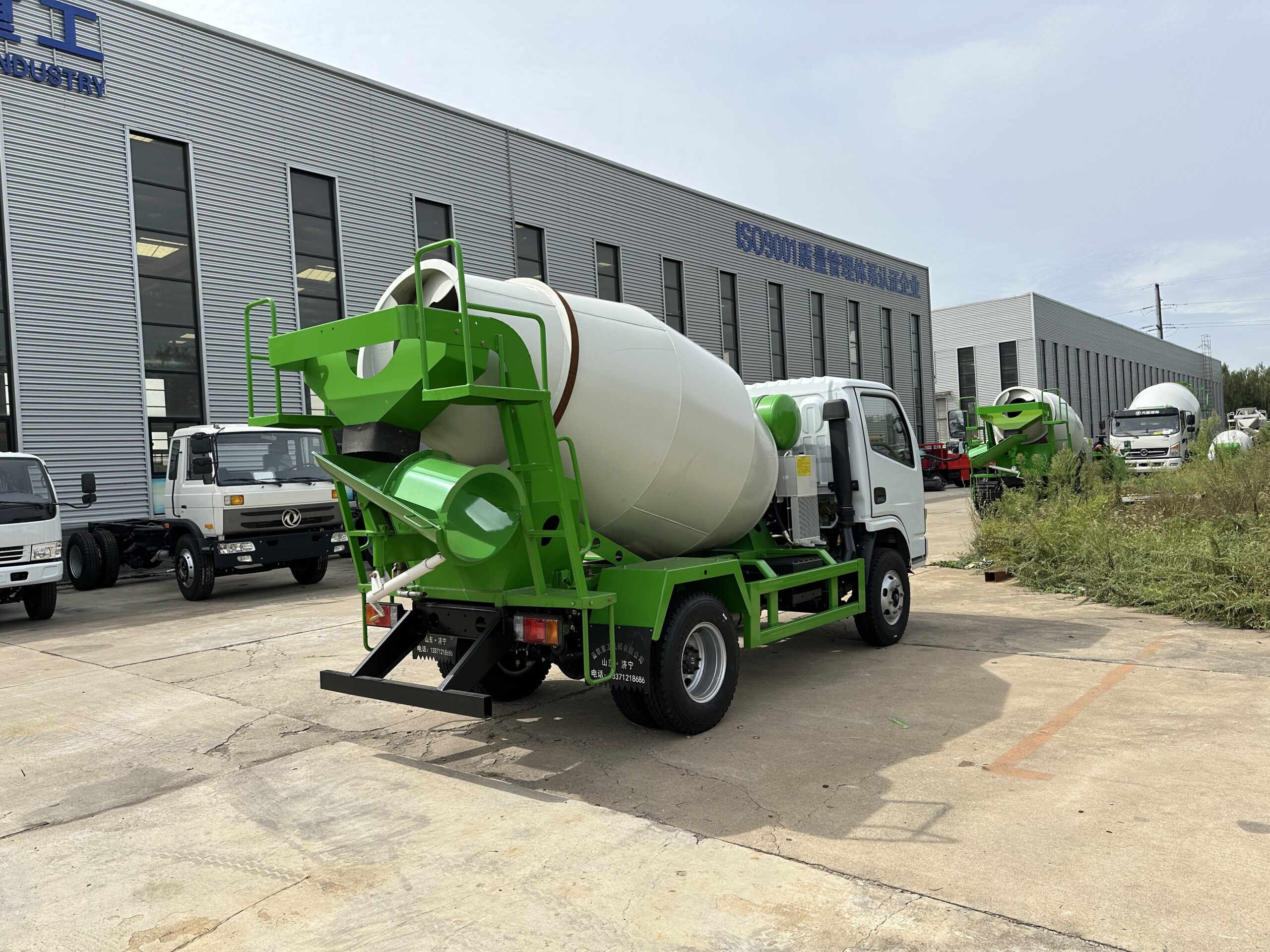
A Concrete Mixer Truck Discharge System should be selected according to the actual construction method and site layout.
For a foundation, the truck may discharge concrete directly into the prepared area or into another concrete placement system.
For other building applications, the concrete may need to be transferred to a pump, bucket or other equipment.
Before purchasing a mixer truck, contractors should consider:
- Discharge direction
- Discharge height
- Distance to the placement point
- Available space
- Site layout
- Compatibility with other concrete equipment
A suitable discharge arrangement can make the truck easier to integrate into the overall construction process.
Choosing the Right Chassis for Building Construction
The chassis affects the overall dimensions and operating characteristics of a mixer truck.
A Concrete Mixer Truck Chassis should be selected according to the required mixer capacity, road conditions and construction environment.
For urban building construction, vehicle width and maneuverability may be important because construction sites can be surrounded by buildings, roads and other infrastructure.
For rural construction, road conditions and site access may become more important.
The chassis should also provide sufficient load capacity for the selected mixer configuration.
Rather than choosing the mixer body and chassis separately without considering the complete vehicle, contractors should evaluate the entire truck as one working system.
Custom Concrete Mixer Trucks for Building Projects
Every construction project has different requirements.
One customer may need a compact mixer truck for house construction, while another may need a larger truck for commercial building work.
Some projects may also have special requirements for vehicle dimensions, chassis, mixer capacity or discharge configuration.
This is where Concrete Mixer Truck With Customized Specifications can be useful.
Depending on the manufacturer and vehicle model, customization may involve:
- Mixer capacity
- Chassis
- Vehicle dimensions
- Drum configuration
- Discharge system
- Hydraulic system
- Tires
- Drive system
- Cab configuration
- Other project-specific requirements
For unusual construction environments, a Custom Concrete Mixer Truck For Special Applications can also be developed according to the working conditions.
The purpose of customization is to make the vehicle fit the project, rather than adding unnecessary equipment.
 How to Choose a Concrete Mixer Truck For Building Construction
Before selecting a truck, it is useful to define the actual construction requirements.
1. Determine the building type
Identify whether the project is a house, apartment, commercial building, workshop, farm building or another type of structure.
2. Estimate concrete demand
Calculate the approximate amount of concrete required during the main construction stages.
3. Check the foundation requirements
Foundation work can require significant concrete delivery, so determine where the truck needs to operate during foundation construction.
4. Check site access
Measure road width, entrance height, turning space and ground conditions.
5. Determine the discharge method
Decide where the concrete will be discharged and whether additional equipment such as a concrete pump will be used.
6. Select the truck capacity
Choose a capacity that matches the project’s concrete demand instead of simply selecting the largest truck.
7. Consider customization
If standard vehicle dimensions, chassis or discharge arrangements do not fit the project, customized specifications can be considered.
Conclusion
A Concrete Mixer Truck For Building Construction can support many stages of a building project, from foundation work to concrete floors, columns, beams and other construction applications.
The right truck depends on more than concrete capacity. Site access, foundation requirements, transportation distance, vehicle dimensions, chassis, discharge system and construction schedule all need to be considered.
For house construction and small building projects, a compact mixer truck may be easier to operate where access and working space are limited. For larger construction projects, a higher-capacity configuration may be considered when the site and concrete demand require it.
For rural construction or projects with specific requirements, the truck can also be configured around the actual road conditions, site layout and concrete delivery method.
If you are planning a building construction project, provide the building type, required concrete capacity, site conditions and discharge requirements. A suitable concrete mixer truck configuration can then be developed around the actual project.