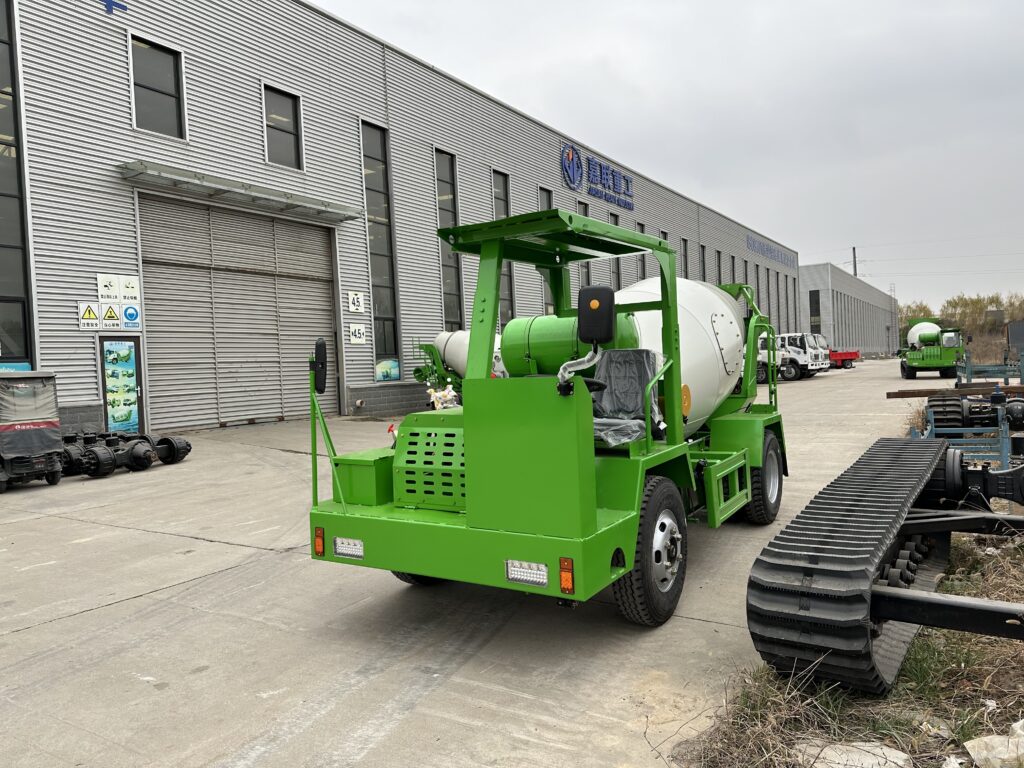
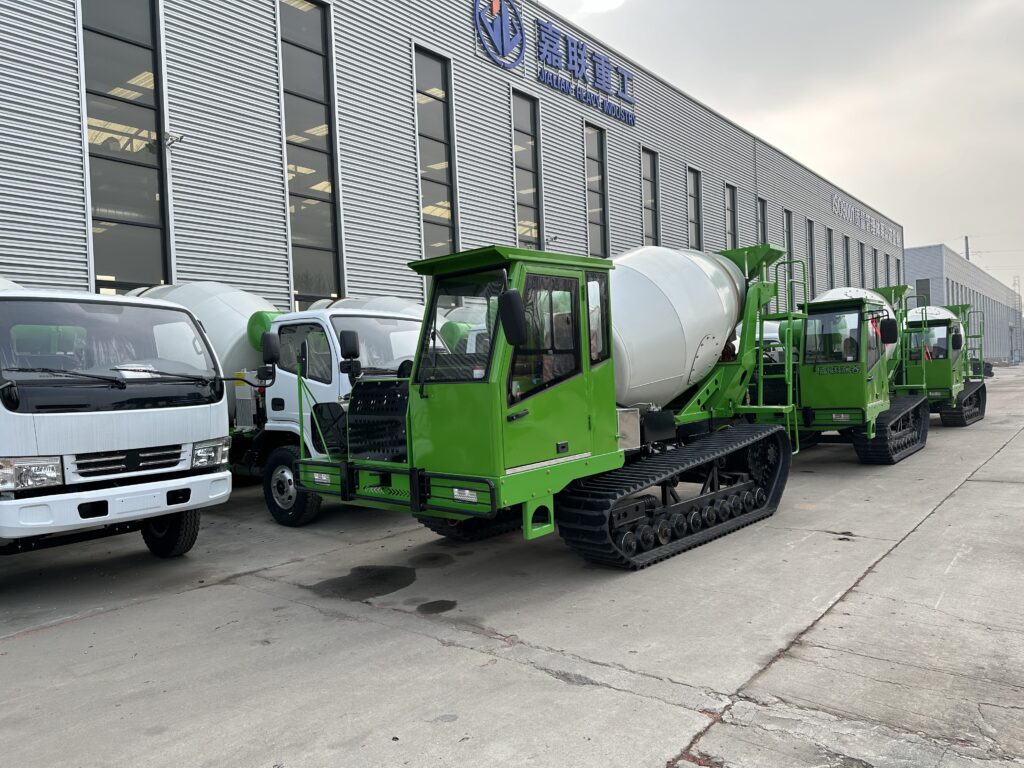
Not every construction site has smooth and well-paved roads.
Construction projects in mountainous areas, mining sites, infrastructure developments, and other challenging environments may involve steep slopes, uneven ground, rough roads, and limited access.
In these conditions, choosing a concrete mixer truck is not only about mixing capacity. The vehicle also needs to have suitable mobility, traction, ground clearance, and overall configuration.
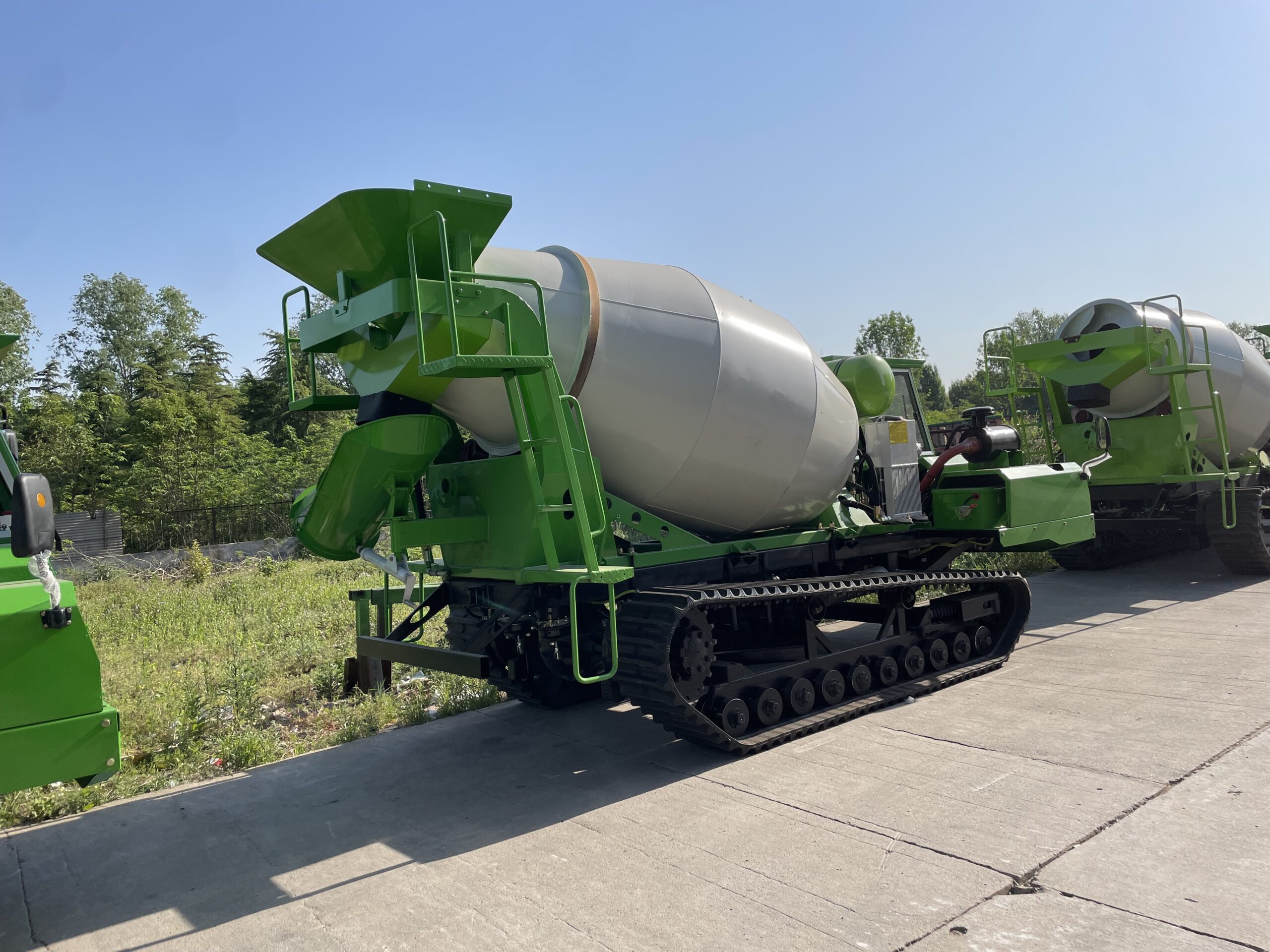
A Concrete Mixer Truck For Difficult Terrain is designed for construction environments where ordinary road conditions cannot be assumed.
The right configuration can help contractors transport and discharge concrete more effectively while dealing with demanding jobsite conditions.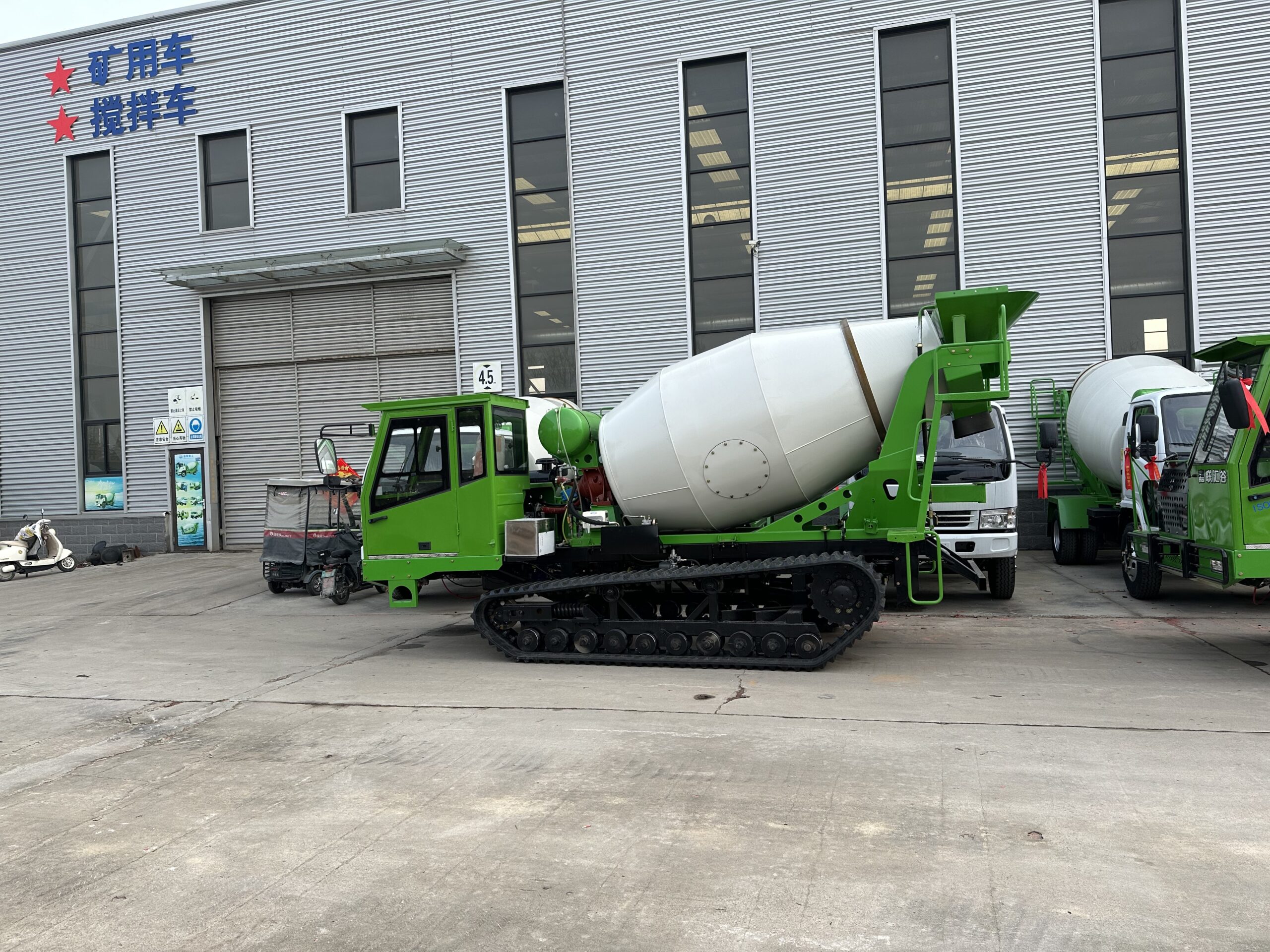
What Is Difficult Terrain For A Concrete Mixer Truck?
Difficult terrain can include many different types of construction environments.
Typical conditions may include:
- Steep slopes
- Uneven ground
- Rocky construction roads
- Muddy roads
- Mountain roads
- Unpaved roads
- Mining sites
- Temporary construction roads
These conditions can place greater demands on the vehicle’s chassis, drive system, tires, ground clearance, and overall stability.
The specific requirements depend on the project.
A truck working on a moderate construction road may have very different requirements from one operating on steep mountain terrain.
Therefore, the vehicle should be selected according to the actual jobsite rather than simply choosing a model based on engine power or mixer capacity.
Why Terrain Matters When Choosing A Concrete Mixer Truck
A concrete mixer truck needs to perform several tasks during one working cycle.
It must travel to the construction site, move through the available roads, position itself near the pouring area, mix or transport concrete, and discharge the concrete.
Difficult terrain can affect every part of this process.
For example, steep roads can increase traction requirements, while uneven ground can make vehicle stability more important.
Rough roads can also increase the demands placed on the chassis and suspension system.
This is why terrain should be considered at the beginning of the equipment selection process.
Important Features For Difficult Terrain
Several vehicle characteristics can influence how well a mixer truck performs in challenging environments.
Four-Wheel Drive
A 4WD Concrete Mixer Truck can provide additional traction when operating on difficult roads and uneven ground.
Four-wheel drive can be useful when the vehicle needs to travel across:
- Slopes
- Muddy roads
- Gravel roads
- Uneven construction roads
- Rough terrain
However, four-wheel drive alone does not determine whether a truck is suitable for a particular project.
The complete vehicle configuration should be considered together.
Ground Clearance
Ground clearance can become important when the truck operates on rocky or uneven roads.
Higher clearance can help reduce the risk of the vehicle’s lower components coming into contact with obstacles on the road.
The appropriate clearance depends on the chassis and actual working environment.
Traction And Vehicle Mobility
A mixer truck operating on difficult terrain needs sufficient traction to move safely through the construction area.
Factors that can influence mobility include:
- Drive system
- Tire configuration
- Vehicle weight
- Engine output
- Transmission
- Ground conditions
The correct combination is more important than focusing on one specification.
Vehicle Dimensions
Large dimensions can make it difficult for a truck to navigate certain construction areas.
Mountain roads, temporary roads, and restricted job sites may have limited space for turning and maneuvering.
For projects where access is restricted, a Small Concrete Mixer Truck For Narrow Roads can provide a more compact solution.
The vehicle should be small enough to access the site while still providing sufficient concrete capacity for the project.
Concrete Mixer Truck For Mountain Roads
Mountain construction sites can present a combination of difficult conditions.
Roads may include:
- Steep sections
- Sharp turns
- Uneven surfaces
- Narrow passages
- Loose gravel
A Concrete Mixer Truck For Mountain Roads should therefore be selected based on the actual road conditions.
Customers should provide the manufacturer with information such as:
- Maximum road slope
- Road width
- Surface condition
- Turning space
- Expected load
- Average transportation distance
This information helps determine whether a particular chassis and drive configuration are suitable.
Concrete Mixer Truck For Steep Slopes
Steep slopes can create additional challenges for heavy construction vehicles.
When selecting equipment for these projects, contractors should consider the vehicle’s ability to operate on the actual slopes found at the site.
Important factors may include:
- Drive system
- Engine performance
- Transmission
- Vehicle weight
- Tire traction
- Braking system
A Concrete Mixer Truck For Steep Slopes should be evaluated as a complete vehicle rather than based on one specification.
Customers should always provide accurate terrain information to the manufacturer before purchasing equipment for steep construction sites.
Concrete Mixer Truck For Uneven Terrain
Uneven terrain can include rocky ground, construction debris, temporary roads, and surfaces with significant height differences.
In these conditions, vehicle stability and ground clearance become particularly important.
A Concrete Mixer Truck For Uneven Terrain should have a configuration appropriate for the expected road surface and load.
The mixer drum and concrete load also affect the vehicle’s overall weight distribution.
For this reason, chassis selection and mixer capacity should be considered together.
Concrete Mixer Truck For Rough Roads
Many construction projects do not have permanent roads.
Temporary construction roads may be made from:
- Gravel
- Soil
- Crushed stone
- Compacted earth
These roads can change significantly depending on weather and construction progress.
A Concrete Mixer Truck For Rough Roads should therefore provide suitable mobility for the expected conditions.
Before purchasing, contractors should consider both the normal road condition and the worst conditions the truck is likely to encounter.
Concrete Mixer Truck For Mining Sites
Mining projects can involve some of the most demanding construction environments.
Mining roads may include steep sections, rough surfaces, heavy loads, and limited access.
A Concrete Mixer Truck For Mining Sites should be selected according to the actual mining environment.
Depending on the project, customers may need to consider:
- Four-wheel drive
- Ground clearance
- Vehicle dimensions
- Engine configuration
- Concrete capacity
- Chassis strength
- Discharge requirements
The best configuration depends on the specific mining operation.
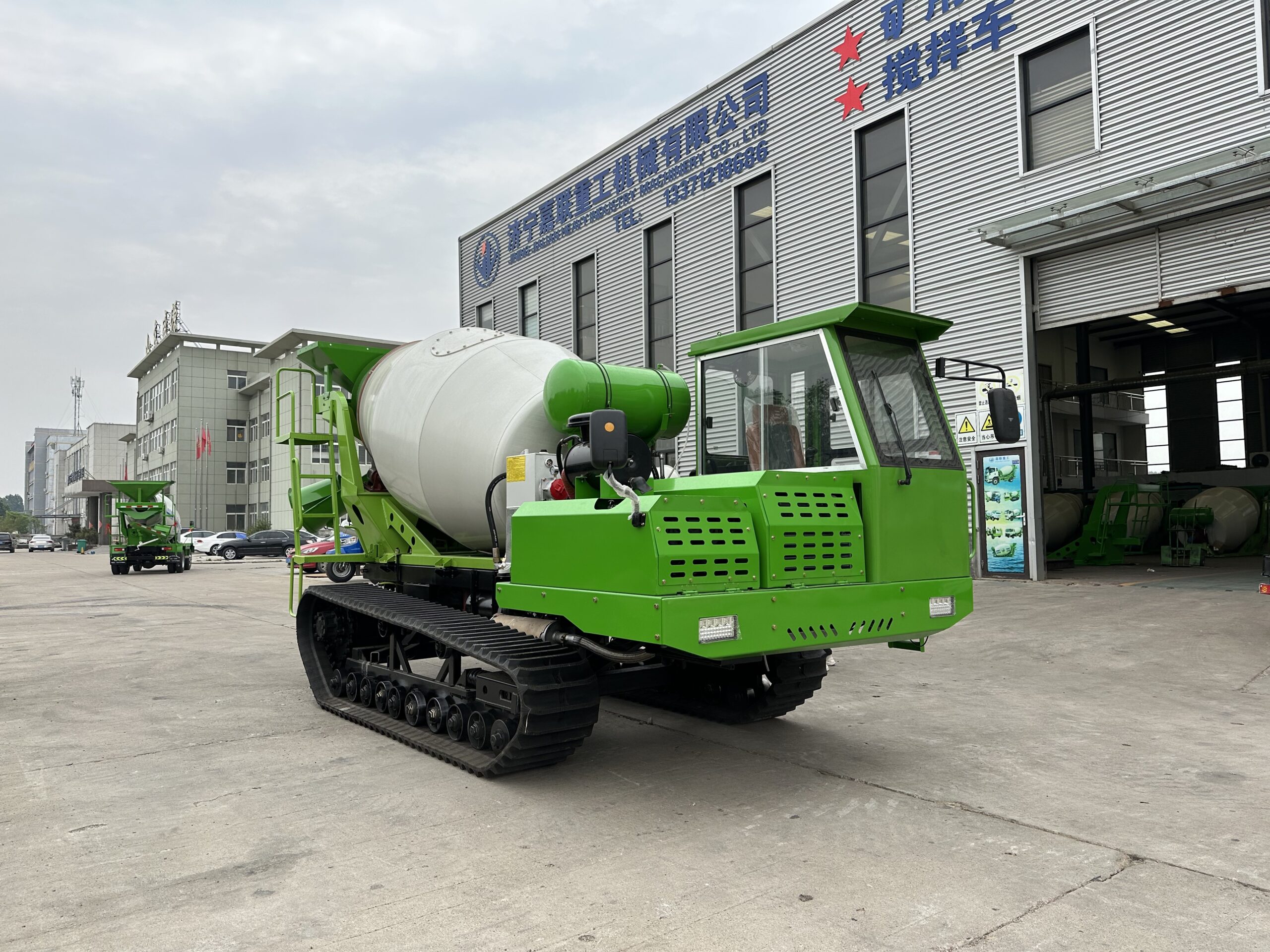 How Concrete Capacity Affects Difficult-Terrain Operation
Mixer capacity should not be considered separately from terrain.
A larger mixer drum means a larger concrete load, which can affect the overall operating weight of the vehicle.
For difficult terrain, contractors should balance:
Concrete capacity + vehicle weight + mobility + road conditions
A project does not necessarily benefit from the largest possible mixer.
The better choice is a capacity that meets the project’s concrete requirements while remaining suitable for the available roads and terrain.
For smaller construction work, a Small Self Loading Concrete Mixer Truck can also provide an integrated option for loading, mixing, transportation, and discharge.
Self Loading Mixer Trucks For Difficult Terrain
Some difficult construction sites also have limited access to loaders, batching plants, or other supporting equipment.
In these situations, a self loading mixer can provide additional flexibility.
The machine combines material loading and concrete mixing with transportation and discharge.
For projects that need to produce concrete directly at the jobsite, a Self Loading Concrete Mixer Truck For Remote Areas can be another practical solution.
The appropriate choice depends on whether the project requires integrated material loading and how the equipment will be supplied and operated at the site.
How To Choose A Concrete Mixer Truck For Difficult Terrain
Choosing the right truck should begin with the actual working conditions.
1. Check The Road Conditions
Determine:
- Road width
- Maximum slope
- Surface type
- Turning radius
- Road length
- Ground stability
These factors help establish the basic mobility requirements.
2. Determine The Concrete Requirement
Estimate:
- Required mixer capacity
- Daily concrete demand
- Number of working cycles
- Transportation distance
This prevents customers from selecting a truck that is unnecessarily large or too small for the project.
3. Select The Drive System
Based on the terrain, determine whether the project requires:
- Two-wheel drive
- Four-wheel drive
- Other specialized configurations
The decision should be based on actual site conditions.
4. Consider Vehicle Dimensions
Check whether the truck can physically access the construction site.
Measure:
- Entrance width
- Road width
- Available turning space
- Maximum height clearance
This is especially important for mountain and restricted construction areas.
5. Discuss The Configuration With The Manufacturer
If the terrain is particularly challenging, provide the manufacturer with detailed information about the project.
Photos, videos, road measurements, and slope information can help the manufacturer recommend a suitable configuration.
 What Information Should You Send To The Manufacturer?
When requesting a mixer truck for difficult terrain, provide as much information as possible.
Useful information includes:
- Project location
- Construction type
- Road width
- Maximum slope
- Ground conditions
- Required mixer capacity
- Daily concrete demand
- Transportation distance
- Required discharge height
- Preferred drive system
If possible, send photos or videos of the road and construction site.
This allows the manufacturer to evaluate the requirements more accurately.
Why Work With An Experienced Manufacturer?
Difficult-terrain projects require more than a standard product recommendation.
An experienced Concrete Mixer Truck Manufacturer can evaluate the relationship between:
- Chassis
- Engine
- Drive system
- Mixer capacity
- Vehicle dimensions
- Hydraulic system
- Working environment
This helps customers avoid selecting a configuration that looks suitable on paper but does not match the actual construction conditions.
For customized requirements, customers can also discuss a Custom Concrete Mixer Truck For Special Applications when a standard configuration cannot meet the project requirements.
Can A Difficult-Terrain Mixer Truck Be Customized?
Yes, depending on the manufacturer and vehicle model.
Customization may involve:
- Mixer capacity
- Chassis
- Vehicle dimensions
- Drive system
- Discharge height
- Chute configuration
- Hydraulic system
- Engine configuration
The exact options depend on the vehicle design.
The most useful approach is to start with the construction conditions and then determine which specifications actually need to be customized.
Final Thoughts
A Concrete Mixer Truck For Difficult Terrain needs to do more than mix and transport concrete.
It must also match the roads, slopes, ground conditions, access limitations, and concrete requirements of the construction site.
Mountain roads, steep slopes, uneven ground, rough construction roads, and mining sites can all require different vehicle configurations.
Four-wheel drive, suitable ground clearance, appropriate vehicle dimensions, sufficient traction, and a properly matched mixer capacity can all contribute to better jobsite performance.
Before purchasing, provide the manufacturer with accurate information about the terrain and construction requirements.
The right mixer truck is not necessarily the largest or most powerful model. It is the one whose configuration matches the actual conditions where it will work.