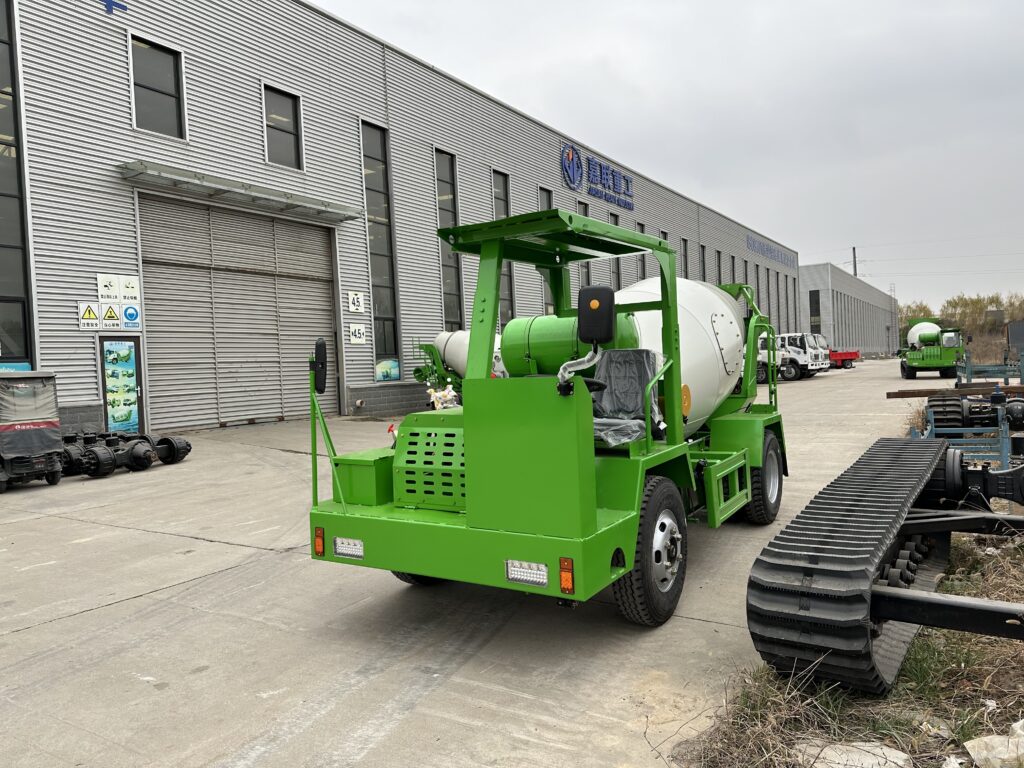

A Compact Concrete Mixer Truck For Construction can be useful when a project has limited road access, narrow working areas or difficult terrain. Mountain construction sites, sloped roads, unfinished construction roads and remote job sites may not have enough space for a large mixer truck.
In these conditions, a compact mixer truck can make it easier to move between the material loading area and the construction site while keeping the concrete mixing function close to where it is needed.
The right truck should not be selected by size alone. Road width, slope, ground conditions, concrete demand, transportation distance and discharge requirements all need to be considered before choosing a configuration.
Compact Concrete Mixer Truck For Mountain Roads
Mountain construction often involves narrow roads, sharp turns, uneven surfaces and changing elevations.
A large concrete mixer truck may have difficulty accessing some mountain job sites, especially when the road is still under construction or has limited turning space. A Compact Concrete Mixer Truck For Mountain Roads can provide a more practical option when the project requires a smaller vehicle footprint.
Compact dimensions can be particularly useful on roads where the available width is limited. The actual truck configuration should be selected according to the road conditions, required concrete capacity and available access to the job site.
For mountain projects, it is also important to consider the chassis, tires, drivetrain and ground clearance rather than looking only at mixer capacity.
Compact Concrete Mixer Truck For Slopes
Sloped construction roads create different requirements from flat job sites.
A truck working on slopes needs suitable traction and a configuration that matches the actual road conditions. Steep sections, loose surfaces and uneven roads can affect vehicle movement and stability.
A Compact Concrete Mixer Truck For Slopes can be considered when the project has limited road space combined with elevation changes.
Before choosing a truck, check the actual slope, road surface, turning points and distance to the concrete discharge location. Depending on the model and project requirements, drivetrain options can also be considered for improved traction on demanding roads.
A compact truck does not automatically mean that it can operate on every slope. The vehicle configuration must match the conditions of the specific construction site.
Compact Concrete Mixer Truck For Rough Construction Roads
Not every construction site has a finished access road.
Some projects use gravel roads, dirt roads, temporary access roads or roads with potholes and uneven sections. During the construction process, road conditions can also change as the project progresses.
A Compact Concrete Mixer Truck For Rough Construction Roads should therefore be selected according to the actual working environment.
Important factors include:
- Road surface
- Road width
- Ground conditions
- Slope
- Turning space
- Required concrete volume
- Transportation distance
- Discharge location
For projects where road conditions are particularly demanding, the chassis, tires and drivetrain should be evaluated together instead of choosing the mixer body separately from the vehicle.
Why Compact Size Matters on Construction Sites
The main advantage of a compact mixer truck is not simply that it is smaller.
Its dimensions can affect how easily the vehicle enters a construction area, passes through narrow roads and positions itself near the concrete discharge point.
This can be important for:
- Mountain construction
- Rural construction
- House construction
- Road projects
- Small infrastructure projects
- Tunnel access roads
- Remote construction sites
- Narrow construction areas
A compact vehicle can also be easier to position when there is limited space around foundations, roads or other structures.
However, the required mixer capacity should still be determined by the actual concrete demand. A smaller truck is not necessarily the right choice if the project requires a large volume of concrete per trip.
Compact Concrete Mixer Truck For Narrow Roads
Road width is one of the first things to check when selecting a compact mixer truck.
Some construction roads are narrow because of surrounding buildings, mountains, temporary access routes or unfinished infrastructure. In these situations, vehicle width and overall dimensions can become important factors.
A Compact Concrete Mixer Truck For Narrow Roads should be selected after measuring the actual road width and considering:
- Vehicle width
- Overall length
- Turning radius
- Wheelbase
- Roadside obstacles
- Entry and exit routes
- Loading and discharge locations
It is also important to consider the full route rather than checking only the entrance. A truck may enter the site but still have difficulty turning or reaching the final discharge location.
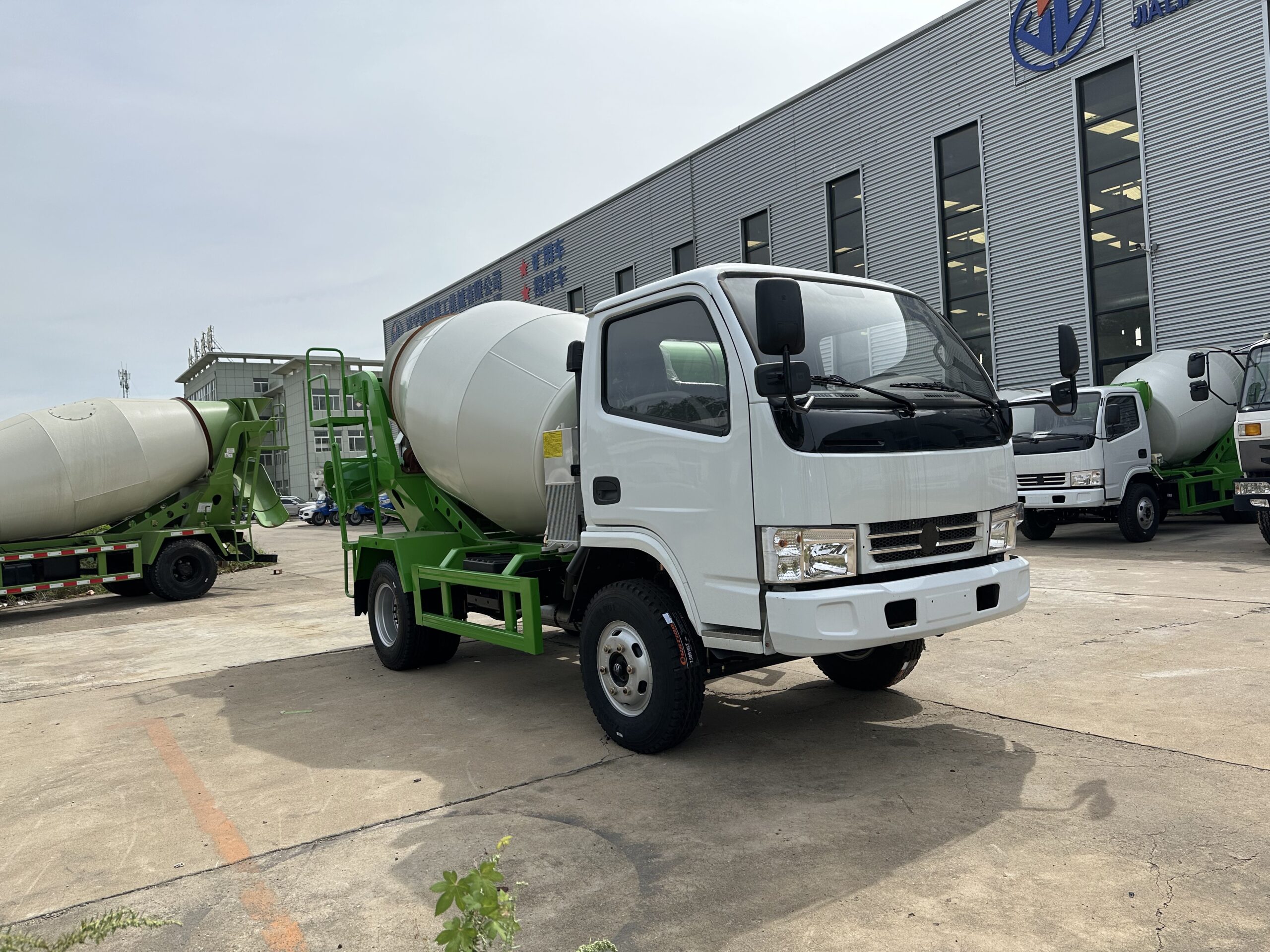 Compact Mixer Truck For Difficult Terrain
Difficult terrain can include more than steep mountain roads.
Construction sites may have loose soil, gravel, mud, uneven ground, slopes and unfinished access roads. These conditions can influence vehicle traction and mobility.
A Compact Mixer Truck For Difficult Terrain should therefore be configured around the project rather than using the same specification for every job.
Depending on the model, the configuration may involve different chassis, tires, drivetrain systems and mixer capacities.
For particularly demanding terrain, four-wheel drive can be considered when available and appropriate for the application. More information about drivetrain selection can be found in our guide to a Concrete Mixer Truck With 4 Wheel Drive.
The key point is that 4WD is only one part of the overall vehicle configuration. Tires, axle design, ground clearance, vehicle weight and road conditions also matter.
Compact Concrete Mixer Truck For Mountain Construction
Mountain construction projects can involve road construction, retaining walls, drainage work, foundations, houses and other infrastructure.
Many of these sites are located away from major roads, which means concrete needs to travel through roads that may not be designed for large construction vehicles.
A Compact Concrete Mixer Truck For Mountain Construction can be considered when access restrictions are an important part of the project.
The required configuration depends on the actual application. For example, a small house construction project may require a different mixer capacity from a road construction project.
The transportation distance should also be considered. If the concrete production point is far from the construction site, the mixer capacity and operating arrangement may need to be different.
Concrete Mixer Truck For Construction Roads
Construction roads are often temporary and can change during different stages of a project.
A road may begin as a simple dirt track and later become a wider gravel road. In mountain areas, the route may also include slopes, curves and uneven sections.
When choosing a Concrete Mixer Truck For Construction Roads, consider the complete working route:
- Where will the truck be loaded?
- How far does it need to travel?
- What is the road width?
- Are there steep sections?
- What type of ground surface is present?
- Where will the concrete be discharged?
- Does the truck need to return through the same route?
Answering these questions can help determine whether a compact configuration is suitable.
Compact Concrete Mixer Truck For Remote Construction Sites
Remote construction sites can have different challenges from urban projects.
The job site may be far from a concrete batching plant, and the access road may be narrow, unfinished or difficult to maintain.
For these projects, a compact mixer truck can provide a mobile way to transport and mix concrete closer to the actual working area, depending on the selected truck configuration and project requirements.
A Compact Concrete Mixer Truck For Remote Construction should be evaluated based on road access, concrete demand, transportation distance and available support equipment.
For projects where access is particularly difficult, a Self Loading Concrete Mixer Truck For Remote Areas can also be considered because its configuration combines concrete loading, mixing and transportation functions in one vehicle.
Compact Concrete Mixer Truck Capacity
Compact size does not mean that every compact mixer truck has the same concrete capacity.
Capacity should be selected according to the amount of concrete required at the job site and the transportation conditions.
For a small construction project, a smaller mixer may be sufficient. Larger projects may require a higher-capacity configuration even if the site has relatively limited access.
When selecting capacity, consider:
- Concrete required per working cycle
- Distance between loading and discharge points
- Road conditions
- Number of concrete deliveries required
- Available loading equipment
- Space available at the job site
The goal is to match the mixer capacity with the actual project instead of choosing the largest possible truck.
Chassis Selection for Mountain and Sloped Construction
The chassis is an important part of a compact mixer truck, especially when the truck will operate on mountain roads or unfinished construction roads.
Important factors can include:
- Chassis dimensions
- Wheelbase
- Axle configuration
- Drivetrain
- Tires
- Ground clearance
- Vehicle weight
- Engine and transmission configuration
The chassis should be selected together with the mixer body because the complete vehicle needs to work as one system.
For difficult working environments, choosing a Concrete Mixer Truck Chassis based on the actual road conditions can help create a more suitable overall configuration.
Discharge Requirements on Narrow Construction Sites
Getting the truck to the construction site is only one part of the job.
The truck must also be able to discharge concrete where it is needed.
A narrow construction site may have limited space for vehicle positioning. Buildings, walls, excavations or other equipment can restrict the available discharge area.
The discharge system should therefore be considered during the truck selection process.
Before ordering a compact mixer truck, determine:
- Where the truck will stop
- How far the concrete needs to reach
- Which side requires discharge access
- Whether the truck needs to reposition
- How much space is available around the discharge point
A suitable Concrete Mixer Truck Discharge System can make a difference in how the truck is used on the actual job site.
Custom Configuration for Difficult Construction Sites
Not every construction project has the same road conditions.
One project may require a compact truck for a narrow mountain road, while another may need a different chassis and mixer capacity for a rural road project.
For this reason, customization can be useful when standard specifications do not match the project.
A Custom Concrete Mixer Truck For Special Applications can be developed around factors such as:
- Vehicle dimensions
- Mixer capacity
- Chassis
- Drivetrain
- Tires
- Discharge arrangement
- Hydraulic configuration
- Road conditions
- Jobsite requirements
The specific options available depend on the manufacturer and truck model.
For projects with unusual dimensions or operating conditions, Concrete Mixer Truck With Customized Specifications can provide another way to match the vehicle to the site.
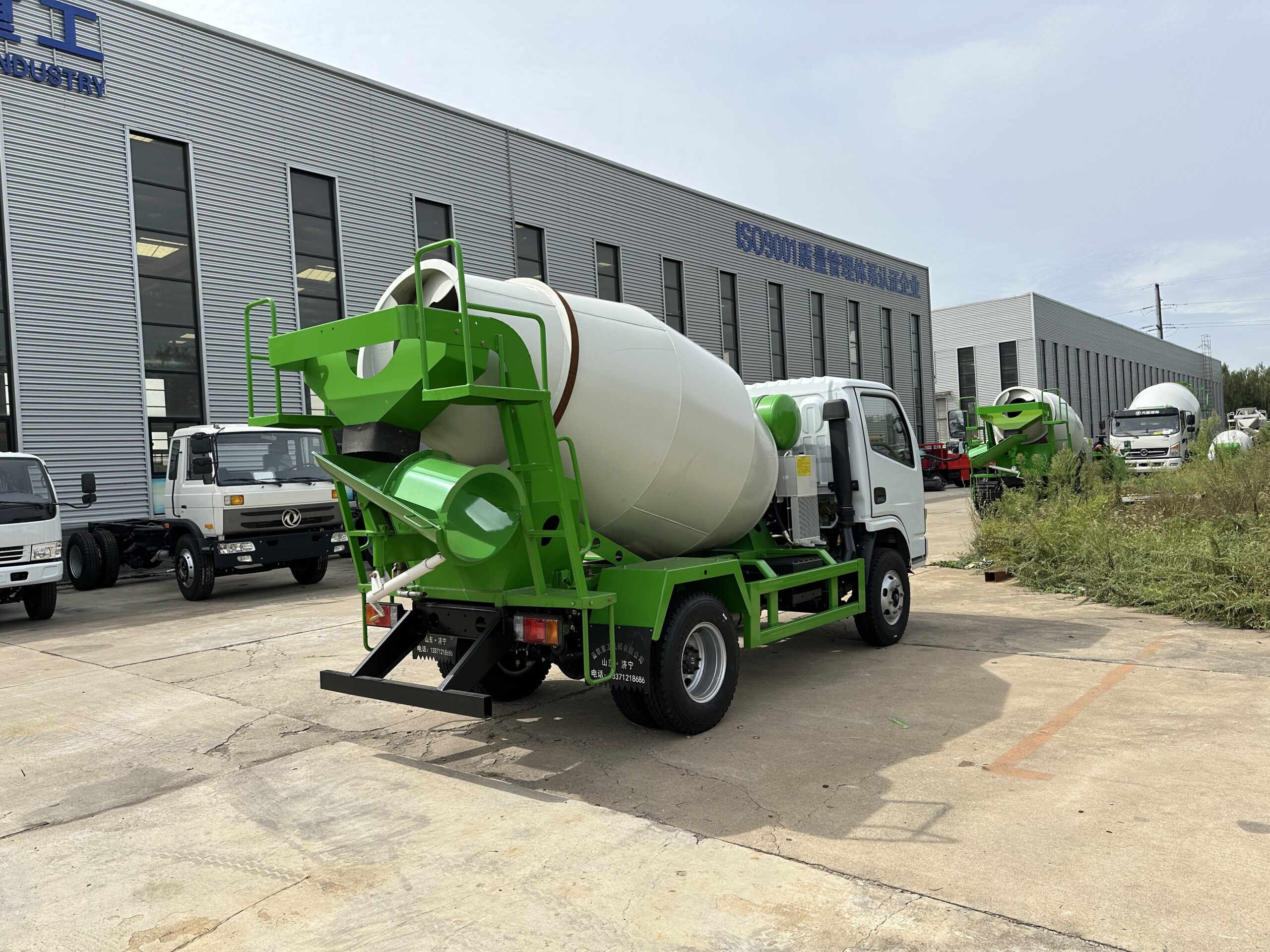 How to Choose a Compact Concrete Mixer Truck For Construction
Before selecting a compact mixer truck, evaluate the project step by step.
1. Check the Road Width
Measure the narrowest section of the access road, not only the main entrance.
2. Check the Slope
Identify steep sections and determine whether the selected chassis and drivetrain are suitable for the road conditions.
3. Check the Ground Conditions
Consider gravel, dirt, mud, loose soil, rocks and uneven surfaces.
4. Determine Concrete Demand
Calculate how much concrete is required per working cycle and select a suitable mixer capacity.
5. Check the Transportation Distance
The distance between the loading point and discharge location can affect the required configuration.
6. Check the Discharge Location
Make sure the truck can reach the required discharge position and has enough space to operate.
7. Select the Chassis and Drivetrain
Choose the chassis, tires and drivetrain according to the actual construction environment.
8. Consider Customization
If the standard truck cannot meet the project’s dimensions or operating requirements, discuss a customized configuration with the manufacturer.
Conclusion
A Compact Concrete Mixer Truck For Construction can be a practical option for projects where access is limited by mountain roads, slopes, rough construction roads or narrow job sites.
The most important point is not simply choosing the smallest truck. The vehicle should match the complete working environment, including road width, slope, ground conditions, transportation distance, concrete demand, chassis, drivetrain and discharge requirements.
For mountain construction, rural projects and difficult construction roads, a compact configuration can be considered when vehicle size and site access are important factors.
If you are looking for a compact concrete mixer truck for a specific construction project, provide the required mixer capacity, road conditions, site dimensions and chassis requirements. The configuration can then be discussed according to the actual project.