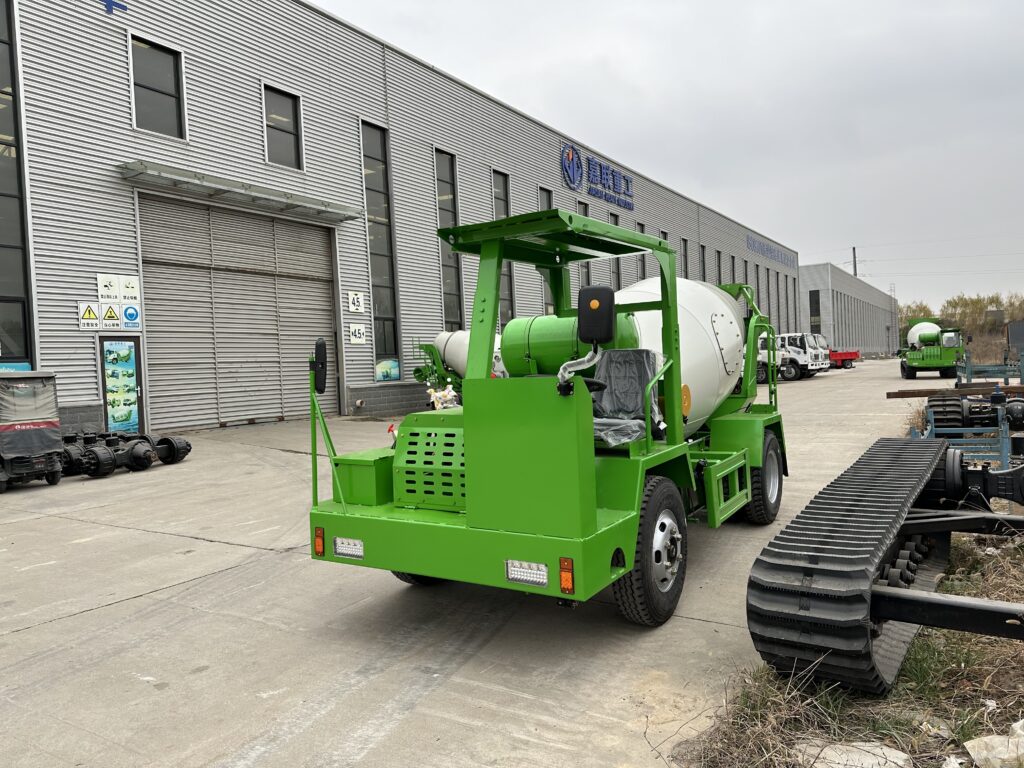
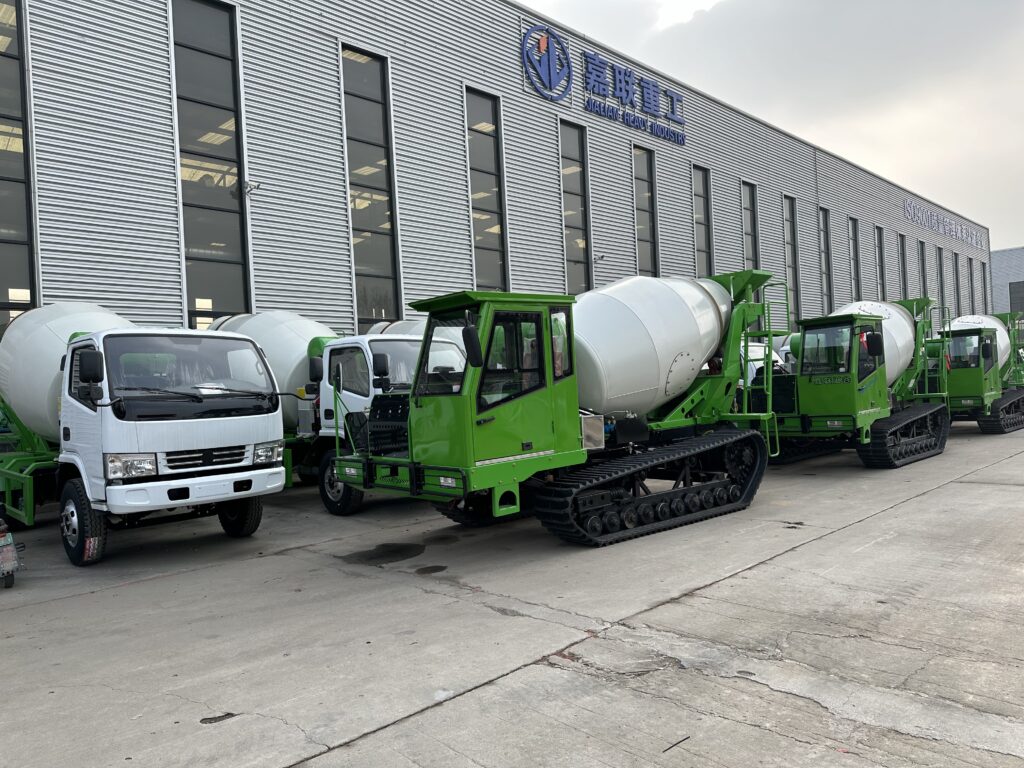
Construction does not always take place on flat, paved roads.
Some projects are located in mountains, on slopes, along unfinished access roads or in areas where the ground is uneven, loose or difficult for heavy vehicles to reach.
A Concrete Mixer Truck For Difficult Terrain needs to be selected differently from a truck used only on flat urban roads. The vehicle may need to travel on gravel roads, muddy construction roads, slopes, uneven ground and temporary access routes before reaching the concrete placement area.
In these conditions, mixer capacity is only one part of the decision. Traction, chassis, tires, ground clearance, vehicle dimensions and road access also need to be considered.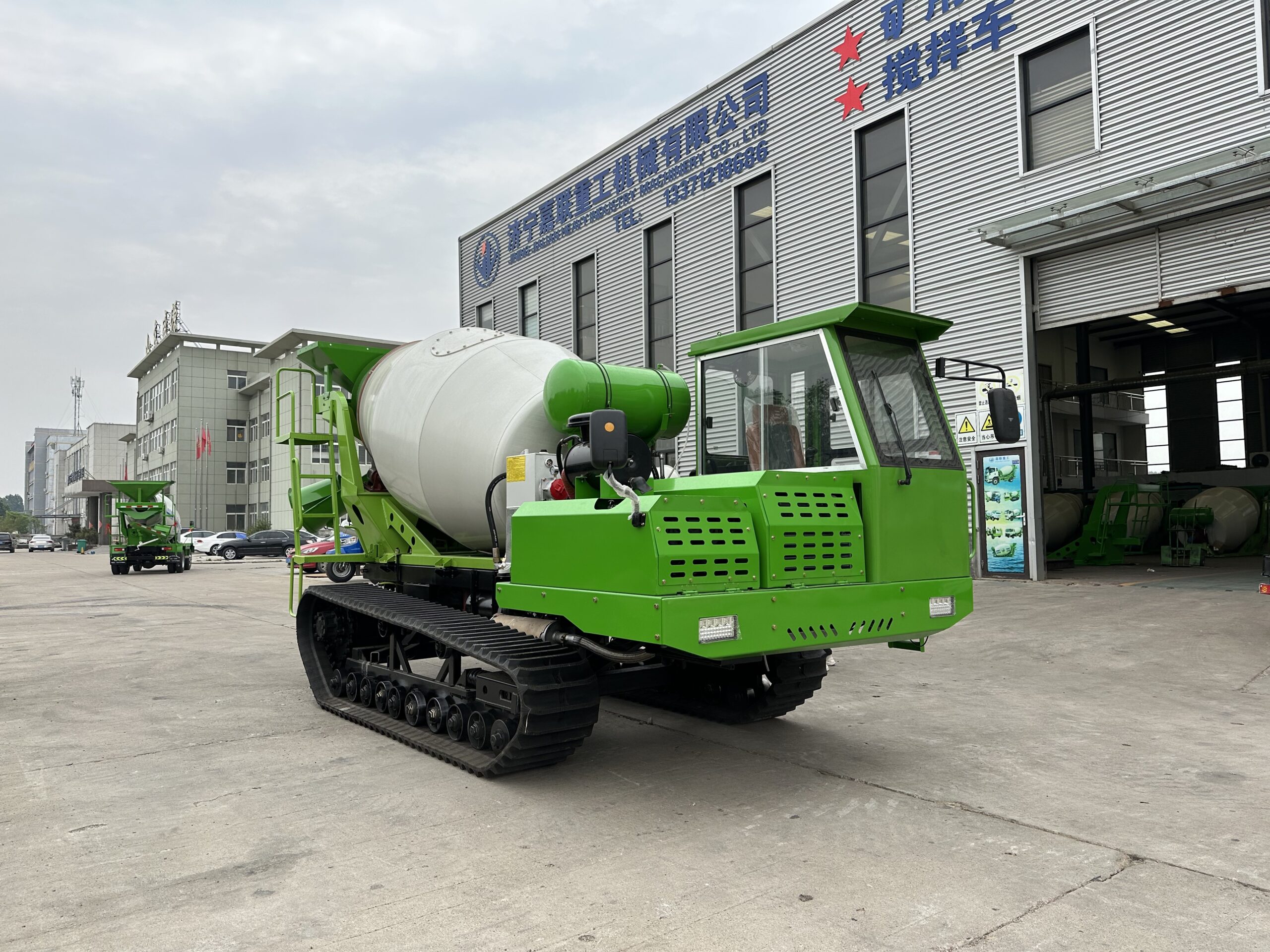
Concrete Mixer Truck For Mountain Roads
Mountain construction sites can be difficult to access because roads may be narrow, uneven or have significant changes in elevation.
A Concrete Mixer Truck For Mountain Roads needs to be matched to the actual road conditions instead of being selected only according to mixer capacity.
Mountain construction can include:
- Housing construction
- Road projects
- Hydropower projects
- Mining areas
- Tunnel construction
- Bridge construction
- Rural infrastructure
- Slope protection work
The road leading to the site may be paved in some sections and unfinished in others. There may also be sharp turns, loose stones or limited space for vehicles to pass.
For this reason, vehicle width, wheel configuration, tire selection and drivetrain can be important when choosing a mixer truck for mountain construction.
Concrete Mixer Truck For Slopes
Sloped construction sites create different operating requirements from flat ground.
A Concrete Mixer Truck For Slopes needs to maintain suitable traction and stability while traveling between different elevations.
The actual requirements depend on the road surface, slope, vehicle load and site conditions.
Before selecting a mixer truck for a sloped project, contractors should consider:
- Road gradient
- Road surface
- Vehicle weight
- Load distribution
- Tire type
- Drive system
- Ground clearance
- Available road width
A truck designed for flat roads may not be the most suitable configuration for every sloped construction site.
However, it is also important not to assume that four-wheel drive alone solves every slope-related problem. The complete vehicle configuration and the actual road conditions need to be evaluated together.
Concrete Mixer Truck For Rough Construction Roads
Many construction sites are connected by temporary or unfinished roads.
These roads may contain loose gravel, potholes, mud, rocks or uneven sections.
A Concrete Mixer Truck For Rough Construction Roads should be able to operate according to the conditions of the access route and the construction site.
Road conditions can affect:
- Vehicle traction
- Tire wear
- Ground clearance requirements
- Vehicle stability
- Driving speed
- Maintenance requirements
A suitable truck configuration starts with understanding the road itself.
For example, a gravel construction road and a muddy road may create different traction requirements. A narrow rocky road may create more concerns about vehicle dimensions and ground clearance.
The truck should therefore be selected according to the actual working environment.
Concrete Mixer Truck For Uneven Ground
Construction sites are not always prepared before concrete work begins.
A project may be located on unfinished ground, a recently excavated area or a temporary construction platform.
A Concrete Mixer Truck For Uneven Ground needs to operate within the limits of the vehicle’s design while carrying the required concrete load.
Ground conditions can affect vehicle stability and traction, particularly when the truck is loaded.
Important factors include:
- Ground firmness
- Surface slope
- Wheel placement
- Tire condition
- Vehicle weight
- Axle configuration
- Ground clearance
Operators should also consider where the truck will stop for loading and unloading. The best access route may not always be the shortest route.
Why Traction Matters on Difficult Terrain
Traction is one of the most important considerations when a mixer truck operates on difficult roads.
A Concrete Mixer Truck Traction system is not a single component. Traction depends on the interaction between the drivetrain, tires, axles, road surface and vehicle load.
On loose gravel, mud or uneven ground, the available grip can change quickly.
A vehicle may have sufficient traction on one section of the road but encounter wheel slip on another.
This is why drivetrain selection should be based on the actual project conditions.
Depending on the truck model and application, a 4WD Concrete Mixer Truck may provide additional driving traction because power can be delivered to more wheels.
However, four-wheel drive does not eliminate the need to consider tires, axle load, ground clearance and road conditions.
 4WD Concrete Mixer Truck for Difficult Terrain
Four-wheel drive is one configuration that may be considered for difficult construction roads.
A 4WD Concrete Mixer Truck can distribute driving force through the vehicle’s four driven wheels, depending on its drivetrain design.
This can be useful in certain conditions such as:
- Loose gravel
- Muddy construction roads
- Slopes
- Uneven ground
- Remote construction access roads
But 4WD should not be treated as a universal solution.
A truck operating on steep or rough roads still needs an appropriate chassis, suitable tires and sufficient ground clearance.
The vehicle’s total weight and concrete load also affect how it behaves on difficult terrain.
Therefore, the complete vehicle should be considered rather than looking at the drive system alone.
Tires and Ground Clearance
Tires are often overlooked when selecting a mixer truck for difficult terrain.
The tire needs to provide suitable contact with the road surface while supporting the vehicle’s operating load.
Different road conditions can create different tire requirements.
For example:
- Gravel roads can cause increased tire wear
- Mud can reduce available traction
- Rocky roads can place greater demands on tire durability
- Uneven ground can affect vehicle stability
- Soft ground can increase the risk of wheel slip
Ground clearance is another factor.
A vehicle operating on a rough construction road may encounter rocks, uneven surfaces or raised sections of ground.
Sufficient clearance can help reduce the risk of the vehicle’s lower components contacting the ground, depending on the vehicle design.
Chassis Selection for Mountain and Rough Roads
The chassis is the foundation of the complete mixer truck.
A Concrete Mixer Truck Chassis should be selected according to the required mixer capacity, total vehicle load, road conditions and operating environment.
For difficult terrain, contractors should consider:
- Axle configuration
- Drive system
- Vehicle weight
- Wheelbase
- Ground clearance
- Tire configuration
- Frame design
- Required mixer capacity
A compact chassis may be useful on narrow mountain roads where vehicle width and turning space are limited.
A heavier-duty configuration may be considered when the project requires greater capacity or operates on demanding construction roads.
The correct choice depends on the complete project rather than one specification.
Small Concrete Mixer Truck For Difficult Terrain
Difficult terrain does not always mean that a large mixer truck is required.
In some mountain villages, rural construction sites and small construction projects, the road may be narrow and the required concrete volume may be relatively low.
A Small Concrete Mixer Truck For Difficult Terrain can be considered when both vehicle size and concrete demand need to remain relatively compact.
Potential applications include:
- Mountain houses
- Rural construction
- Small road projects
- Farm buildings
- Small bridge work
- Slope construction
- Local infrastructure projects
A smaller vehicle may provide advantages in terms of access and maneuverability, depending on the specific model and road conditions.
However, the smaller size should still provide sufficient capacity and chassis strength for the required load.
Narrow Construction Roads in Mountain Areas
Mountain construction often involves narrow access roads.
A road may have enough width for the truck to pass but very limited space for turning or meeting another vehicle.
This makes vehicle dimensions important.
Before purchasing a mixer truck for a mountain project, contractors should check:
- Road width
- Turning radius
- Maximum vehicle height
- Roadside obstacles
- Bridge or culvert load limits
- Distance between passing areas
- Access to the actual construction site
A compact mixer truck may be more suitable for some narrow access roads, while larger trucks may require better road access.
These measurements should be confirmed before selecting the vehicle.
Concrete Mixer Truck for Construction Roads
Construction roads are often temporary.
They may be created specifically to provide access to a project and can change as construction progresses.
A Concrete Mixer Truck For Construction Roads should therefore be selected according to the current and expected road conditions.
If the road is expected to improve during the project, the required vehicle configuration may change over time.
If the road will remain rough throughout construction, the truck should be selected with those conditions in mind.
This is especially important for projects in:
- Mountain areas
- Mining areas
- Remote regions
- Rural areas
- Forest construction zones
- Large infrastructure sites
The access road should be treated as part of the overall equipment selection process.
Concrete Mixer Truck for Remote and Mountain Projects
Remote construction sites may be far from concrete supply facilities.
When the distance between the concrete source and the construction site is significant, transportation planning becomes important.
A mixer truck may need to travel long distances over roads that are not fully developed.
For these projects, contractors should consider both transportation and concrete production.
A Self Loading Concrete Mixer Truck For Remote Areas may be considered when the project requires material loading, mixing, transportation and discharge in one machine, depending on the vehicle configuration.
This can be relevant for remote construction, rural infrastructure and mountain projects where access to ready-mixed concrete is limited.
However, the choice between a conventional mixer truck and a self-loading mixer should be based on the actual material supply, concrete demand and project workflow.
Concrete Mixer Truck Capacity for Difficult Terrain
Truck capacity should also be considered carefully.
A larger mixer can carry more concrete, but greater vehicle weight may affect road access and operating conditions.
A smaller mixer may have easier access to narrow roads, but it may require more trips if the project needs a larger volume of concrete.
Therefore, Concrete Mixer Truck Capacity should be matched with both the concrete demand and the road conditions.
Consider:
- Concrete required per trip
- Total project volume
- Road carrying capacity
- Distance to the construction site
- Number of required trips
- Vehicle dimensions
- Available turning space
The best configuration is the one that fits both the concrete requirement and the access conditions.
Discharge Requirements on Difficult Construction Sites
Getting the truck to the construction site is only part of the job.
The concrete also needs to reach the correct placement location.
A Concrete Mixer Truck Discharge System should be considered according to the site layout.
On a mountain project, the truck may need to discharge concrete beside a slope, foundation, retaining structure or narrow construction area.
Before choosing the truck, contractors should determine:
- Where the truck can safely stop
- How far the concrete needs to travel after discharge
- Discharge direction
- Available working space
- Whether a concrete pump or other equipment will be used
A suitable discharge configuration can make a significant difference to the practical operation of the mixer truck.
Custom Concrete Mixer Truck For Difficult Terrain
Difficult terrain varies from project to project.
One project may involve mountain roads, another may involve muddy construction roads, while another may require a compact truck for a narrow tunnel or remote site.
Because of these differences, standard configurations may not always meet every requirement.
A Custom Concrete Mixer Truck For Special Applications can be developed according to the actual operating conditions.
Possible customization considerations include:
- Mixer capacity
- Chassis
- Drive system
- Vehicle width
- Vehicle height
- Tires
- Ground clearance
- Discharge arrangement
- Hydraulic system
- Cab configuration
For projects with specific dimensions or operating conditions, a Concrete Mixer Truck With Customized Specifications can also be considered.
Customization should be based on actual project requirements rather than simply adding more equipment.
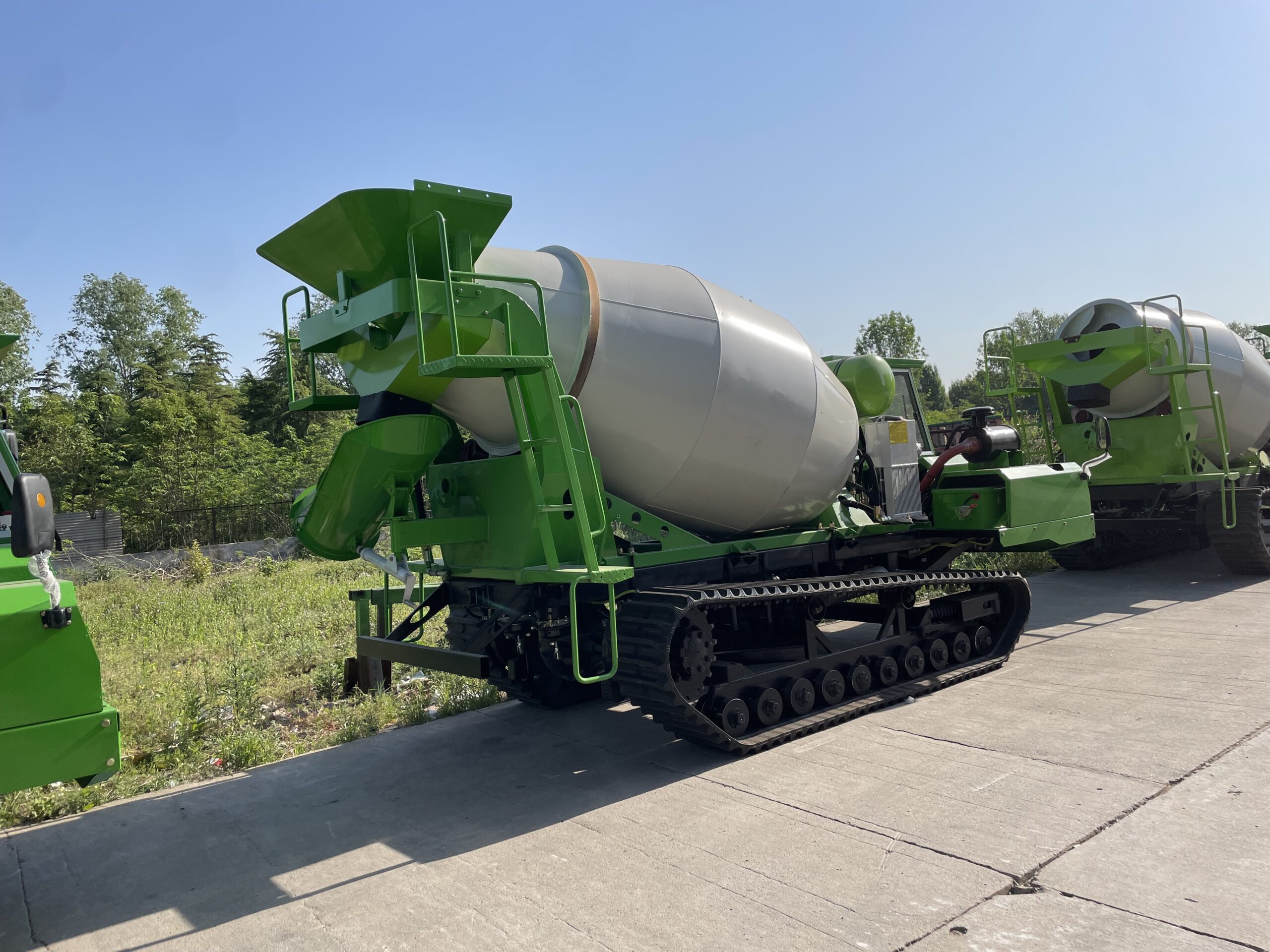 How to Choose a Concrete Mixer Truck For Difficult Terrain
Before selecting a mixer truck, collect the basic information about the project.
1. Check the road conditions
Identify whether the access road is paved, gravel, muddy, rocky, uneven or unfinished.
2. Measure the slope
Understand the road gradient and the sections where the truck needs to travel uphill or downhill.
3. Check road width
Measure the narrowest part of the access road and available turning areas.
4. Determine the concrete requirement
Estimate how much concrete is needed per trip and the total project demand.
5. Consider the drivetrain
Depending on the actual road conditions, a two-wheel-drive or four-wheel-drive configuration may be considered.
6. Select suitable tires and chassis
The tires, axles, chassis and ground clearance should match the operating environment.
7. Check the discharge location
Determine exactly where the concrete needs to be discharged and how far it needs to travel to the final placement area.
8. Consider customization
If standard configurations cannot meet the vehicle size, capacity, drivetrain or discharge requirements, customized specifications can be considered.
Conclusion
A Concrete Mixer Truck For Difficult Terrain needs to be selected according to the complete construction environment.
Mountain roads, slopes, gravel roads, muddy access routes and uneven construction sites can all create different requirements for the mixer truck.
Traction is important, but it is only one part of the vehicle. Chassis configuration, tires, ground clearance, vehicle dimensions, mixer capacity and discharge arrangements should also be considered.
For narrow mountain roads and smaller projects, a compact mixer truck may provide easier access. For projects with loose or difficult road conditions, a suitable drivetrain and tire configuration may be considered.
For remote projects, a self-loading mixer can also be considered when the project requires on-site material loading and concrete production.
If you are looking for a concrete mixer truck for difficult terrain, provide the road conditions, slope, road width, required concrete capacity and discharge requirements. The truck configuration can then be matched to the actual construction environment.