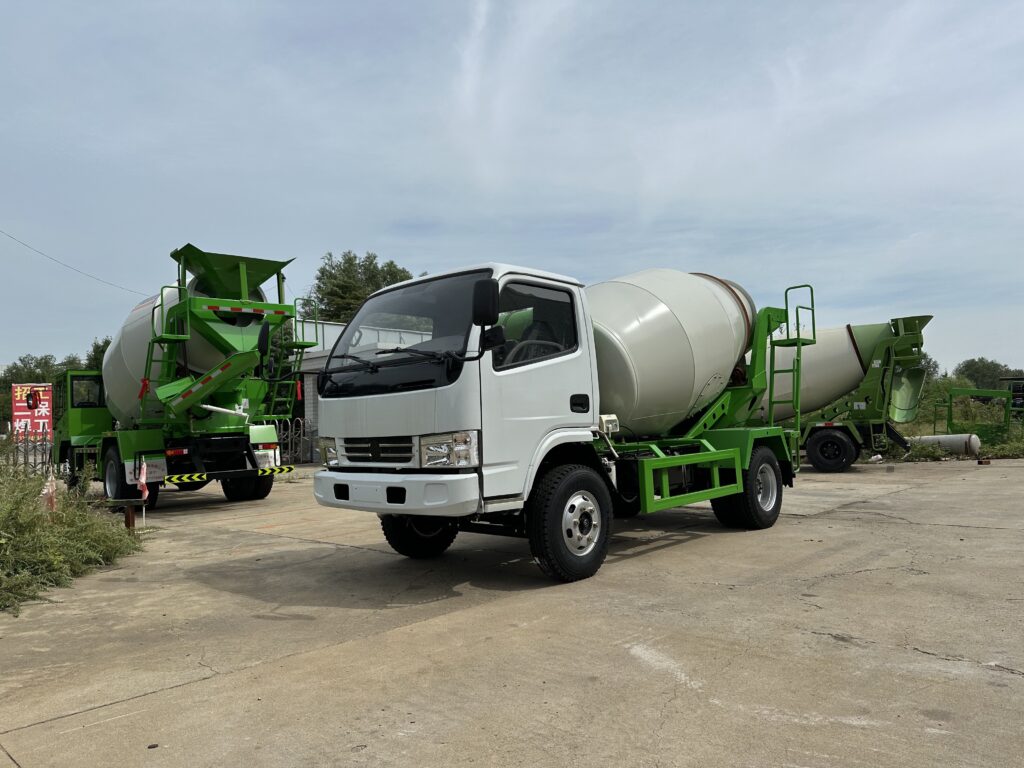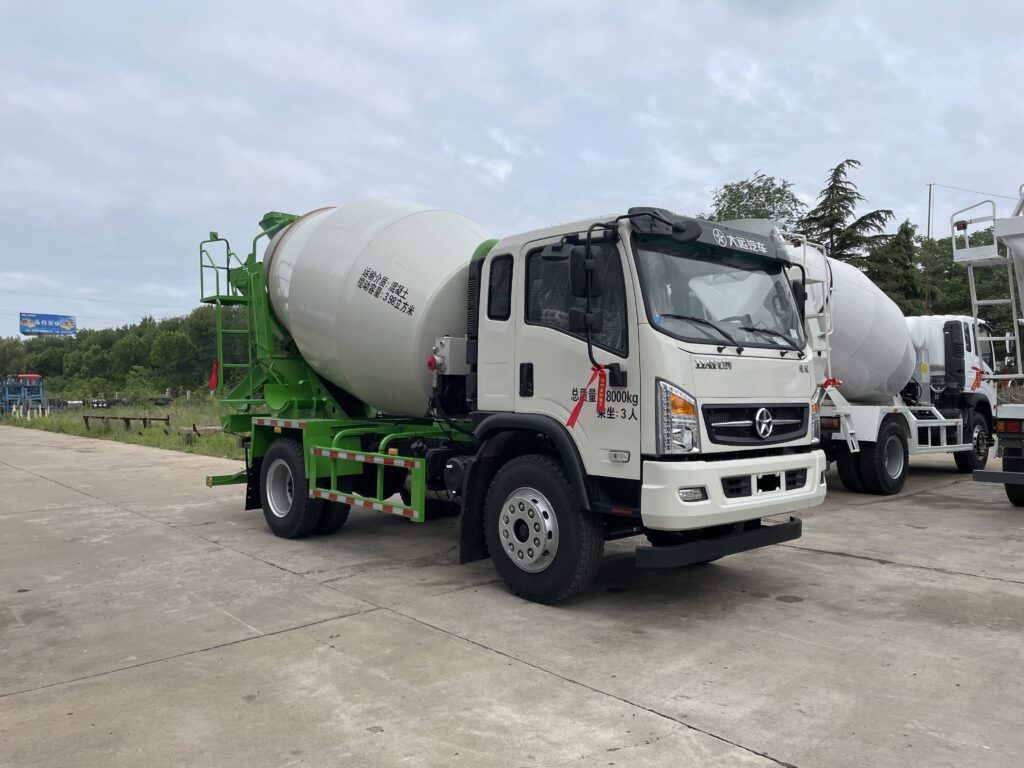
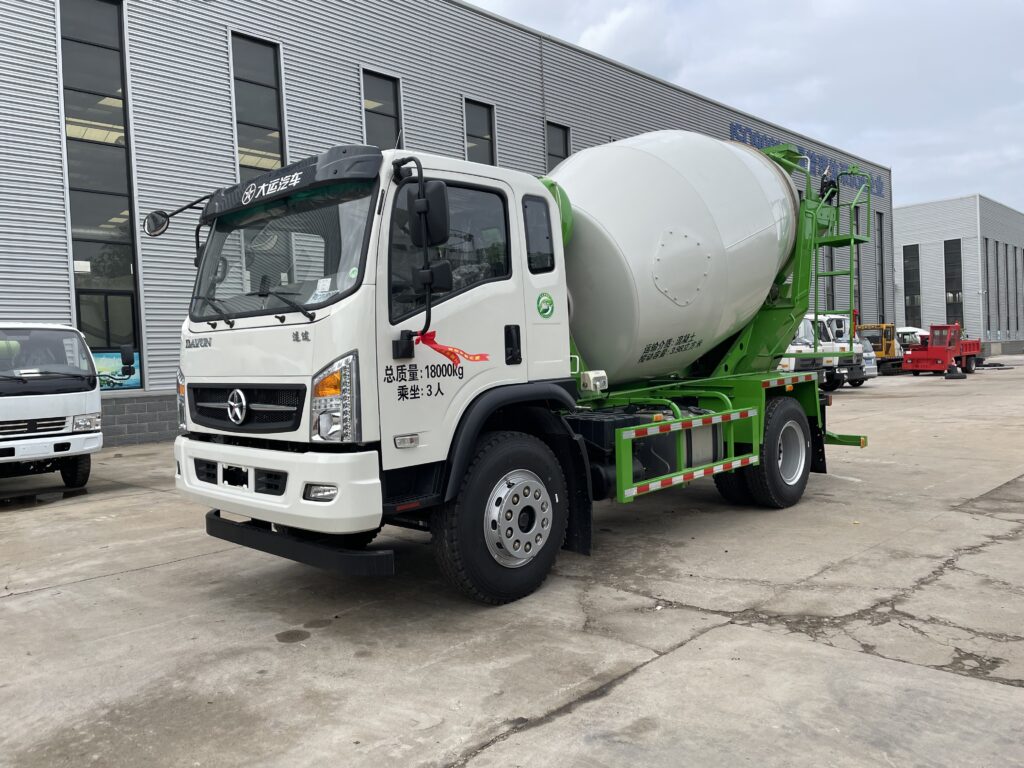
Infrastructure projects often require concrete to be produced, transported and discharged at different locations across a large construction site. Roads, bridges, drainage systems, tunnels, public facilities and other civil engineering projects can all require a reliable concrete supply.
A Concrete Mixer Truck For Infrastructure Projects needs to do more than carry concrete from one point to another. Its mixer capacity, chassis, drum drive system, discharge configuration, vehicle dimensions and road performance all need to match the actual construction process.
The right configuration depends on factors such as project size, concrete demand, transportation distance, road conditions, pouring location and required discharge method.
For this reason, infrastructure projects should select a mixer truck based on the complete working process rather than mixer capacity alone.
What Is a Concrete Mixer Truck For Infrastructure Projects?
A Concrete Mixer Truck For Infrastructure Projects is a concrete transportation and mixing vehicle configured for construction projects that require regular delivery of ready-mixed or site-produced concrete.
Typical applications include:
- Road construction
- Bridge construction
- Tunnel construction
- Drainage projects
- Culvert construction
- Foundation construction
- Public buildings
- Utility projects
- Airport construction
- Industrial infrastructure
- Rural infrastructure
Different projects create different transportation requirements.
For example, road construction may involve long linear work areas, while bridge construction may require concrete to be delivered to a specific pouring location. Tunnel projects may have restricted access, while drainage projects can involve narrow roads and frequently changing work locations.
Therefore, the mixer truck configuration should be based on the project environment.
Why Infrastructure Projects Need the Right Mixer Truck
Concrete work is often connected to a specific construction sequence.
The concrete may need to arrive at the site during a certain stage of the operation. If transportation takes too long, access is difficult, or the vehicle cannot reach the required discharge location, the construction process can become more complicated.
A suitable mixer truck should therefore consider four basic stages:
Concrete Loading → Mixing/Agitation → Transportation → Discharge
Each stage places different requirements on the vehicle.
The drum needs sufficient capacity for the planned concrete volume.
The drive system needs to rotate the drum according to its operating requirements.
The chassis needs to support the vehicle and concrete load.
The discharge system needs to deliver concrete where the construction crew requires it.
This is why infrastructure mixer truck selection is a system-level decision.
Key Technical Factors for Infrastructure Mixer Trucks
Several technical specifications deserve attention when selecting a mixer truck for an infrastructure project.
1. Mixer Drum Capacity
Mixer capacity is one of the first specifications buyers consider.
However, the required capacity should be calculated based on the project’s actual concrete demand rather than simply choosing the largest available drum.
Consider:
- Concrete required per pouring operation
- Number of trucks available
- Transportation distance
- Concrete supply rate
- Jobsite access
- Expected delivery frequency
A larger mixer does not automatically mean higher overall efficiency.
If the construction site has narrow access roads or limited pouring space, a smaller truck may be easier to operate.
For smaller infrastructure sections, a Small Concrete Mixer Truck For Small Projects can be considered when the required concrete volume and site conditions are relatively limited.
Concrete Mixer Truck Capacity and Project Workflow
The relationship between truck capacity and project workflow is particularly important.
Imagine a road project requiring continuous concrete delivery.
If each mixer carries a smaller amount of concrete, more transportation cycles may be required.
If the mixer capacity is larger, fewer trips may be needed, but the vehicle may require wider access roads and greater chassis capacity.
The correct capacity therefore depends on more than the amount of concrete required.
A basic planning relationship can be expressed as:
Required Concrete Supply = Concrete Per Cycle × Number of Delivery Cycles
Transportation time also matters.
A simplified delivery cycle includes:
Loading Time + Travel Time + Waiting Time + Discharge Time + Return Time
Reducing unnecessary waiting or transportation time can be just as important as increasing mixer capacity.
Chassis Selection for Infrastructure Construction
The chassis is the foundation of the complete mixer truck.
It carries:
- Mixer drum
- Hydraulic or mechanical drive components
- Concrete load
- Driver and equipment
- Other vehicle systems
When selecting a Concrete Mixer Truck Chassis, buyers should consider the expected gross vehicle weight and operating conditions.
Important factors include:
- Engine power
- Axle capacity
- Wheelbase
- Tire specification
- Suspension
- Ground clearance
- Vehicle dimensions
- Transmission
- Drive configuration
The chassis should be matched to the mixer body.
A mixer drum should not simply be installed on a chassis without checking weight distribution and axle capacity.
 Concrete Mixer Trucks for Road Construction
Road construction is one of the common infrastructure applications for concrete mixer trucks.
Road projects can involve long working sections, changing construction locations and temporary access roads.
A Concrete Mixer Truck For Road Construction may need to travel between the concrete supply point and different sections of the project.
The selection should consider:
- Road width
- Transportation distance
- Surface conditions
- Concrete demand
- Discharge location
- Daily operating hours
For large road projects, transportation planning can be particularly important because the mixer may repeatedly travel between the batching plant and the active construction area.
For rural or unfinished access roads, the chassis and drivetrain may also need additional consideration.
Concrete Mixer Trucks for Bridge Construction
Bridge construction creates different requirements.
Concrete may be needed for:
- Foundations
- Pile-related work
- Abutments
- Piers
- Deck construction
- Structural components
A Concrete Mixer Truck For Bridge Construction should be selected according to the actual access and pouring conditions.
Bridge construction sites may have limited working areas, temporary roads or restricted access around the structure.
Vehicle dimensions can therefore become important.
The truck should be able to reach the required discharge position without creating unnecessary interference with cranes, formwork or other construction equipment.
Concrete Mixer Trucks for Tunnel Construction
Tunnel construction can create particularly demanding access conditions.
The available space may be restricted by:
- Tunnel width
- Tunnel height
- Turning space
- Ventilation equipment
- Temporary structures
- Construction machinery
In these situations, vehicle dimensions can be as important as mixer capacity.
A Concrete Mixer Truck For Infrastructure Projects used in tunnel construction may require a compact chassis, controlled vehicle dimensions and a discharge configuration suitable for the working area.
For specialized tunnel projects, buyers can also consider a Custom Concrete Mixer Truck For Special Applications when standard vehicle dimensions or discharge arrangements do not match the site.
Concrete Mixer Truck for Drainage and Utility Projects
Infrastructure construction also includes projects that are smaller in scale but spread across many locations.
Examples include:
- Drainage channels
- Culverts
- Water supply systems
- Sewer systems
- Utility trenches
- Small bridges
- Roadside structures
These projects may require a mixer truck to move repeatedly between different work sections.
A compact Mobile Concrete Mixer Truck can be useful where the construction location changes frequently.
In these applications, vehicle maneuverability, dimensions and discharge convenience can have a major impact on daily operation.
4WD Concrete Mixer Trucks for Infrastructure Projects
Not every infrastructure project requires four-wheel drive.
However, some projects include unpaved roads, slopes, loose soil or muddy construction areas.
In such cases, a Concrete Mixer Truck With 4 Wheel Drive can be considered.
Four-wheel drive allows the drivetrain to transfer engine power through four driven wheels according to the vehicle’s configuration.
This can help improve traction when road grip is limited.
However, 4WD should not be viewed separately from the rest of the vehicle.
The following specifications should also be evaluated:
- Engine torque
- Transmission
- Transfer case
- Axle capacity
- Tire specification
- Ground clearance
- Vehicle weight
- Road gradient
The actual 4WD configuration should match the project’s road conditions.
Hydraulic System and Drum Operation
The vehicle drivetrain moves the mixer truck, while the drum drive system rotates the mixer drum.
Many mixer trucks use a hydraulic system for drum operation.
A typical hydraulic drum drive may include:
Engine → Hydraulic Pump → Hydraulic Circuit → Hydraulic Motor → Drum Drive
The hydraulic pump generates hydraulic flow, while the hydraulic motor converts hydraulic energy into rotary mechanical power.
The hydraulic system needs to be matched to:
- Drum capacity
- Drum load
- Required drum speed
- Engine power
- Operating conditions
For infrastructure projects involving frequent loading, transportation and discharge cycles, stable drum operation is important.
A Concrete Mixer Truck With Hydraulic System can therefore be considered when hydraulic drum control is part of the required vehicle configuration.
Concrete Mixer Truck Discharge System
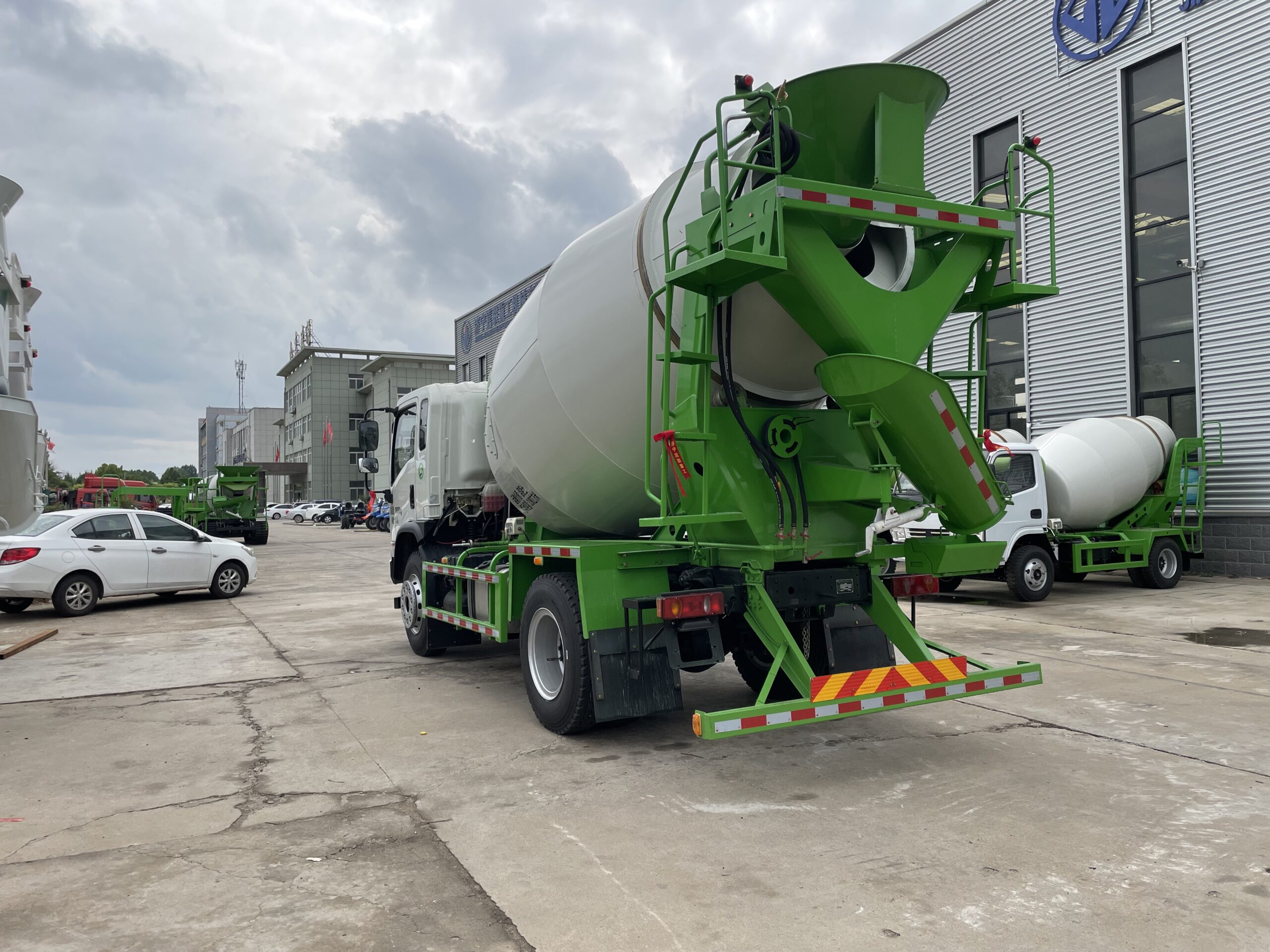
The discharge system determines how concrete leaves the mixer drum.
A standard discharge arrangement may include:
- Discharge opening
- Chute
- Main discharge chute
- Extension chute
- Supporting structure
- Rotation or adjustment mechanism
The correct discharge configuration depends on where the concrete needs to be placed.
For example:
A road project may require discharge directly beside the roadway.
A drainage project may require concrete to be delivered into a narrow trench.
A bridge project may have a specific pouring position around formwork.
A tunnel project may have restricted discharge space.
Therefore, buyers should describe the actual discharge location when requesting a mixer truck.
Transportation Distance and Concrete Mixer Truck Selection
Transportation distance is another important technical factor.
A mixer truck may travel a short distance inside a construction site or repeatedly travel between a batching plant and a remote project area.
Longer transportation distances increase the importance of:
- Drum operation
- Road conditions
- Vehicle reliability
- Fuel consumption
- Driver workload
- Transportation scheduling
For remote infrastructure construction, project managers should also consider whether concrete can be supplied consistently from the batching location.
In areas with limited infrastructure, a Self Loading Concrete Mixer Truck For Remote Areas may be considered because its operating concept combines concrete loading, mixing, transportation and discharge functions in one machine.
This is a different application from a conventional mixer truck supplied by a centralized batching plant.
 How to Match Mixer Capacity With Infrastructure Projects
Choosing mixer capacity should start with the concrete requirement.
Consider the following questions:
How much concrete is required per operation?
A foundation or structural section may require a different concrete volume from a small drainage section.
How far does the truck need to travel?
Long transportation distances can reduce the number of delivery cycles completed in a working day.
How many trucks are working together?
A project using multiple mixer trucks may require a different capacity strategy from a project using only one truck.
How accessible is the construction site?
A larger truck may have difficulty entering a narrow construction area.
Where does the concrete need to be discharged?
The required discharge position may affect vehicle dimensions and chute configuration.
The best capacity is therefore the one that fits the complete construction process.
Infrastructure Mixer Truck and Vehicle Dimensions
Infrastructure projects can involve restricted access.
Vehicle dimensions should be checked before ordering.
Important dimensions include:
- Overall length
- Overall width
- Overall height
- Wheelbase
- Minimum turning radius
- Ground clearance
For example, a tunnel may have a maximum height restriction.
A rural road may have limited width.
An urban infrastructure project may have restricted turning space.
In these situations, choosing the mixer capacity first and checking dimensions later can create problems.
Vehicle dimensions should be part of the initial selection process.
How to Choose a Concrete Mixer Truck For Infrastructure Projects
A practical selection process can be divided into several steps.
Step 1: Define the Construction Application
Identify whether the truck will mainly be used for:
- Roads
- Bridges
- Tunnels
- Drainage
- Foundations
- Utilities
- Public works
- Industrial construction
Different applications create different requirements.
Step 2: Calculate Concrete Demand
Estimate the concrete required per cycle and the number of deliveries needed.
This helps determine the appropriate mixer capacity.
Step 3: Check Access Conditions
Record:
- Road width
- Road surface
- Maximum slope
- Tunnel height
- Turning space
- Transportation distance
These details help determine the chassis and drivetrain.
Step 4: Select the Chassis
Match the chassis to the total operating weight and project conditions.
Step 5: Select the Drum Drive System
The hydraulic or other drum drive system should match the drum capacity and expected operating conditions.
Step 6: Configure the Discharge System
Determine where the concrete needs to be discharged and how much reach or adjustment is required.
Step 7: Review the Complete Vehicle
Finally, check whether the engine, chassis, mixer body, hydraulic system, discharge system, tires and dimensions work together as one configuration.
Common Technical Mistakes When Buying an Infrastructure Mixer Truck
Several mistakes can be avoided during the purchasing process.
Choosing Capacity Without Considering Access
A large drum may provide greater concrete capacity, but the vehicle may not be practical for narrow roads or restricted sites.
Choosing 4WD Without Checking the Complete Drivetrain
4WD is only one part of vehicle traction.
Engine torque, transmission, axles, tires and ground clearance also matter.
Ignoring Axle Load
The concrete load adds significant weight to the vehicle.
The chassis and axles must be suitable for the intended operating weight.
Ignoring Discharge Location
The mixer truck needs to reach the actual concrete placement area.
Discharge configuration should therefore be considered before purchasing.
Focusing Only on Engine Power
Engine power is important, but it does not describe the complete mixer truck.
The transmission, drivetrain, hydraulic system, drum capacity and chassis all affect actual operation.
Technical Checklist for Infrastructure Mixer Trucks
Before placing an order, buyers can prepare the following information:
| Item | Information to Confirm |
|---|---|
| Project type | Road, bridge, tunnel, drainage, etc. |
| Concrete demand | Required volume per cycle |
| Mixer capacity | Required drum capacity |
| Chassis | Brand and configuration |
| Engine | Power and fuel requirements |
| Drive system | 2WD or 4WD |
| Road conditions | Paved, gravel, mud, slope, etc. |
| Dimensions | Maximum length, width and height |
| Transportation distance | Average delivery distance |
| Drum drive | Hydraulic or other configuration |
| Discharge | Required discharge location |
| Tire specification | Based on road conditions |
| Working environment | Urban, rural, remote, tunnel, mine, etc. |
Providing this information to the manufacturer makes it easier to develop a suitable vehicle configuration.
Why Infrastructure Projects May Need Customized Mixer Trucks
Infrastructure projects are rarely identical.
A highway project, bridge project and tunnel project can have completely different working conditions.
Even two road projects may have different requirements because of road width, terrain, transportation distance and concrete demand.
This is why some projects require customized configurations.
A Concrete Mixer Truck With Customized Specifications can be configured around requirements such as:
- Mixer capacity
- Chassis
- Vehicle dimensions
- Drive configuration
- Tire selection
- Drum drive system
- Discharge arrangement
Customization should be based on actual project requirements rather than adding specifications simply because they are available.
Infrastructure Projects and Mixer Truck Maintenance
Infrastructure mixer trucks can operate for long working hours and travel on different types of roads.
Regular maintenance should cover both the chassis and mixer system.
Important inspection areas include:
- Engine
- Transmission
- Axles
- Tires
- Suspension
- Hydraulic system
- Hydraulic hoses
- Mixer drum
- Drum blades
- Discharge chute
- Control components
Concrete residue should also be removed from areas where it can accumulate.
For hydraulic systems, operators should check oil level, hoses, fittings and potential leakage.
For the drivetrain, regular inspection of lubricants and mechanical components should follow the chassis manufacturer’s maintenance requirements.
Preventive maintenance helps identify problems before they interrupt construction operations.
Frequently Asked Questions
What type of infrastructure projects use concrete mixer trucks?
Concrete mixer trucks can be used for road construction, bridge construction, tunnels, drainage systems, foundations, utility projects, public works and other civil engineering applications.
How do I choose a concrete mixer truck for an infrastructure project?
Start with the concrete demand, transportation distance, road conditions, site access and discharge requirements. Then select the appropriate mixer capacity, chassis, drivetrain and discharge configuration.
What mixer capacity is suitable for infrastructure projects?
There is no single capacity that fits every infrastructure project. The appropriate capacity depends on concrete demand, transportation distance, site access, number of delivery vehicles and project workflow.
Is 4WD necessary for infrastructure construction?
Not always. 4WD may be useful when infrastructure projects involve muddy roads, loose soil, slopes or other low-traction conditions. Projects on paved roads may not require 4WD.
Can a mixer truck be customized for tunnel construction?
Yes. Tunnel projects can have special requirements for vehicle height, width, turning space, mixer capacity and discharge configuration. These requirements can be considered when configuring the vehicle.
What information should I provide when requesting an infrastructure mixer truck?
Provide the project type, required concrete capacity, road conditions, transportation distance, maximum vehicle dimensions, discharge requirements and preferred chassis or drivetrain configuration.
Conclusion
A Concrete Mixer Truck For Infrastructure Projects should be selected according to the complete construction process rather than mixer capacity alone.
Roads, bridges, tunnels, drainage systems and other infrastructure projects create different requirements for concrete capacity, transportation, chassis, drivetrain, vehicle dimensions, drum drive and discharge.
The technical selection process should therefore begin with the project itself:
Project Type → Concrete Demand → Transportation Distance → Road Conditions → Vehicle Dimensions → Chassis → Mixer System → Discharge Configuration
For standard infrastructure projects, a conventional mixer truck may provide the required configuration. For projects with restricted access, difficult roads or unusual discharge requirements, a customized configuration may be more appropriate.
If you are looking for a Concrete Mixer Truck For Infrastructure Projects, provide your project type, concrete capacity, road conditions, transportation distance and site dimensions. The mixer truck configuration can then be matched to the actual construction requirements.