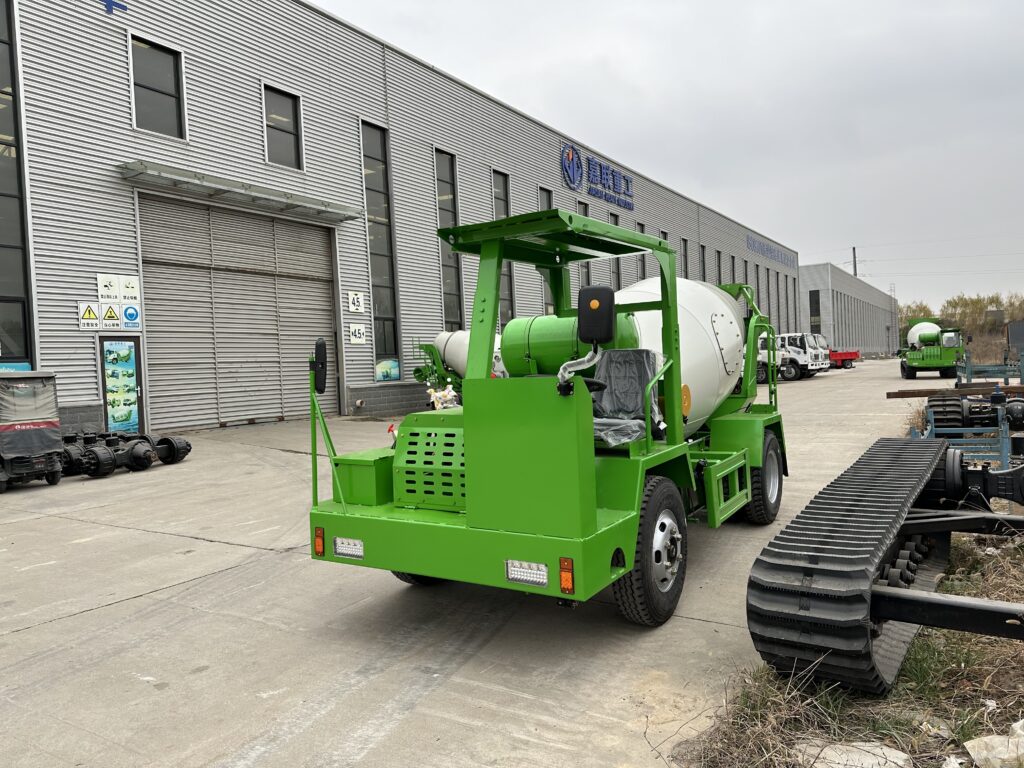
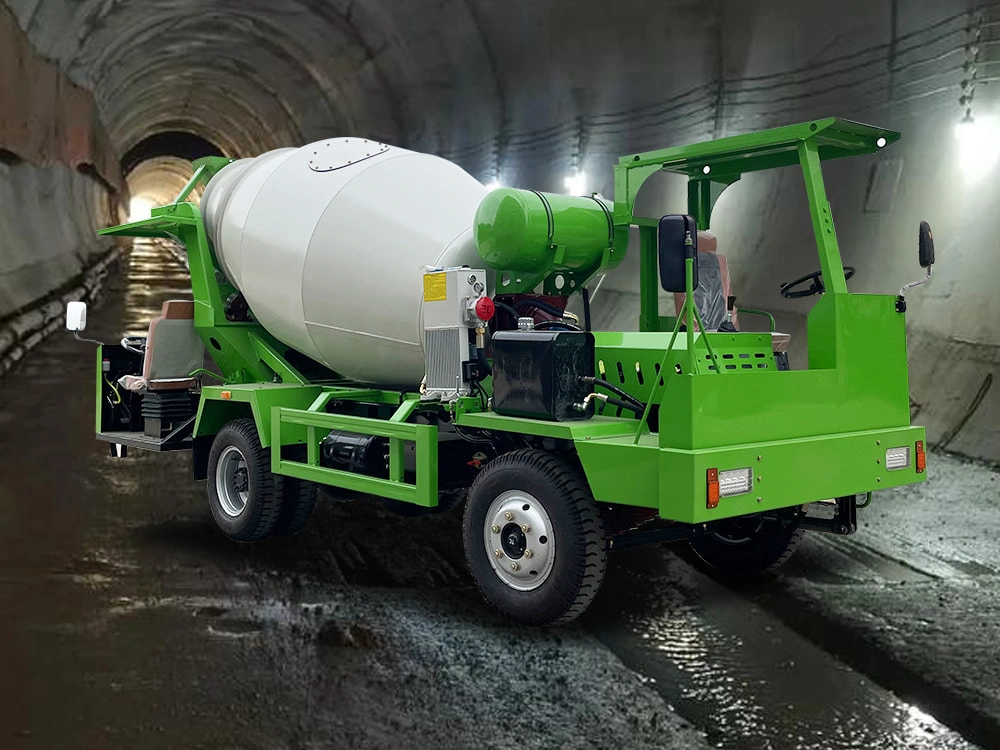
Muddy roads, soft ground and rough terrain can turn a simple concrete supply task into a difficult job-site problem. A standard mixer truck is practical when the road is firm, wide and accessible, but many construction sites are not built around standard road conditions. Mountain projects, rural access roads, small bridges, slope work and remote building sites often require equipment that can move steadily before the site is fully prepared.
A crawler concrete mixer is designed for this type of situation. Instead of depending only on a road-going truck chassis, it uses crawler drive or track support to improve contact with the ground. This makes it easier to move across soft soil, muddy access routes and uneven terrain. For contractors and buyers, the main value is not only mixing concrete, but also getting the mixer close enough to where concrete is needed.
Why Muddy Roads Are Difficult for Standard Mixer Trucks
Standard mixer trucks are usually selected for road-accessible construction. They work well for urban sites, concrete plant delivery, road work and projects with stable site access. Problems begin when the truck must enter soft ground or climb a wet slope. Heavy equipment may sink, lose traction or require extra machines to pull it out. This delays work and increases site risk.
Muddy access roads also reduce turning ability. A truck that performs well on a paved road may be difficult to control on a narrow, wet or uneven route. In some projects, the road is temporary and changes after rain or excavation. When site access is unstable, buyers should consider whether the mixer can move safely and discharge concrete where needed.
How Crawler Drive Improves Job-Site Access
Crawler drive spreads machine weight over a larger contact area. This helps reduce ground pressure compared with narrow tire contact, especially on soft surfaces. The benefit is important for rural roads, mountain slopes and construction sites where the ground has not been fully compacted.
The crawler structure also improves traction. On muddy roads or uneven routes, the machine has better contact with the ground and can move more steadily at low speed. For many small and medium projects, this is more useful than high road speed. The goal is practical access, stable operation and reliable concrete supply inside the job site.
When to Choose a Crawler Concrete Mixer
A crawler concrete mixer is usually worth considering when the site has one or more access limitations. These may include soft ground, wet soil, unpaved roads, mountain slopes, narrow temporary roads or remote areas where standard mixer trucks cannot work efficiently. It can also be useful when the project is small enough that a large concrete supply system is not practical.
Buyers should not choose crawler equipment only because the road looks difficult. Capacity, working distance, daily concrete demand and discharge method should also be considered. For example, a rural bridge project may need a compact and flexible solution, while a mountain road project may need stronger traction and stable discharge. The right configuration depends on the full working condition.
Typical Applications
Mountain Road Construction
Mountain projects often include slopes, curves and rough temporary roads. A crawler mixer can help deliver concrete closer to retaining walls, drainage structures, slope protection work and small bridge foundations.
Rural Construction
Village roads, rural house building and farmland water conservancy projects may not have wide access. Crawler equipment can support small and medium concrete demand where a standard truck has difficulty entering.
Soft Ground and Muddy Sites
Some construction areas become soft after rain or excavation. Crawler traction helps reduce the risk of getting stuck and supports more stable movement inside the working area.
What Buyers Should Check Before Inquiry
Before asking for a quotation, it is useful to prepare basic job-site information. This helps the supplier recommend a practical configuration instead of only sending a general model. Important details include the required capacity, road width, slope condition, soil condition, daily concrete volume and destination country.
Photos and short videos of the road are especially helpful. A short video can show mud depth, slope angle, road width and turning space better than text alone. With this information, the supplier can judge whether a crawler mixer, truck-mounted mixer or another configuration is more suitable.
Final Recommendation
Crawler concrete mixers are not a replacement for every standard mixer truck. They are best used when access and traction matter more than normal road speed. For muddy roads, slopes, soft ground and rough terrain, crawler drive can make concrete supply more practical and reduce the risk of delays caused by poor site access.
How to Discuss the Model with a Supplier
When you contact a supplier, avoid asking only for the lowest price or the largest capacity. A better approach is to describe the route from the loading point to the working point. Mention whether the ground is clay, sand, gravel or mixed soil, and explain how the road changes after rain. If the site includes a slope, describe whether the machine needs to climb with material or only move on level ground.
It is also helpful to explain how concrete will be discharged. Some projects need the mixer to stop close to a small foundation, while others need repeated discharge along a road section. These working details help the supplier judge whether a crawler concrete mixer should be configured for mobility, capacity, discharge convenience or a balanced combination of all three.
Need help selecting equipment for your job site? Send us your road condition, required capacity and destination for recommendation.