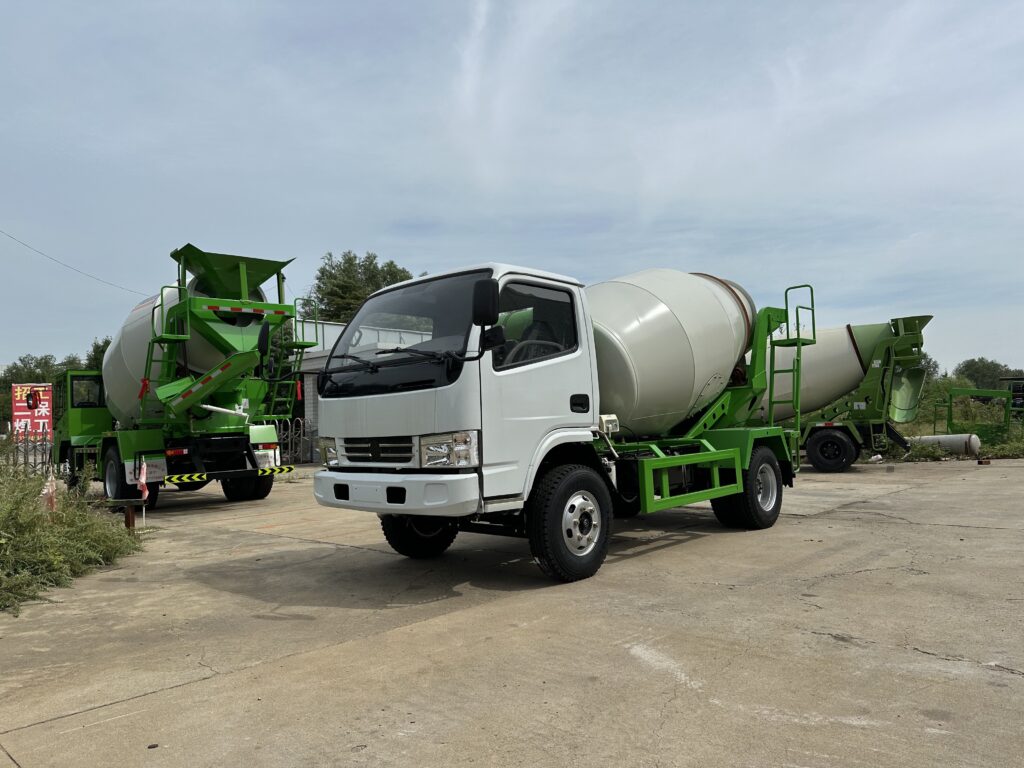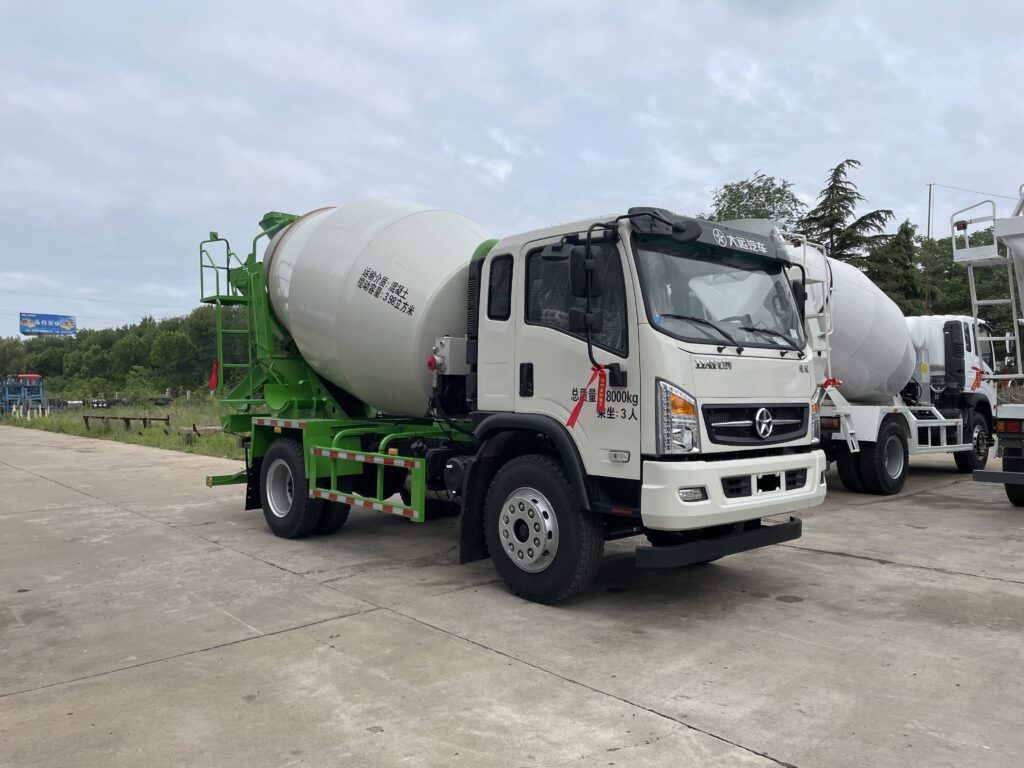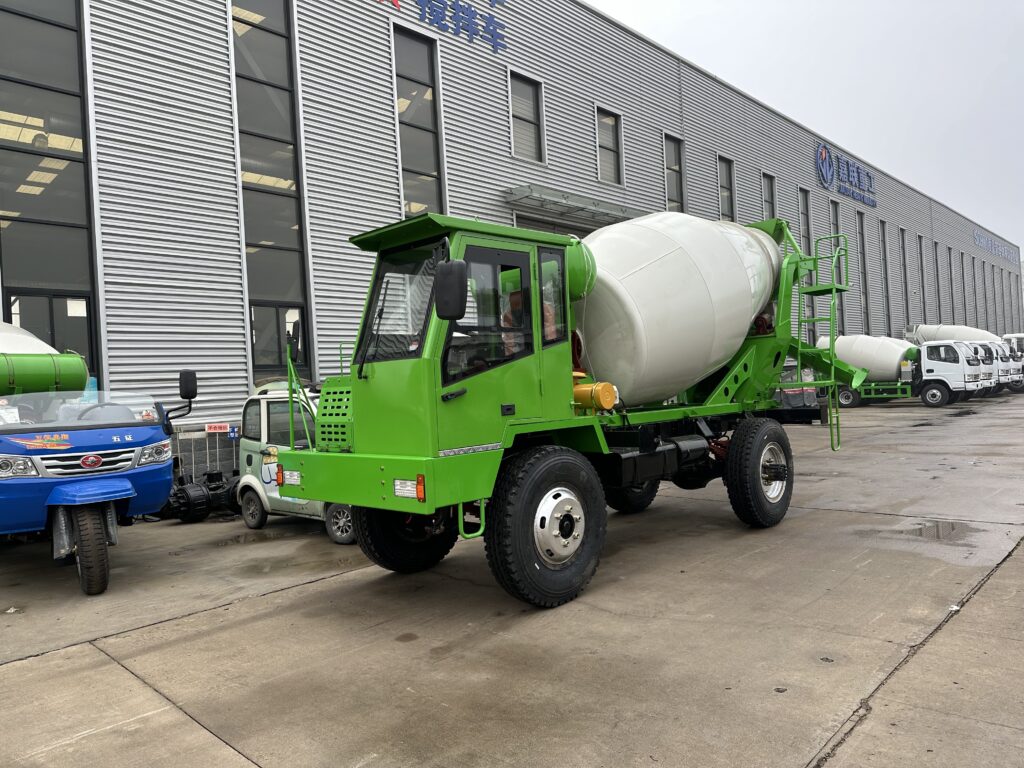
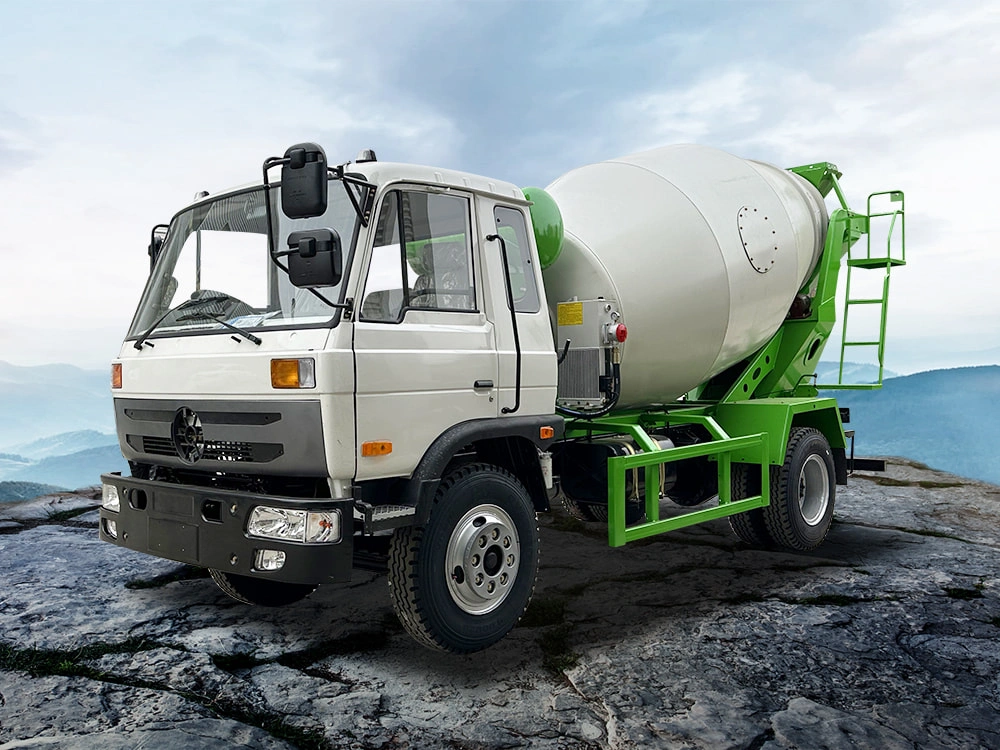
Choosing a concrete mixer truck is not only a question of tank size. For small and medium construction projects, the right configuration depends on daily concrete demand, travel distance, road condition, turning space, discharge method and the working environment. A practical 2–8 m³ mixer truck should help the buyer complete concrete mixing and transport efficiently without creating unnecessary operating cost or access problems on the job site.
Why capacity selection matters
Mixer capacity affects delivery frequency, fuel consumption, site coordination and concrete quality. A larger tank can move more concrete in one trip, but it also requires better road access, a suitable chassis and enough working space. A smaller mixer is easier to operate in rural roads, narrow construction areas and small foundations, but it may require more trips if the daily concrete demand is high.
For overseas buyers, the most practical approach is to match capacity with actual project demand. A rural house, village road or small commercial building may not need a large mixer. Road maintenance, bridge work or concrete plant delivery may require higher capacity and more stable transport efficiency. Before confirming a model, it is useful to estimate the daily concrete volume, transport distance and unloading frequency.
Common 2–8 m³ mixer applications
Small and medium mixer trucks are widely used in residential building, rural house construction, township roads, small bridges, factory floors, farmland water conservancy and local concrete supply. A 2–4 m³ mixer can be practical for smaller sites, narrow roads and short-distance delivery. A 6–8 m³ configuration is more suitable when the project requires higher concrete volume, more regular delivery or stronger chassis support.
There is no single capacity that fits every job site. Buyers should consider whether the truck needs to enter narrow village roads, unfinished access roads, mountain slopes or urban construction areas. If the road is flat and accessible, a truck-mounted concrete mixer is often efficient. If the site includes muddy roads, soft ground or slopes, a crawler concrete mixer or track-based solution may be more suitable.
Road condition and chassis options
Road condition is one of the most important factors in mixer truck selection. A standard truck-mounted mixer works well on paved roads, city streets, rural roads with basic access and construction sites where the ground is relatively stable. It is a good choice for concrete delivery, road work and general building projects.
For rough terrain, the buyer may need a different drive configuration. Crawler concrete mixers are designed for muddy roads, soft ground, slopes and remote areas where wheeled trucks may struggle. Mining safety mixer trucks may be required for mine roads, underground support work, quarry infrastructure and tunnel-related construction. Reversible or two-end driving mixers can be useful where turning space is limited, such as tunnels, narrow streets and confined construction areas.
When to choose crawler or truck-mounted mixers
Truck-mounted mixers are usually recommended when the job site has road access and the main task is concrete transport between a batching point and the construction area. They are practical for urban construction, road and bridge work, residential building, industrial plants and concrete delivery tasks. Buyers can discuss chassis type, tank capacity, color, logo and discharge structure according to market needs.
Crawler mixers are more suitable when road access is unstable. If the project includes mountain roads, muddy access, soft ground, farmland, remote infrastructure or solar foundation construction, crawler drive can provide better traction and movement. In these situations, the lowest purchase price is not always the best choice. A machine that can actually reach the job site and discharge concrete smoothly may reduce delays and operating risk.
What information to send for quotation
To receive a useful recommendation, buyers should provide project type, required capacity, road condition, working space, destination country and expected quantity. Photos or videos of the job site are also helpful, especially for mining projects, narrow tunnels, muddy roads and rural construction areas. If local branding is required, buyers can also mention color, logo and appearance needs.
Jialian Heavy Machinery can help compare truck-mounted, crawler, mining safety, reversible drive and customized concrete mixing equipment according to the buyer’s working condition. A practical configuration should match the capacity requirement, chassis platform, tank structure, discharge system and delivery plan. For small and medium projects, this selection process helps avoid oversized equipment, poor road access and unnecessary commissioning risk.
Final recommendation
Before ordering a 2–8 m³ concrete mixer truck, do not choose capacity by tank size alone. Consider your concrete demand, road condition, job-site space and destination requirements together. If you are not sure which model is suitable, send your working condition, capacity requirement and destination to the Jialian team. We can help recommend a practical mixer truck or related concrete mixing equipment configuration for your project.